
Microsoft Patent Splits One Trackpad Into Two Separate Hand-Controlled Zones
Your laptop's trackpad is one big slab that does one thing at a time. Microsoft wants to change that by splitting it into two independent zones in software, so each hand can do something completely different at once.
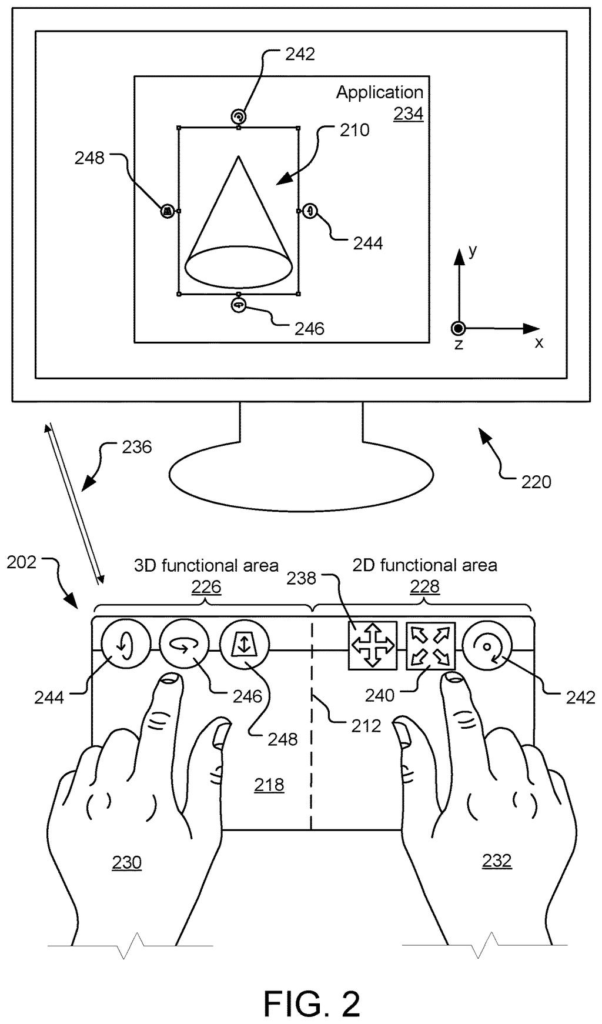
What Microsoft's virtual trackpad zones actually do
Imagine trying to move and rotate a 3D object on screen, except your trackpad only listens to one finger at a time, forcing you to juggle both actions awkwardly with one hand. That's the problem Microsoft is trying to fix.
This patent describes a trackpad that looks exactly like a normal trackpad but is secretly divided into two zones by software. You could use the left half to move something and the right half to spin it, both at the same time, with each hand doing its own thing independently.
There's no line drawn on the surface and no physical bump separating the zones. The division is entirely invisible and handled by the computer. Microsoft specifically calls out accessibility as a motivation, noting that two-handed control setups can be a big help for users who need more predictable or ergonomic input options.
How the software drivers carve up one touch surface
The patent describes a single, unbroken touch sensor surface (the kind already inside most laptop trackpads) that is divided into two or more independent functional areas purely through software configuration. No hardware changes are required.
Each zone gets its own dedicated software driver (a small program that translates raw touch signals into actions). These drivers run at the same time, processing inputs from their respective zones in parallel rather than pooling everything together. When you touch the left zone, that driver handles it. When you touch the right zone simultaneously, a separate driver handles that independently.
The drivers send their outputs over a shared interface to the operating system, but each data packet is tagged with which zone it came from. That tagging is important: it lets applications treat the two zones as genuinely separate input sources rather than one combined stream of finger positions.
Practical use cases the patent highlights include:
- One zone for moving an object, one zone for rotating it
- Two-handed simultaneous control of digital environments
- Accessibility-oriented input schemes that benefit from predictable, separated hand roles
What this means for PC accessibility and 3D control
Most trackpads today treat every finger touch as part of one big gesture pool. That works fine for scrolling or pinch-to-zoom, but it falls apart the moment you want two hands doing two completely unrelated things at the same time. This patent gives applications a clean way to assign distinct jobs to distinct regions of the same surface, which opens the door for more expressive control in 3D software, creative tools, and accessibility setups.
For everyday users, this could mean a laptop trackpad that behaves more like a professional input device without any extra hardware. For users with motor or accessibility needs, predictable zone-based input could reduce the cognitive and physical load of complex on-screen tasks. The flip side is that this only works if app developers actually adopt the new driver model, which adds a real-world hurdle between the patent and any tangible benefit arriving on your machine.
This is a genuinely practical idea. Splitting a trackpad into zones in software costs nothing in hardware terms and could be useful in 3D modeling, accessibility tools, or even gaming. The hard part is the classic chicken-and-egg problem: the feature only delivers value when applications are built to use it, and developers won't bother until the feature is widespread on real devices.
There are more where this came from
We read every patent application Big Tech publishes and send you the ones worth knowing. Plain English, free, every week.
The drawings
4 drawing sheets from US 2026/0211520 A1 · click any drawing to enlarge


Want this weekly breakdown for a company we don't cover? Patentlyze Pro →