
Meta Patents a Shared Social Media Session That Merges Two Users' Feeds in Real Time
Imagine scrolling through Instagram or Facebook with a friend — and the feed adapts to both of you at the same time, not just one of you. That's exactly what Meta is patenting.
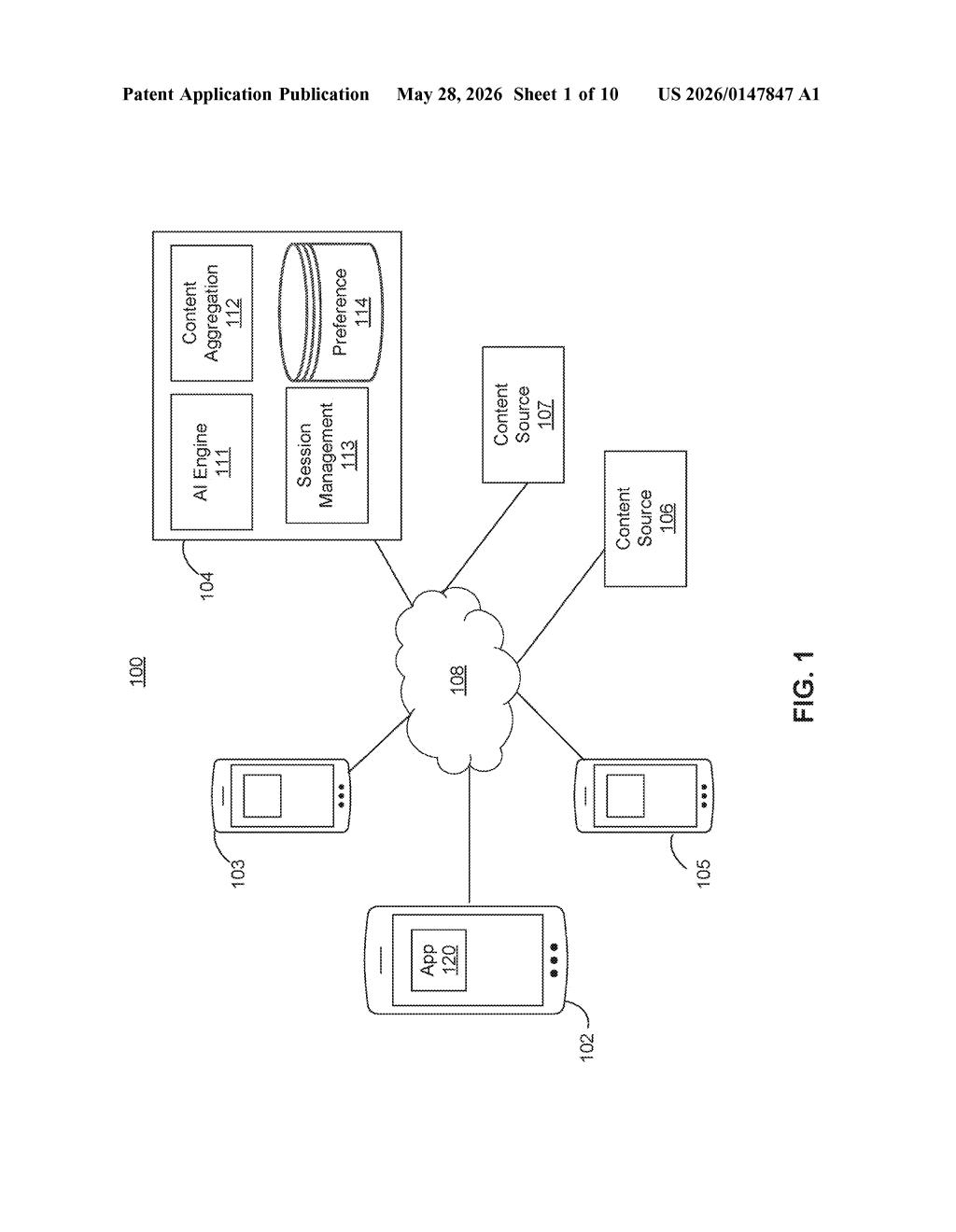
What Meta's shared social feed actually does
Picture this: you and a friend want to browse social media together, the way you might watch Netflix together over a video call. The problem is that your feeds are built entirely around you — your interests, your follows, your history. Your friend's feed looks completely different. Right now, there's no real way to share that experience.
Meta's patent describes a system that creates a shared social media session — a single, unified content feed that pulls from both users' profiles and blends them together. You could kick off the session from a messaging app or a standalone app, and the same stream would show up on both your devices at the same time.
The system uses AI to figure out what content fits both of your preferences without forcing either of you to compromise your privacy settings. Think of it like a playlist that a DJ builds on the fly by reading the room — except the room is two people's worth of social media data.
How Meta blends two user profiles into one feed
The patent describes a method where a server receives a request to start a shared social media session, then independently looks up the user profiles for each participant — pulling their preferences, interests, and content signals without merging the underlying personal data.
From there, the system queries content across multiple platforms and sources (not just one app's content library) and uses those dual-profile inputs to generate a unified content feed. That single feed is then transmitted synchronously to both devices, so both users are looking at the same posts, videos, or stories at the same time.
The AI layer is responsible for the hard part: resolving conflicts between two users' tastes. If one person loves cooking content and the other follows sports accounts, the model has to decide what a satisfying middle ground looks like — without just picking one person's preferences over the other's.
Key design elements the patent calls out:
- Privacy controls are maintained per user, even inside a shared session
- Sessions can be initiated from a messaging interface (think: starting a shared feed from a DM thread) or a standalone app
- Content is sourced from different platforms, suggesting a cross-app aggregation layer
What this means for co-watching and social browsing
Co-watching and co-browsing have been persistent UX gaps across social platforms. Apps like TikTok and Instagram are built as solo experiences — the algorithm is trained on one person's behavior, and that breaks down the moment two people try to share the screen. Meta's filing suggests they're thinking seriously about making social media a genuinely shared, real-time activity rather than a side-by-side solitary experience.
For Meta's broader strategy, this fits into their ongoing push around social connection — the idea that their platforms should bring people together, not just serve individuals in isolation. If this shipped as a feature inside WhatsApp or Messenger, it could create a new social ritual: sending a friend a link to start a shared scroll session, the way you'd share a Netflix party link. It also opens a cross-platform content aggregation angle that would be worth watching closely.
This is a genuinely interesting idea that solves a real, underserved problem — co-browsing social media is clunky today and nobody has cracked it. The cross-platform sourcing angle is the most intriguing part: if Meta can pull content from outside its own apps into a shared session, that's a meaningful expansion of its content aggregation ambitions. The AI preference-blending piece is conceptually simple but technically hard to do well, and the patent doesn't reveal much about how that actually works under the hood.
There are more where this came from
We read every patent application Big Tech publishes and send you the ones worth knowing. Plain English, free, every week.
Want this weekly breakdown for a company we don't cover? Patentlyze Pro →