
Meta Patents Electromagnetic Shielding for Muscle-Signal Wearables
Meta is working to make muscle-reading wristbands accurate enough to survive the real world — and that means designing out the electrical noise that everyday appliances constantly pump into your skin.
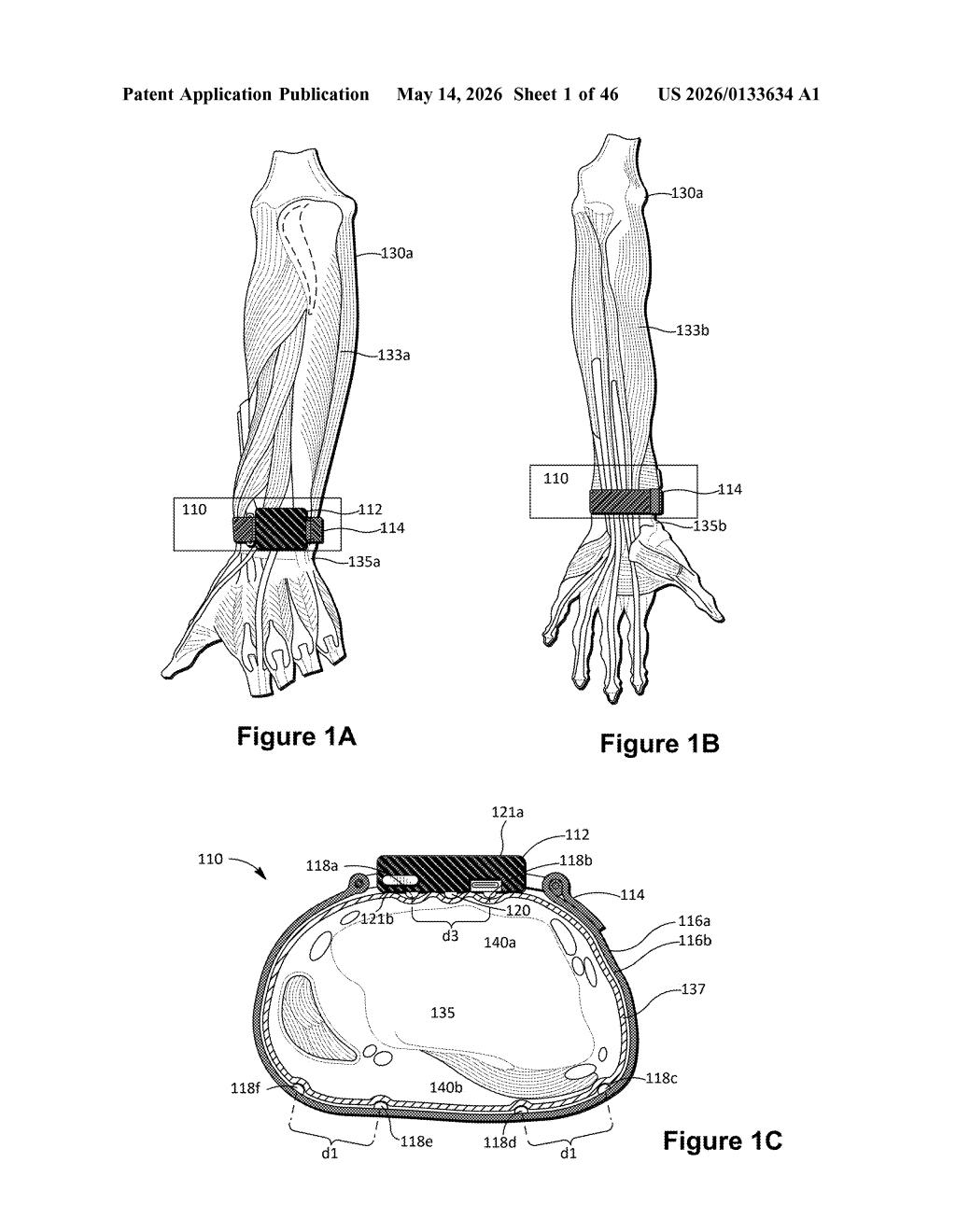
What Meta's EMG wristband noise-blocking actually does
Imagine trying to listen to a whispered conversation in a room full of buzzing fluorescent lights. That's roughly the problem a wristband faces when it tries to read the tiny electrical signals your muscles produce — devices all around you, from laptop chargers to kitchen appliances, radiate low-level electrical interference that can drown out those signals completely.
Meta's patent describes a physical shielding structure built into a wristband that wraps around the circuit board responsible for capturing and processing those muscle signals. The shield is shaped to enclose the sensitive analog electronics on multiple sides, with an insulating layer between the shield and the components to prevent short circuits.
The goal is to block power line interference — the 50/60 Hz hum from AC power sources — before it ever reaches the signal-processing chips. A portion of the muscle sensor itself still pokes out from the band to stay in contact with your skin, but the rest of the electronics are tucked safely inside the shielded housing.
How the EM shield wraps the circuit board and sensor
The patent describes a layered assembly designed to protect electromyography (EMG) sensors — hardware that detects the tiny electrical signals muscles generate when they contract — from environmental noise.
At the core is a circuit board with a neuromuscular sensor attached to its bottom surface (the side facing your skin) and analog signal-processing components on its top surface. Analog components are especially vulnerable to interference because they handle raw, unprocessed electrical signals before any digital cleanup can happen.
An electromagnetic (EM) shield wraps around at least two opposite side surfaces of the circuit board and covers the analog components on top. An insulative material (essentially a non-conducting spacer) sits between the shield and those components so the metal enclosure doesn't accidentally create a short circuit. The shield is specifically tuned to block power line interference — the pervasive 50/60 Hz electrical noise generated by AC-powered devices.
The whole assembly — board, shield, and part of the sensor — is housed inside a wearable band. One design detail worth noting: the sensor extends slightly beyond the band by a "predetermined distance," ensuring consistent skin contact without exposing the fragile electronics.
What this means for Meta's neural wristband ambitions
EMG wristbands are central to Meta's long-term vision for controlling AR glasses with hand and finger gestures — without a touchscreen. The problem is that signal quality has always been a bottleneck: in real-world environments, power-line noise can be strong enough to make gesture recognition unreliable or unusable.
This patent is less about a flashy new feature and more about the unglamorous engineering that makes wearable neural interfaces actually work when you're sitting next to a power strip. If you've ever used an early EMG device and found it frustratingly inconsistent, interference rejection like this is exactly what separates a lab demo from a consumer product.
This is classic deep-stack hardware engineering — not the kind of patent that generates headlines, but exactly the kind that determines whether a product ships or stays a prototype. Meta's neural wristband project (Project Aria / EMG input for Ray-Ban successors) has a known signal-quality problem, and a dedicated shielding architecture is a serious, committed attempt to fix it at the hardware level rather than papering over it in software.
Get our take in your Top Stories
Liked this breakdown? Add Patentlyze as a preferred source on Google, and our plain-English take shows up more often in your Top Stories the next time Meta patent news breaks.
There are more where this came from
We read every patent application Big Tech publishes and send you the ones worth knowing. Plain English, free, every week.
Want this weekly breakdown for a company we don't cover? Patentlyze Pro →