
Samsung Display Patents a Stacked Electrode Method for Aligning Micro LEDs
Getting microscopic light-emitting elements to land exactly where you want them on a display panel is one of the hardest unsolved problems in next-gen screen manufacturing. Samsung Display's latest patent describes a clever two-layer electrode geometry designed to make that placement far more reliable.
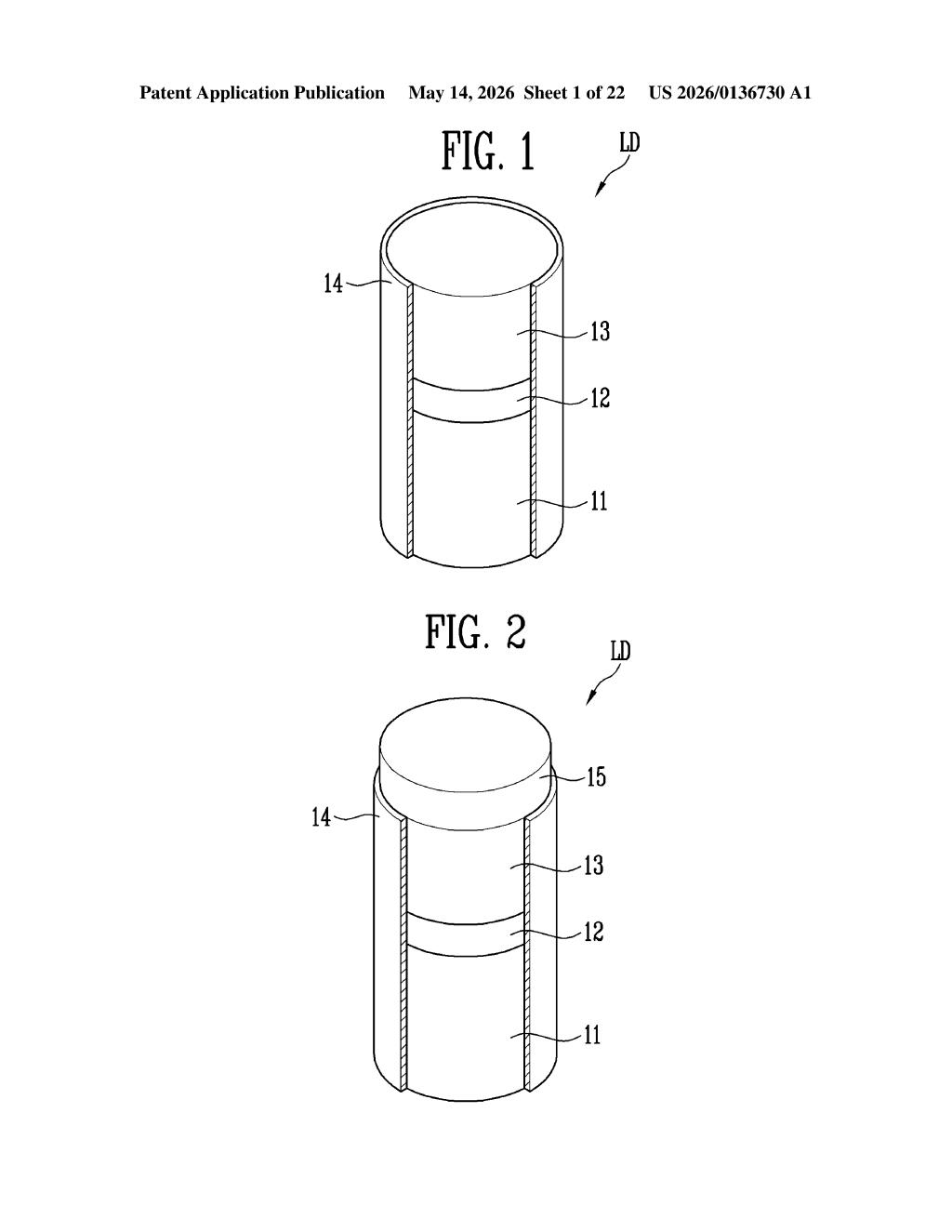
How Samsung's electrode stack guides tiny LEDs into place
Imagine trying to park thousands of grain-of-sand-sized light bulbs onto a screen — each one needing to land in exactly the right spot. That's essentially what manufacturers face when building micro-LED displays, and even tiny misalignments ruin picture quality.
Samsung Display's patent describes a way to help those tiny elements find their correct position almost automatically. The trick is a stacked electrode design: a lower pair of electrodes sits closer together, while an upper pair sits farther apart. That wider gap at the top acts like a funnel, giving each light-emitting element a clear landing zone to align itself into.
A thin insulating layer sits on top of the upper electrodes, and the light-emitting element rests on that layer, neatly centered between the wider upper electrodes. It's a structural nudge that makes precise placement more achievable at manufacturing scale — which matters a lot when you're placing millions of these elements per panel.
How the wider upper electrodes create a self-aligning channel
The patent describes a sequential deposition-and-etch process for building the electrode structure. Here's the basic sequence:
- A first and second conductive layer are deposited on top of each other on a substrate.
- Both layers are etched simultaneously (or in sequence) to form two pairs of electrodes — a lower pair (first and second electrodes) with a narrower gap, and an upper pair (third and fourth electrodes) directly on top with a wider gap.
- An insulating layer is then deposited over the upper electrode pair.
- Finally, the light-emitting element — think a microscopic LED rod or chip — is deposited and aligns itself on the insulating layer, sitting between the wider upper electrodes.
The key geometric insight is that the second distance (upper gap) is greater than the first distance (lower gap). In plan view (looking straight down), the light-emitting element lands inside the wider upper zone. The lower electrodes, being narrower and underneath, are positioned to make electrical contact with the element's ends once it's in place.
This geometry is specifically aimed at self-aligned assembly — a technique (meaning the physical structure itself guides components into position, reducing reliance on robotic precision alone) that's critical for economically viable micro-LED production.
What this means for next-gen Samsung micro-LED displays
Micro-LED displays promise dramatically better brightness, efficiency, and longevity than OLED — but the manufacturing yield problem has kept them expensive and rare. Self-aligning electrode geometries like this one are a direct attack on that yield problem. If Samsung Display can reliably place more elements correctly on the first pass, panel costs drop and large-scale production becomes realistic.
This patent is a divisional of an earlier 2021 filing (now granted as US 12,507,516), meaning Samsung has been developing this approach for several years. That continuity suggests it's not just a paper idea — it's likely part of an active process development program tied to Samsung's broader micro-LED roadmap.
This is a manufacturing process patent, not a flashy new product announcement — but that's exactly why it's worth paying attention to. The gap between micro-LED as a concept and micro-LED as a mass-market product is almost entirely a fabrication yield story, and patents like this one are the unglamorous engineering work that closes that gap. Samsung Display has been grinding on this problem for at least four years based on the filing history, which is a meaningful signal of commitment.
There are more where this came from
We read every patent application Big Tech publishes and send you the ones worth knowing. Plain English, free, every week.
Want this weekly breakdown for a company we don't cover? Patentlyze Pro →