
Samsung Patents an Image Sensor That Replaces Curved Lenses with Nano-Scale Prisms
Samsung is designing an image sensor that ditches the tiny curved glass lenses sitting over your camera's pixels and replaces them with ultra-thin layers of microscopic prism patterns etched at the nanometer scale — potentially allowing camera modules to shrink significantly without sacrificing light capture.
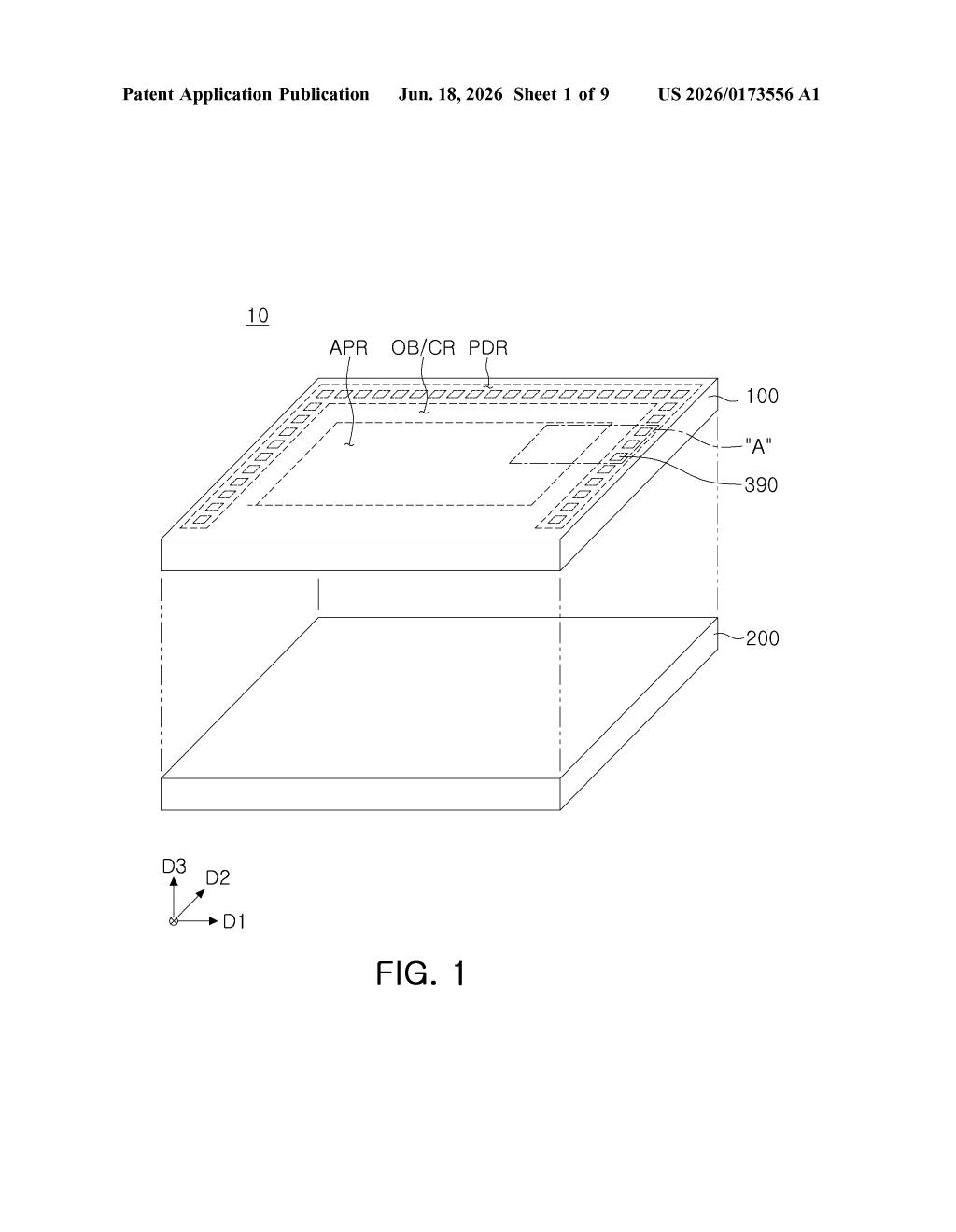
What Samsung's nano-prism camera sensor actually does
Imagine your phone's camera as a tiny stadium full of seats (the pixels), with a glass roof shaped to funnel rain (light) into the right seats. Traditional camera sensors use curved micro-lenses — one per pixel — to do exactly that. They work, but they add thickness and have physical limits on how small they can get.
Samsung's patent describes swapping those curved lenses for something called a meta-optical structure: flat layers of transparent material with billions of tiny prism-shaped ridges etched into them. These nano-prisms bend and redirect incoming light the same way a lens does, but in a layer thin enough to sit almost flush with the sensor surface.
The design stacks two of these patterned layers on top of the sensor, and the patent is very specific about geometry — the inorganic base layer underneath them must be more than 20 times thicker than the insulating layer below it. That ratio is probably the key to keeping the light-bending effect working correctly across the whole sensor.
How the stacked nano-prism layers direct light to pixels
The sensor described in the patent is a back-illuminated stacked chip — meaning light enters from the back of the silicon, not the front, which is already common in high-end smartphone cameras. What's new is what Samsung puts on top of the light-entry surface.
Instead of traditional micro-lenses, the sensor uses a meta-optical structure: two dielectric layers (electrically insulating, light-transmitting materials) each patterned with nano-prism patterns — grids of prism-shaped ridges far smaller than the wavelength of visible light. At that scale, the structures interact with light waves directly, bending them in controlled directions without needing curved surfaces.
Underneath the meta-optics sits an inorganic layer (a chemically stable, non-organic material like silicon nitride or similar) whose thickness is specified as more than 20 times the insulating layer below it. This ratio likely controls optical spacing — getting light to converge at exactly the right depth to hit the photoelectric conversion regions (the parts of each pixel that actually turn photons into electrical charge).
The chip itself is a stacked structure:
- A first substrate containing the pixel photodetectors
- A second substrate above it carrying the logic circuitry that reads out and drives the pixels
- Interconnection layers bonding the two together
This separation of sensing and logic is a well-established approach for improving performance, and the nano-prism layer sits on top of the whole stack.
What this means for thinner cameras in future Samsung phones
The practical pressure here is camera thickness. Smartphone makers want thinner bodies, but conventional camera optics — even at the micro-lens level — impose a floor on how thin a sensor module can be. A flat optical structure that performs the same focusing job could help push that floor down, or free up space for larger pixel areas that capture more light per shot.
Meta-optics as a concept has been researched in universities for years, but manufacturing nano-scale patterns reliably at the volume Samsung needs is a serious engineering challenge. Filing a patent with specific geometric constraints (like that 20× thickness ratio) suggests Samsung's engineers are working through real fabrication details, not just a theoretical concept — which is usually a sign that a technology is getting closer to production consideration.
This is a genuinely interesting engineering patent, not a routine filing. Meta-optics for image sensors has real promise for thinner, higher-performing cameras, and the level of geometric specificity in Samsung's claims — particularly the 20× thickness ratio — suggests this is past the whiteboard stage. Whether it appears in a Galaxy phone within the next few years depends entirely on whether the nanofabrication is manufacturable at scale, which no patent can tell you.
There are more where this came from
We read every patent application Big Tech publishes and send you the ones worth knowing. Plain English, free, every week.
Want this weekly breakdown for a company we don't cover? Patentlyze Pro →