
Smart Glasses Patent Switches Device to Audio-Only Mode When Display Is Suppressed
Meta is working on a way for smart glasses to automatically shut off their display and keep working through audio alone, then snap the screen back on when you ask for it.
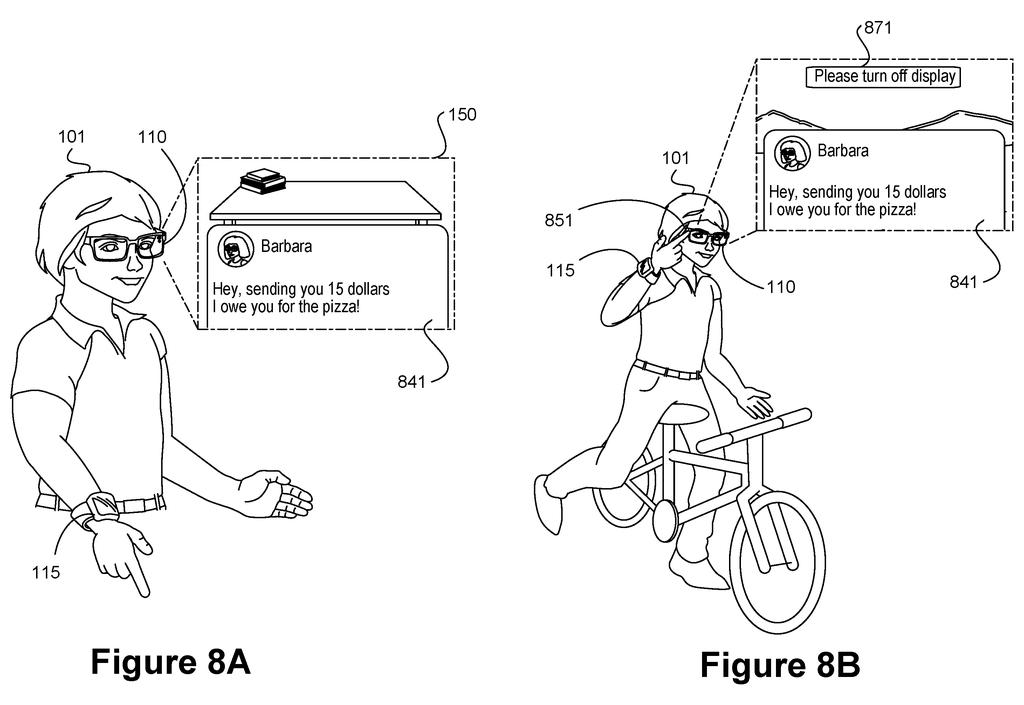
How Meta's glasses decide when to ditch the screen
Imagine you're wearing smart glasses during a meeting, and the device notices it probably shouldn't be flashing text in your field of view right now. Instead of going completely silent, the glasses turn the screen off and keep answering your questions through the earpiece speaker, so you stay informed without looking like you're reading a heads-up display in front of your colleagues.
That's the core idea in this Meta patent. The glasses detect a condition that makes displaying information a bad idea, automatically go dark, and shift to pure audio responses. When you want the screen back, you issue a wake command, and the display turns on again.
The patent doesn't spell out every trigger that would qualify as a display suppression condition, but the framing strongly suggests situations like social interactions, low-battery mode, or scenarios where visual distraction is unwanted. It's essentially a polite-mode for AR glasses.
… cause the head-wearable device to enter a displayless state; while the head-wearable device is in the displayless state, wherein the display of the head-wearable device is off while in the head-wearable device is in the displayless state: obtain a second instruction; cause the speaker of the head-wearable device to present a nonvisual response based on the second instruction …
Translation: The glasses turn off their screen and switch to sound only when something blocks the display.
How the display suppression trigger and wake command work
The patent describes a two-state system for a head-worn device that has both a display and a speaker.
In display state, the glasses work normally: you give an instruction (by voice, gesture, or tap), the screen shows a visual response. The device constantly checks whether a display suppression condition is present. When that condition is detected, the device transitions to displayless state: the screen turns off entirely.
In displayless state, the glasses don't stop working. You can still give instructions, and the device responds through the speaker instead of the screen. This keeps the glasses functional in contexts where flashing visuals would be awkward or distracting.
The system exits displayless state when the user performs a wake command, at which point the display turns back on and normal visual operation resumes. The patent frames this as automatic, meaning the device makes the switch on its own without the user having to manually toggle anything.
… automatically switching a head-wearable device from a display state to a displayless state in accordance with a determination that a display suppression condition is present …
Translation: The wearable device senses when to hide the screen and shifts modes on its own.
What this means for Ray-Ban Meta and future AR glasses
Meta's current Ray-Ban smart glasses don't have a display at all, but the company has been publicly developing display-equipped AR glasses. This patent suggests Meta is thinking carefully about when those future displays should actually be on, not just what they show. Automatically hiding the screen in social situations is a real usability problem that every AR glasses maker will need to solve.
For you as a potential wearer, this kind of automatic mode-switching could be the difference between glasses that feel natural in conversation and ones that make you look like you're staring at a teleprompter. It's a social-context problem as much as a technical one, and Meta appears to be filing IP around a specific answer.
This is a genuinely practical patent for a genuinely hard problem in wearable AR. The question of when a display should be invisible to bystanders and when it should be active is something every AR headset company will need to answer. Meta's approach of automatic suppression plus a user-initiated wake command is clean and worth watching as the Ray-Ban line grows.
There are more where this came from
We read every patent application Big Tech publishes and send you the ones worth knowing. Plain English, free, every week.
The drawings
18 drawing sheets from US 2026/0229154 A1 · click any drawing to enlarge


Want this weekly breakdown for a company we don't cover? Patentlyze Pro →
Be the first to weigh in