New Meta Patents For Smart Glasses, and what they tell us
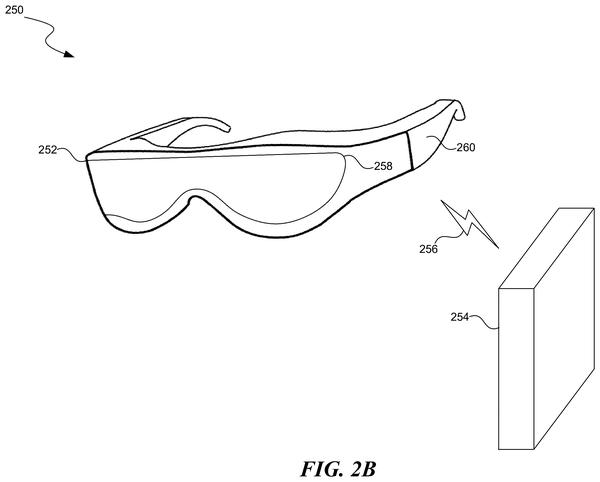
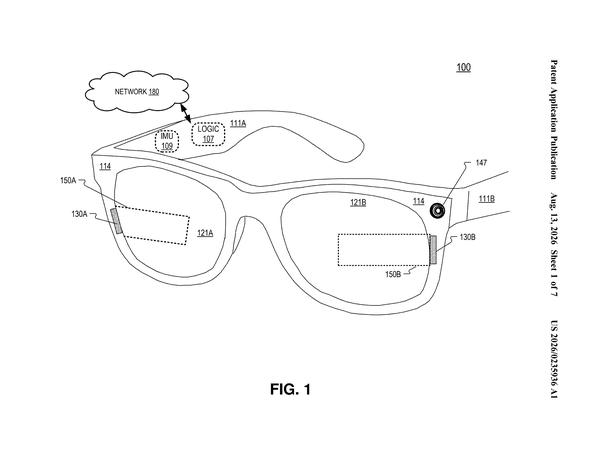
This tracker collects Meta patents on smart glasses hardware: camera lens shielding, hinge durability, nose bridge fit, display alignment, and voice-plus-gesture wake word handling. Together they sketch glasses that track gaze, gesture, and voice at once, then decide how to respond.
based on all tracked filings in this watchlist · refreshes every week
Meta is filing patents around smart glasses that can show you information, respond to your body movements, and work alongside other devices like a smartwatch to get things done.
The filings cluster heavily around two problems: how the glasses sense what you want (through eye movement, hand gestures, and wrist signals) and how to make the physical glasses thinner, tougher, and better sealed against water and dust.
What’s new in Meta's smart glasses
a dated entry each week this watchlist moves · older entries stay archived
Sep 17, 2026 2 filings joined
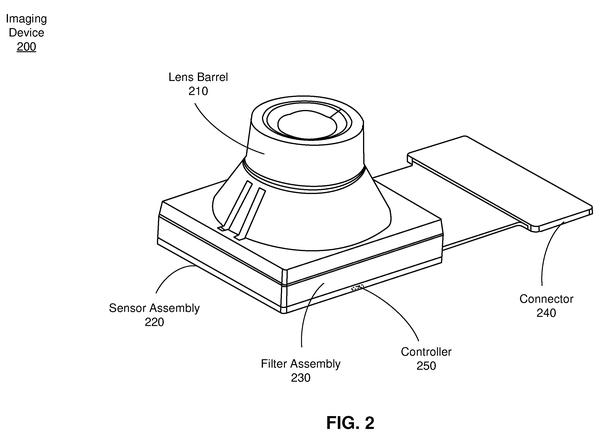
Both new filings focus on sharper, clearer vision in Meta's glasses. One covers a camera housing that adjusts focus electrically, the other combines multiple cameras to improve image quality.
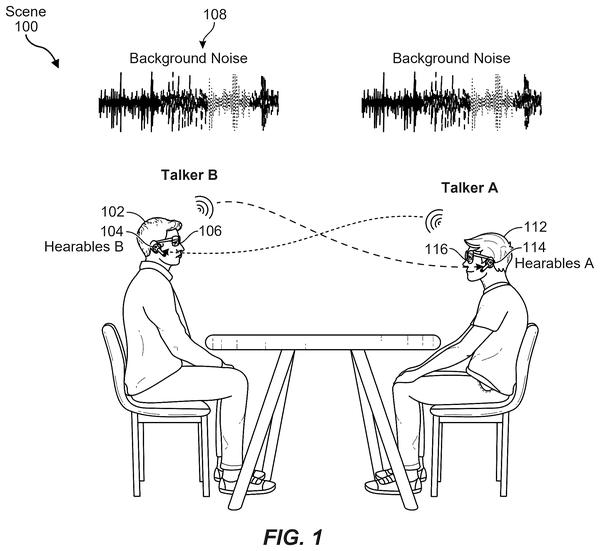
This week's filing focuses on sending a speaker's voice directly to a nearby listener's earbuds through the glasses. The push is toward making glasses a tool for private, targeted audio sharing between two people.
This week's filings focus on smarter sensing: glasses that pick out voices, read silent lip movements, and boost sound based on where you look. Meta also filed for cameras that process what they see on the spot, and headsets that explain their own decisions.
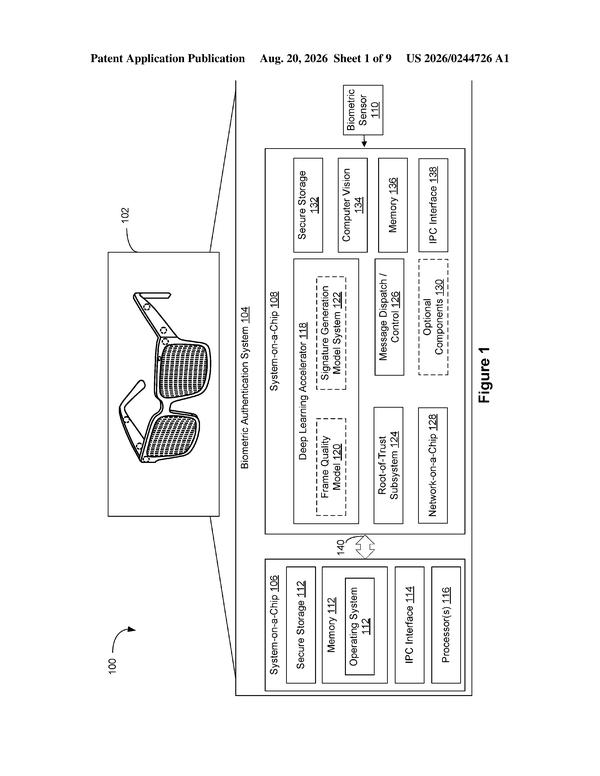
This week's filings focus heavily on keeping personal data safe and private in smart glasses. Meta is exploring ways to protect body-based identification data with a dedicated chip, cut off the microphone in a way that apps cannot undo, and use skin contact to move data between devices.
the problems Meta keeps filing on · each with its three newest filings · new filings join every week
Glasses That Show Digital Images 13 filings
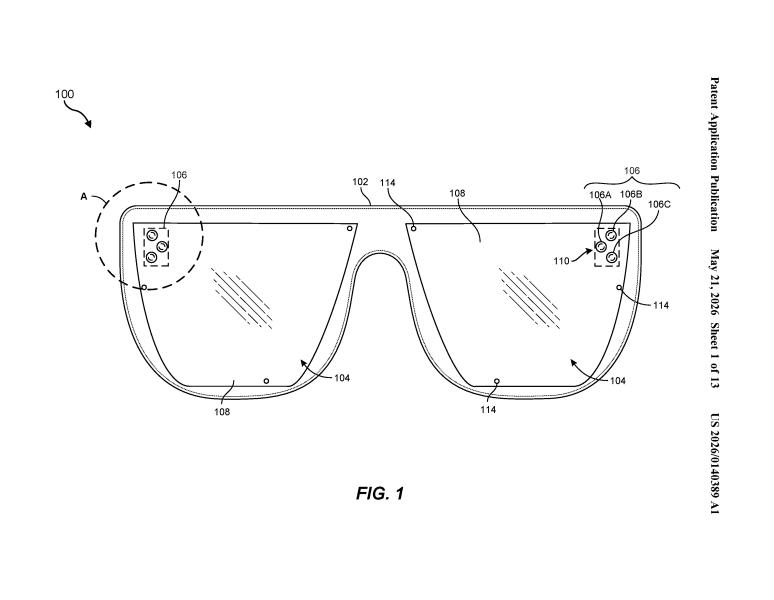
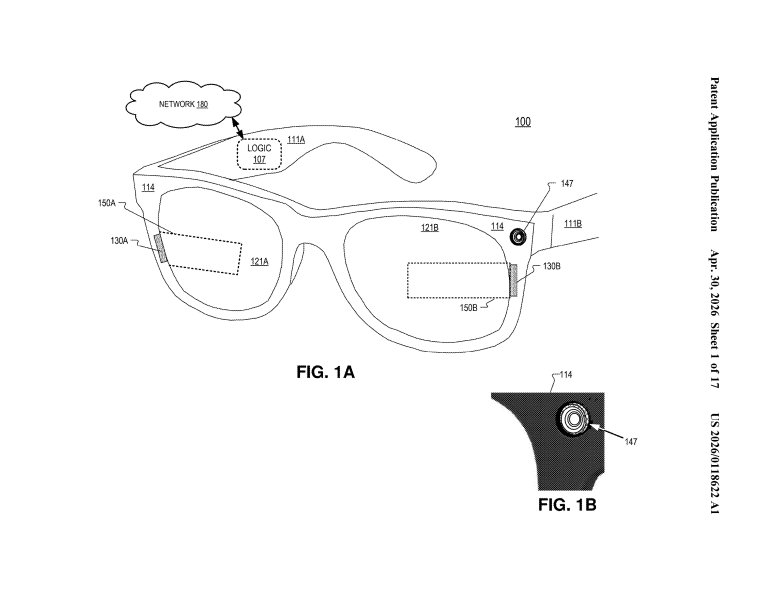
Fitting a screen into a normal-looking pair of glasses requires solving problems with lenses, light, and alignment. These filings cover the optics, lens materials, and display hardware behind see-through AR glasses.
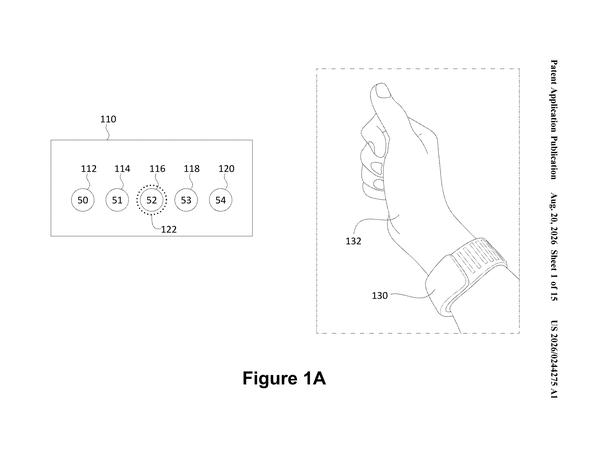
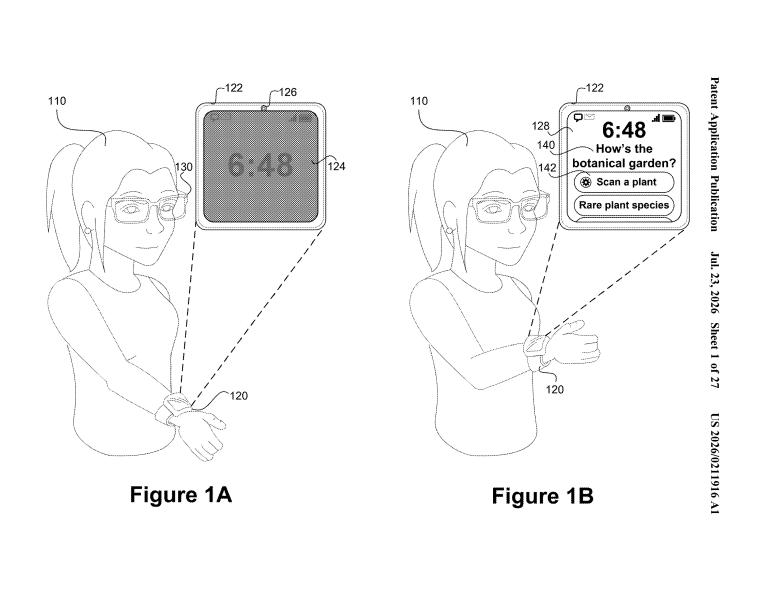
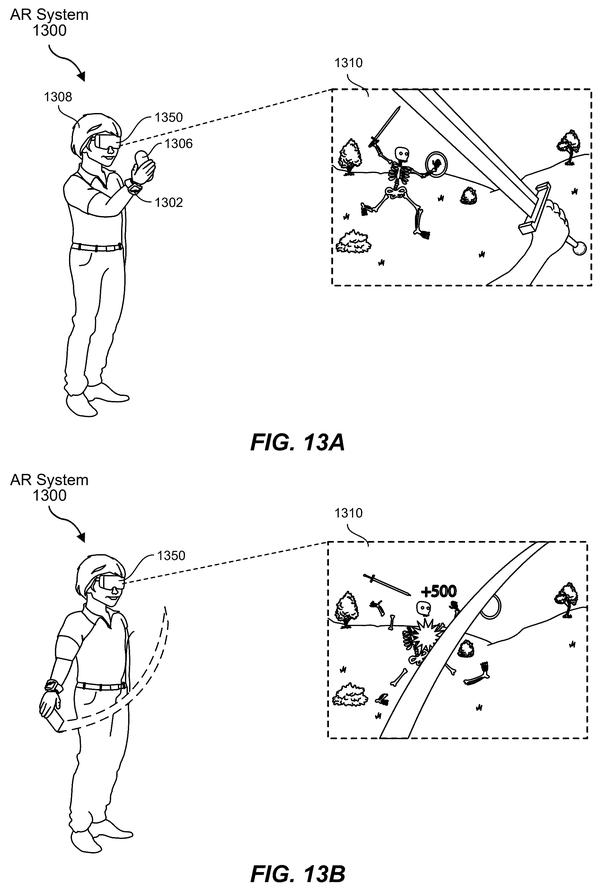
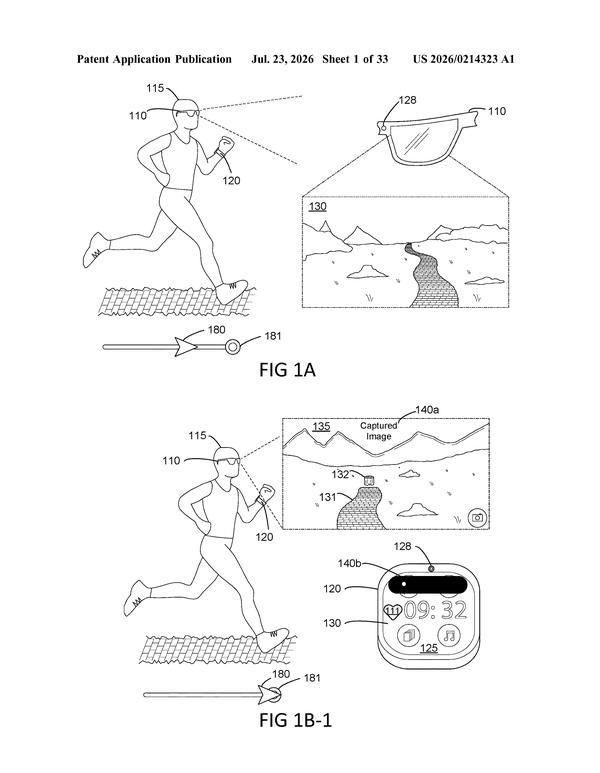
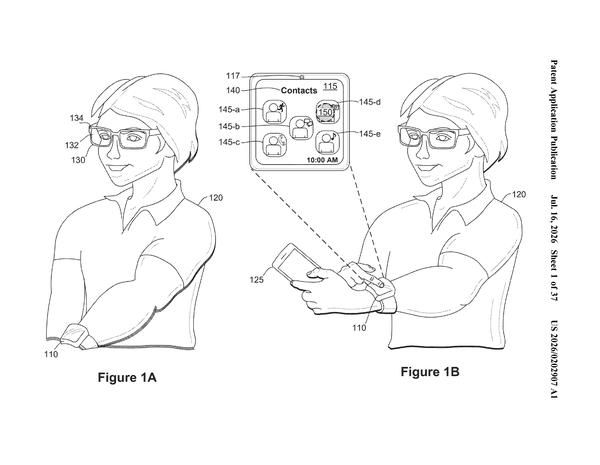
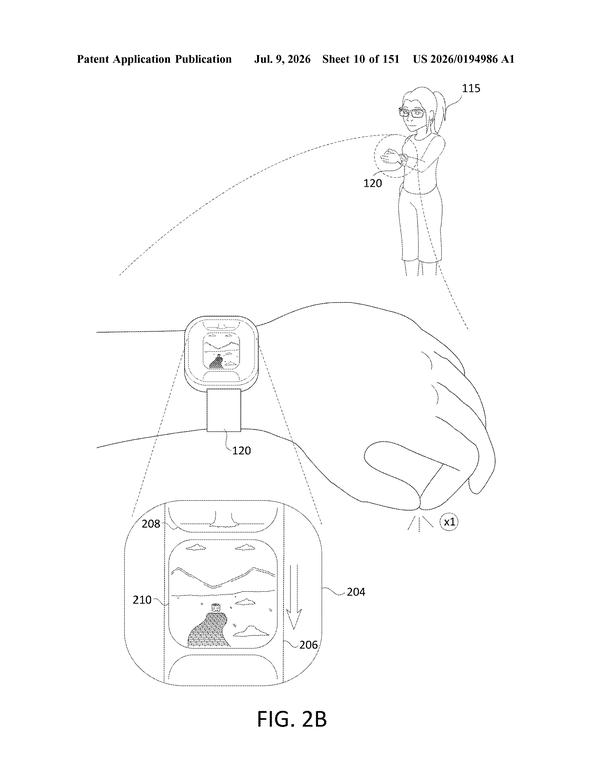
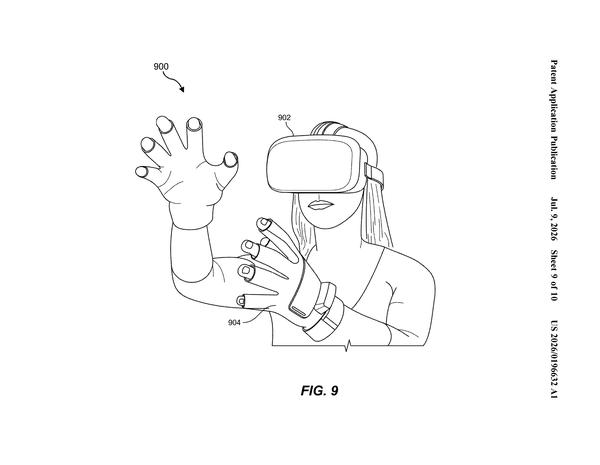
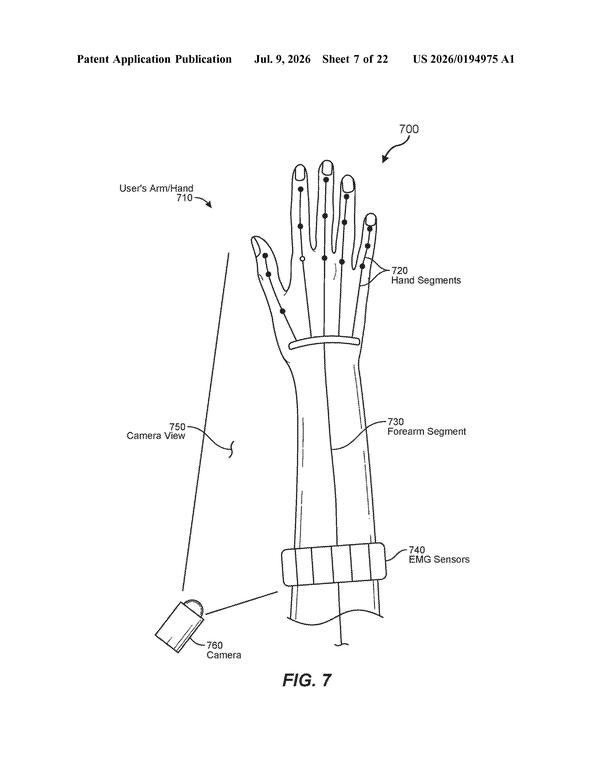
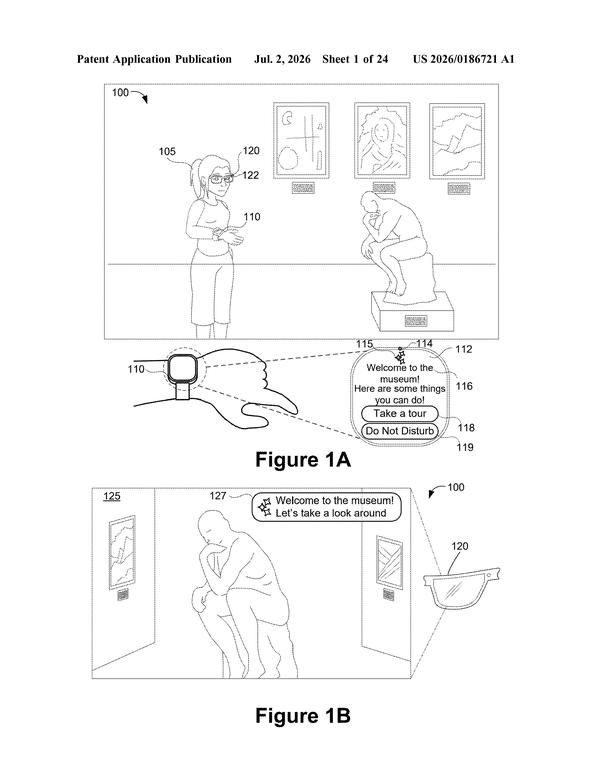
Tapping a screen on your face is awkward, so these filings explore using your wrist and hand movements to control glasses instead. They cover gestures, wristband sensors, and how glasses and a watch can share tasks.
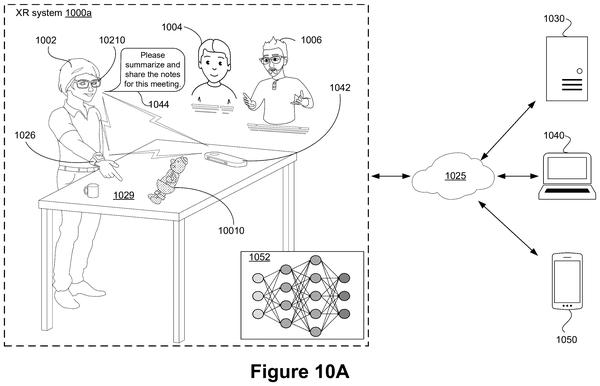
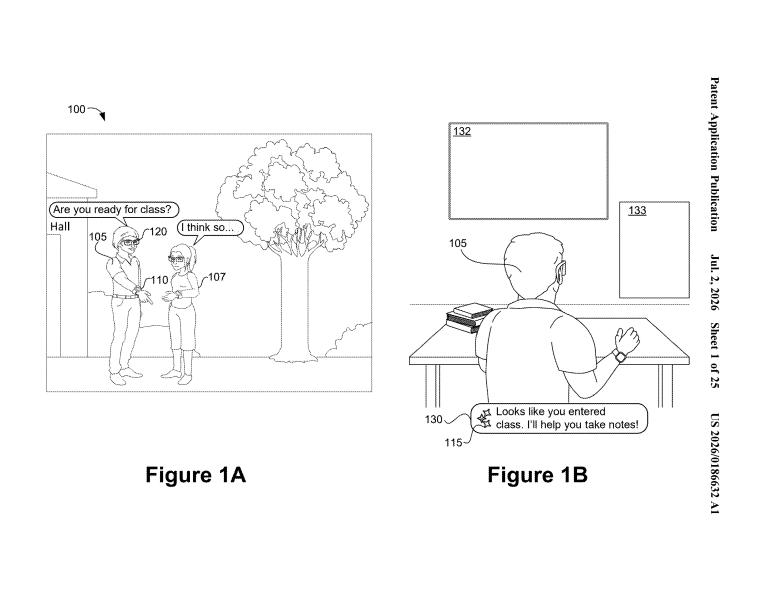
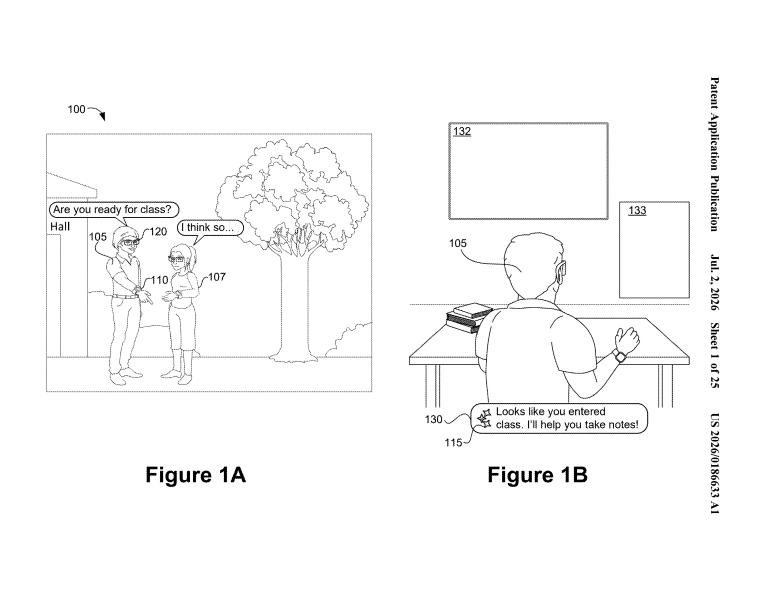
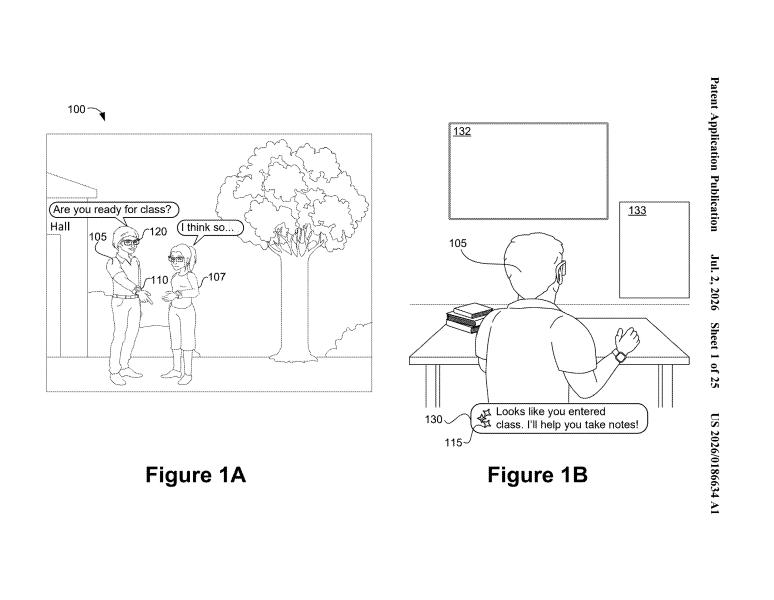
Smart glasses can hear and see what you do all day, and these filings explore what the AI does with that. They cover identifying objects you look at, taking meeting notes, finishing your sentences, translating text, and picking a personality to match your mood.
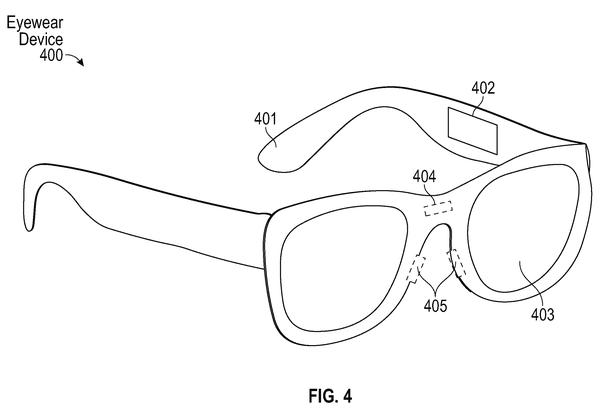
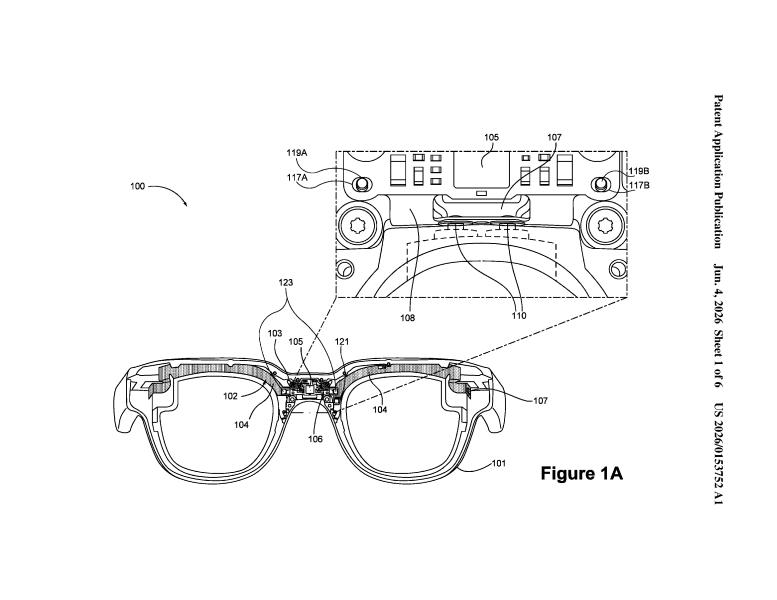
The physical frame of smart glasses has to hold electronics, bend without breaking, and keep out water. These filings cover hinges, nose bridges, seals, and how circuits pass through moving parts.
Looking at something could replace tapping a button, but the glasses have to know exactly where your eyes are pointed. These filings cover gaze tracking, eye-position sensing, and using your eyes to control devices or cameras.
Taking photos and video from a pair of glasses means fitting camera parts into a very small, wearable frame. These filings cover lens mounts, camera housings, shared photo features, and live-streaming controls.
Smart glasses need fast focus shifts to keep virtual images sharp as your eyes move. This patent removes the mechanical parts that slow that down, letting the lens adjust through voltage changes embedded in the barrel itself.
Display sharpness on compact frames gets a boost from distributed optics: multiple narrow cameras feed into a single stitched output, compensating for the size constraints that force small individual lenses.
Wearer's microphones become a private channel to nearby listeners' earbuds, solving the noisy-environment speech problem without requiring the wearer to shout or repeat themselves.
Smart glasses that isolate and amplify a single voice in noise would let wearers function in loud environments without removing the device, extending where the hardware stays useful.
Keeping raw camera feeds from leaving the device hinges on moving object recognition onto the sensor itself rather than routing data to offboard processors, which this filing demonstrates is technically viable for AR glasses.
Smart glasses could filter audio by detecting where the wearer is looking, turning head position into a cocktail-party filter that requires no manual adjustment.
Among the hardware challenges here, optics, hinges, fit, this patent shifts focus to the software layer: making AI confidence and reasoning visible to users in real time, not just surfacing the answers themselves.
Wake-word handling relied on external pairing until now. Body-contact electrodes let glasses transmit to nearby devices without radio protocols, removing the Bluetooth negotiation step entirely.
The tracker's voice-plus-gesture wake word handling thread now has a physical layer: Meta is moving microphone control off the software stack entirely, making privacy guarantees that survive even if the main processor is compromised or remotely altered.
The gesture-control layer now separates speed from distance: a slow rub moves one item, a fast swipe jumps several. This lets users navigate dense menus without a physical screen.
Smart glasses that unlock via biometric data need the fingerprint or face scan stored completely separately from the main processor, preventing any app or software exploit from reaching it.
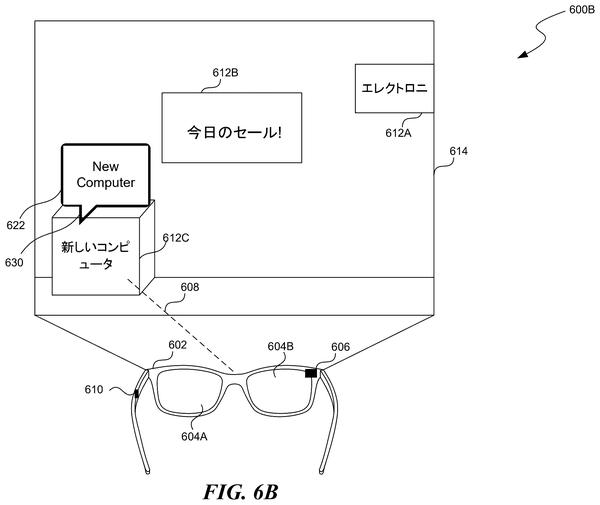
Smart glasses that pre-translate foreign text in your field of view eliminate the lag between spotting a sign and understanding it, solving a key friction point for travelers in non-native-language environments.
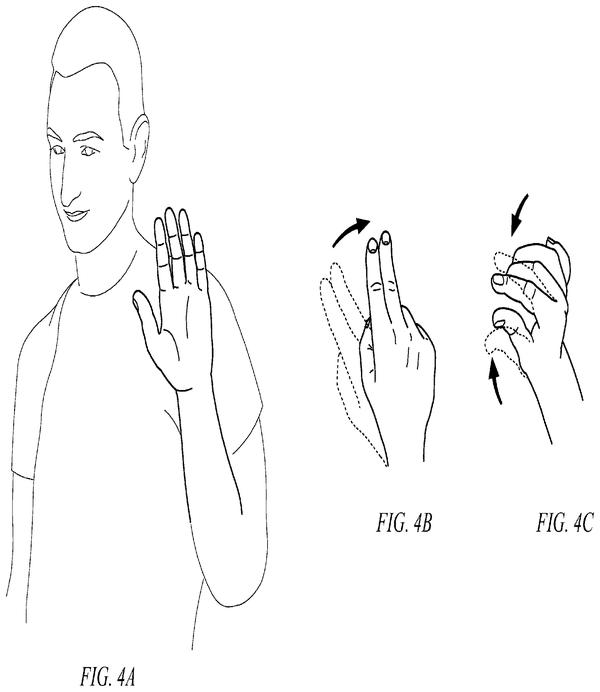
Recognizing gesture sequences rather than single movements lets the headset distinguish intentional commands from accidental hand motions like scratching, reducing the false triggers that plague current AR glasses.
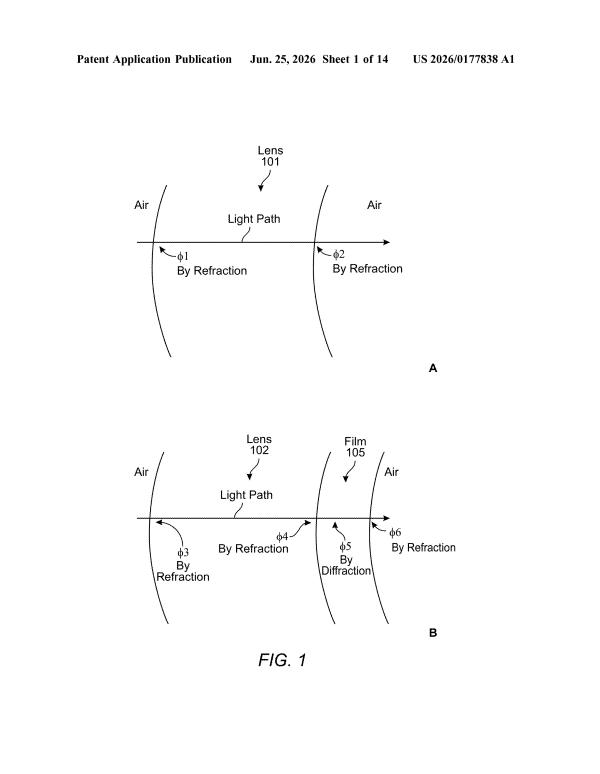
Display visibility plagued earlier designs through conductive grid patterns etched into lenses. This filing proposes transparent conductive coatings shaped to remain optically invisible while carrying power and signals to embedded components.
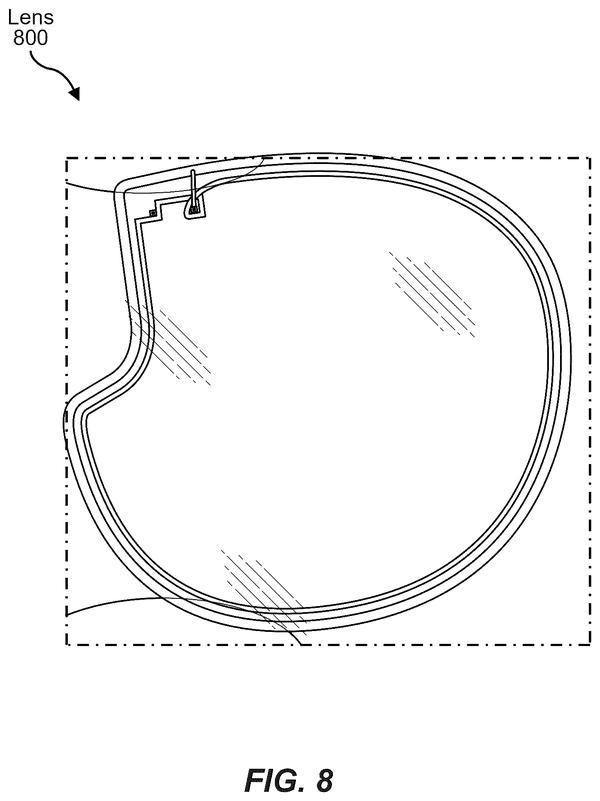
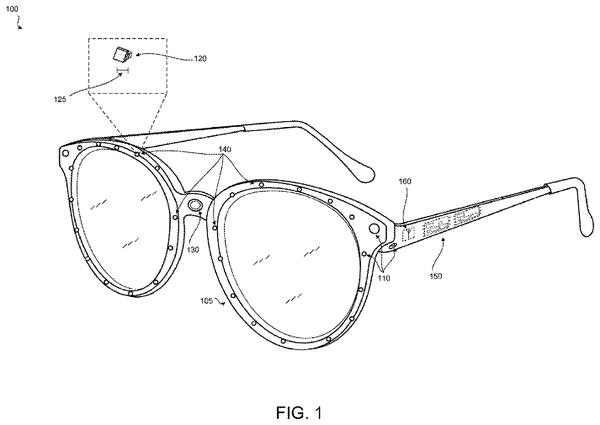
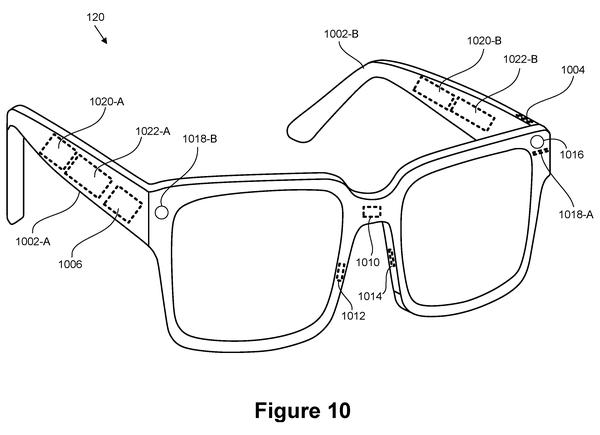
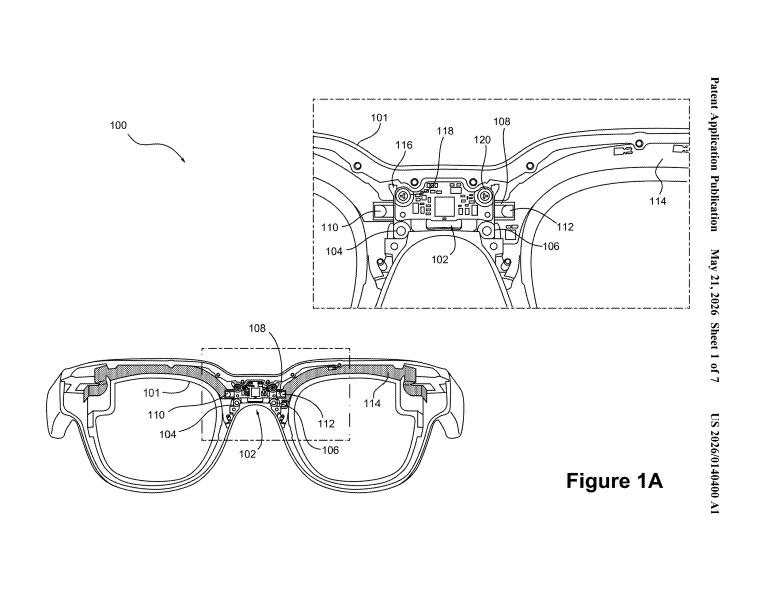
Shrinking the camera module down to fit behind temple arms means ditching the protective barrel that makes traditional optics bulky. Exposing the front lens trades sealed durability for the compact footprint smart glasses actually need.
Sharper AR display focus without mechanical complexity means lighter, more durable headsets. The shape-memory wire approach eliminates moving parts that traditionally fail in hinged, portable devices.
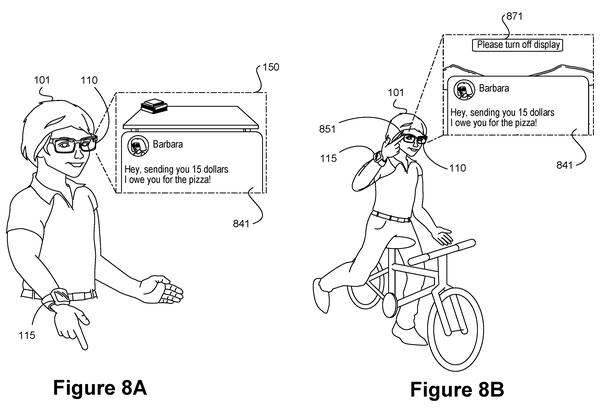
Voice-plus-gesture wake word handling gets a practical refinement: the system can now suppress the display while staying responsive through audio, letting users keep the glasses active in social settings without the visual distraction of an active screen.
Eye-tracking interprets where the wearer is looking as a command input, letting the glasses respond to gaze alone without voice or hand gestures. This extends the wake-word problem into a broader input layer, moving interaction away from external triggers.
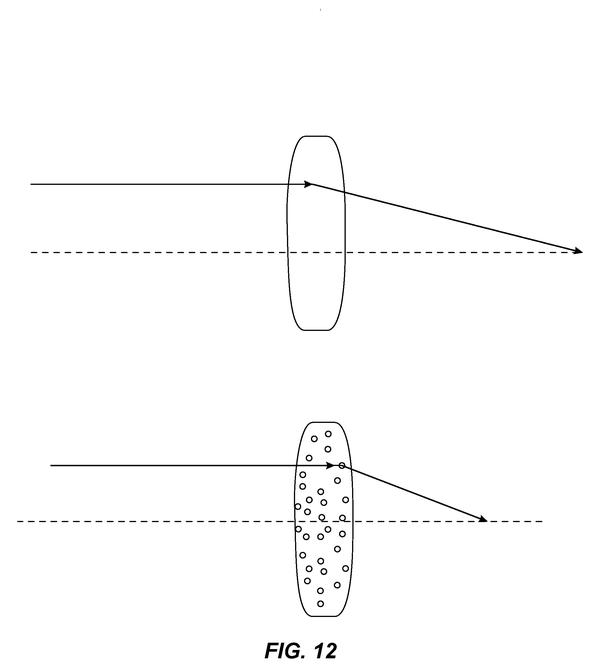
The display alignment work so far has relied on thick lenses to bend light correctly. This filing shifts that burden to the material itself, using crystal particles in polymer to hit the same optical power at half the thickness.
The voice-plus-gesture wake word handling strand now extends beyond the glasses themselves: Meta is routing AI responses away from on-device speakers to paired wearables, solving the privacy friction of public audio replies.
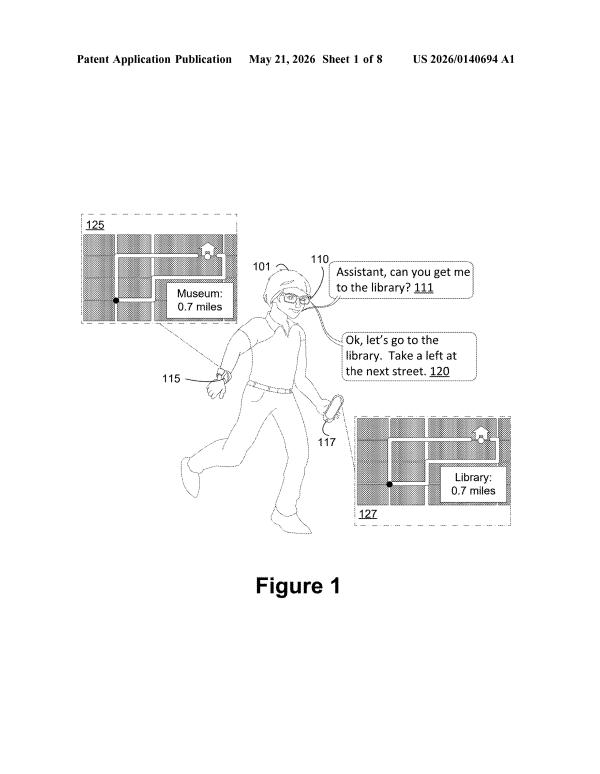
The glasses-watch pairing suggests Meta is exploring how to offload display duties from the eyewear itself, letting the watch handle instruction delivery while cameras on the frame stay focused on scene understanding and task verification.
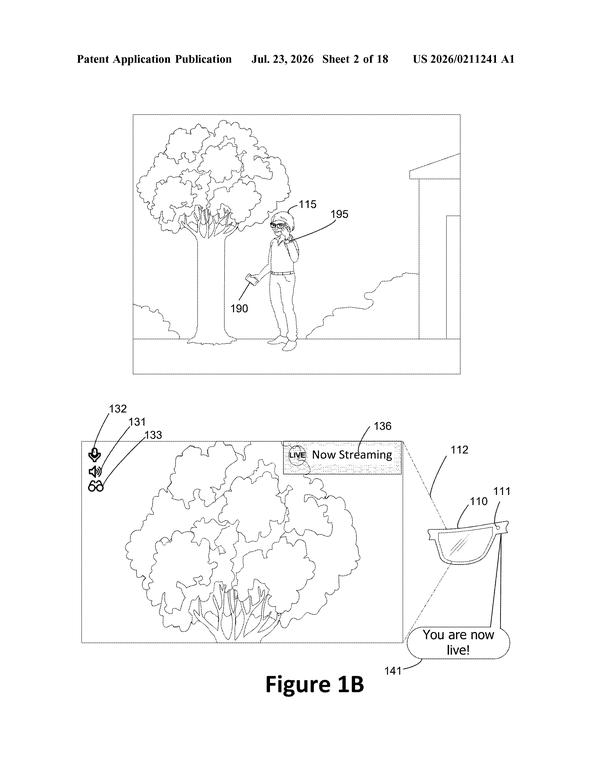
Voice-plus-gesture wake word handling now extends to livestream events: distinct audio cues signal connection drops, viewer joins, and incoming messages without requiring screen checks.
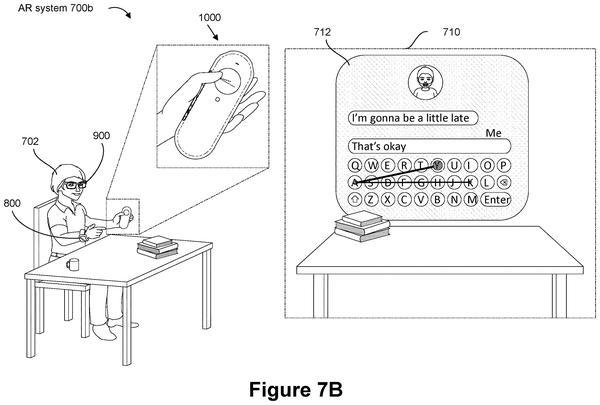
Silent activation removes the need to say wake words in public, shifting from voice-plus-gesture handling to wrist-based muscle signals that work without audio cues.
A camera trigger tied to biometric drop-offs lets the glasses capture workout moments without explicit user input, adding accountability mechanics to the fitness-tracking angle of the broader glasses platform.
Within gesture-based wake word handling, this filing pivots from voice plus hand signals to wrist-anchored buttons, giving users a fixed target to tap rather than tracking movement in open space.
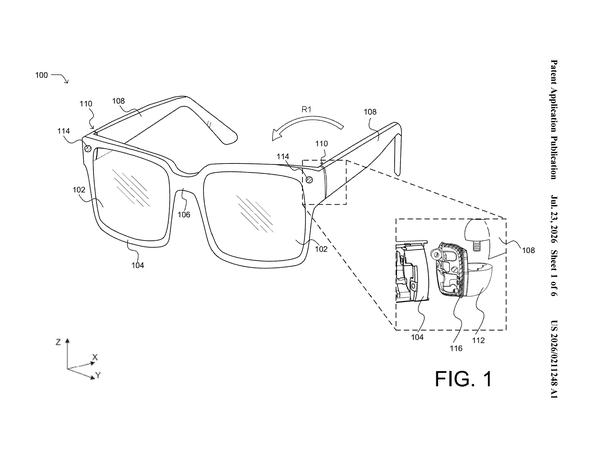
A wiper gasket around the hinge joint blocks water and dust from entering the frame cavity during arm flexing, protecting internal circuits from moisture damage during outdoor use and repeated folding.
Smart glasses that wake on smartwatch input rather than voice or gesture alone would let users trigger the camera without hand gestures or speaking, filling a gap when those methods aren't practical.
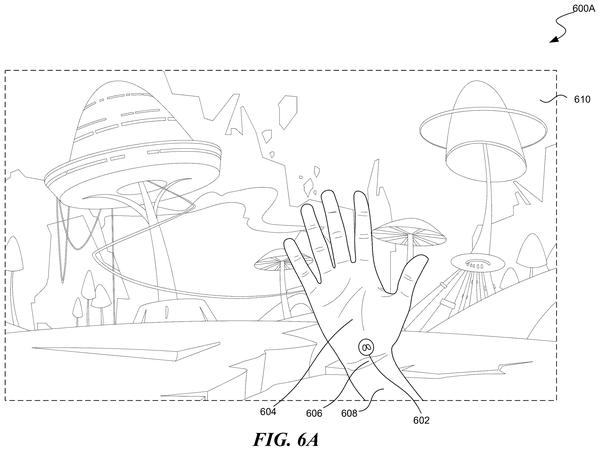
Wrist-worn sensors now let users adjust volume through pinch-and-twist motions without touching the frames or speaking commands, moving past voice-plus-gesture wake word handling into continuous hand control.
The battery connector problem has been implicit in glasses design all along: if users can't swap power reliably, the product fails in daily life. This filing solves it with a self-aligning pack, removing a friction point that could otherwise kill adoption.
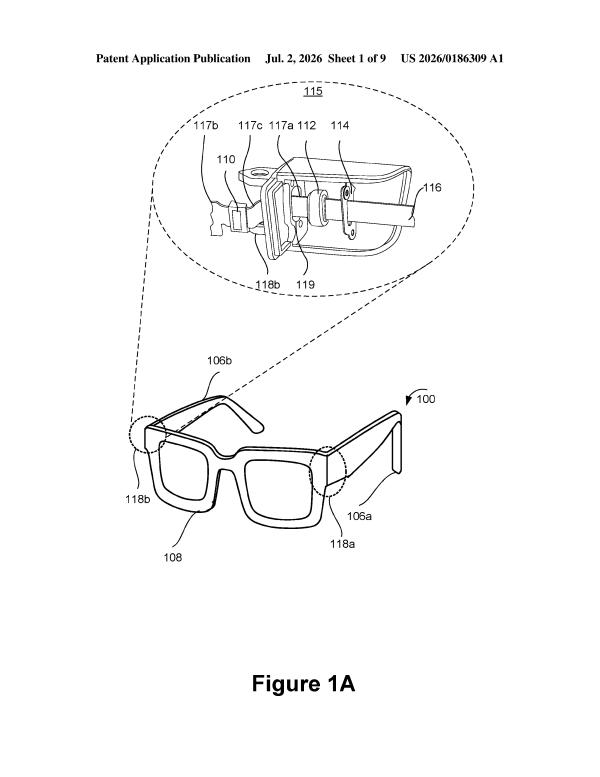
Smart glasses that fold repeatedly need their internal wiring to survive thousands of bend cycles without cracking. Meta's approach seals the circuits at hinge points to prevent the connection failures that would otherwise kill the device.
Voice-plus-gesture wake word handling gets a companion: remappable physical controls mean users can configure button and touch functions instead of accepting factory defaults, freeing up interaction patterns when voice alone won't work.
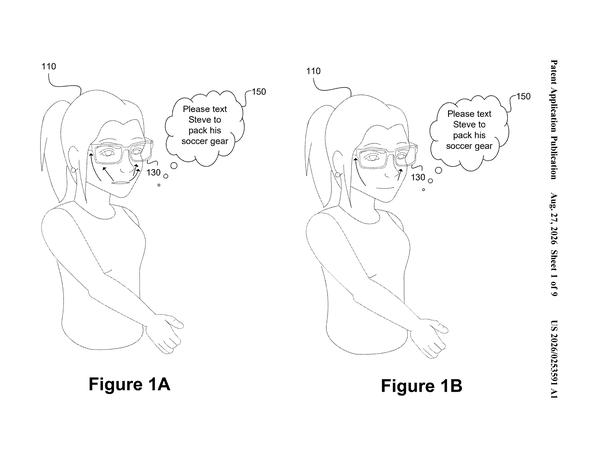
The assistant's voice problem gets concrete: how does it actually speak for you when you can't speak yourself? This filing sketches the mechanical answer, listen, generate options, let you pick one, play it back.
Keeping the AI awake constantly would kill the battery. This filing describes a two-tier sensing approach that lets glasses run in low-power mode until real-world events warrant full activation.
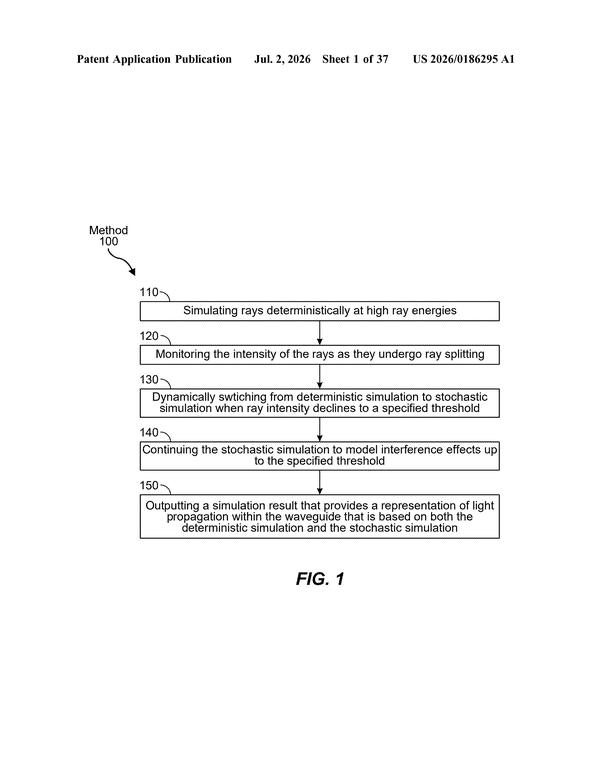
Waveguide light simulation cuts computational cost by tracking fewer ray paths without sacrificing accuracy, speeding up the design cycle for see-through displays that need to overlay crisp graphics on the real world.
Smart glasses that capture and process speech during meetings confirm Meta's push toward a voice-first assistant, one that doesn't need you to ask for help, just listens and delivers structured output like summaries and tasks.
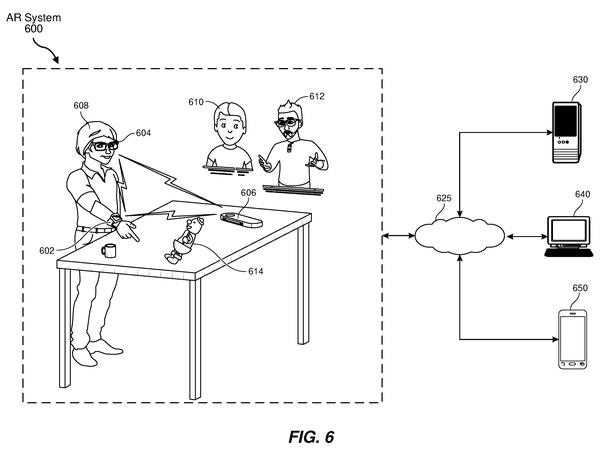
Multiple wearers' camera feeds automatically stitch into a single composite image through local wireless handshakes, eliminating manual photo collection at group events and confirming Meta's push toward collaborative capture workflows.
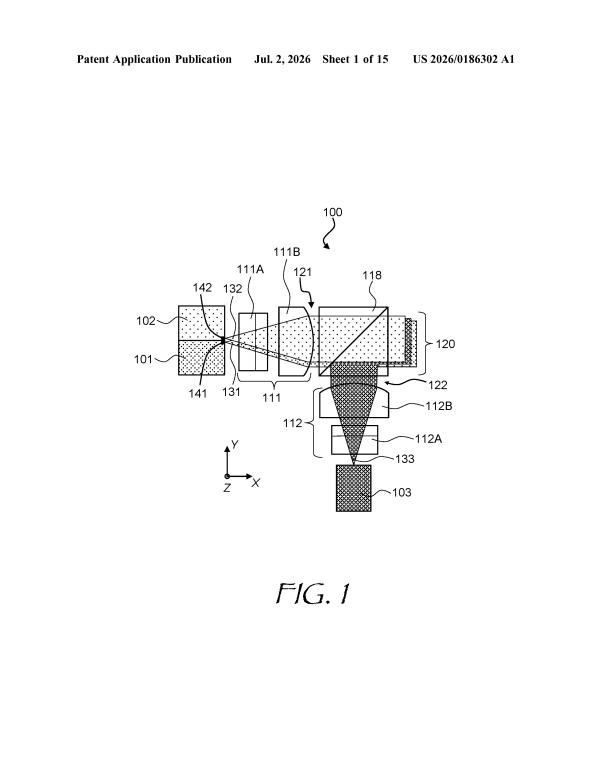
The glasses need to project colors onto your eye, and that means fitting three separate lasers into a space barely bigger than a pinhead. This patent solves the engineering problem of combining red, green, and blue beams without losing brightness or focus.
Knowing what emotional state a user is in requires continuous audio monitoring that maps voice patterns to context, location, activity, time, so the assistant can recognize mood shifts and adapt its responses accordingly.
Smart glasses need an AI that shifts tone and expertise mid-conversation instead of sounding the same regardless of what you're asking. This filing shows how Meta would route requests to different AI personalities based on what the wearer says.
The assistant needs to actually see what you're looking at outdoors to work reliably. This filing solves a core blocker: keeping virtual information readable in bright sunlight so the glasses can function as designed.
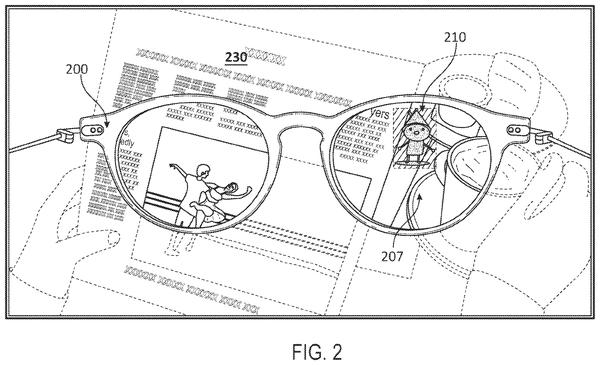
Correcting your vision while displaying AR content requires either custom inserts or accepting blur. This filing embeds the holographic display directly into prescription lenses, letting one lens do both jobs simultaneously.
A single molded piece that holds the camera rigid eliminates the calibration drift that would otherwise degrade the headset's spatial awareness as glasses flex and age in daily use.
Smart glasses that predict what you're asking could surface answers through the device's display or speaker before you finish the question, speeding up how fast you get information.
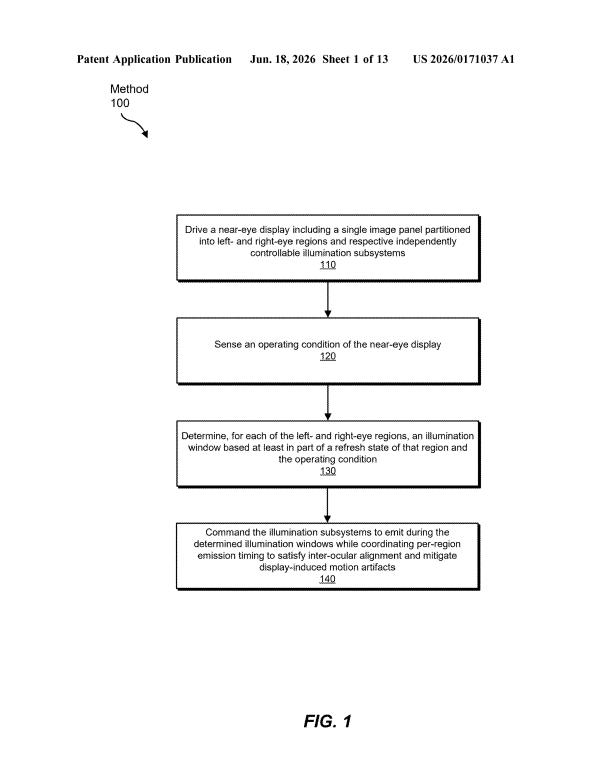
The glasses need sharp motion perception to feel natural and avoid nausea. This filing solves that by lighting each eye's half of a single screen at different moments, keeping motion blur from ruining the sense of presence.
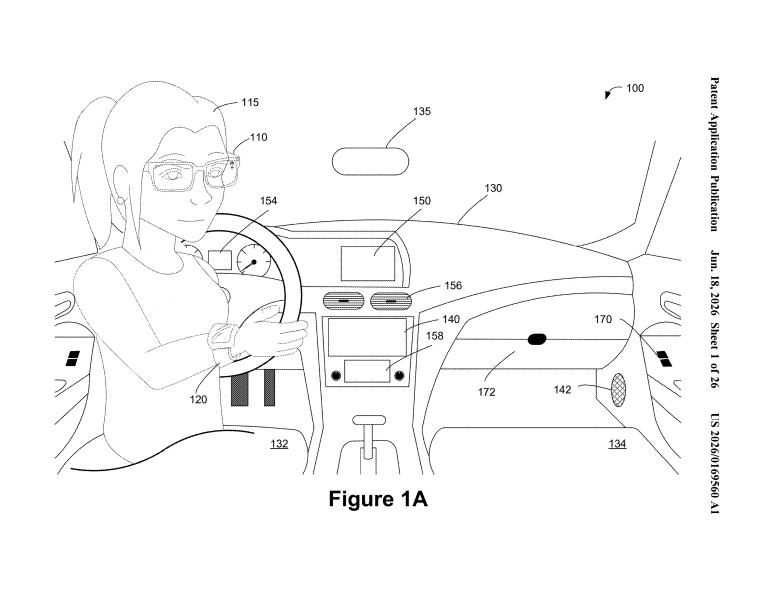
Controlling in-car systems through gaze and gesture removes the need for drivers to look away from the road or keep their hands on physical controls, extending the assistant's reach into vehicle interfaces.
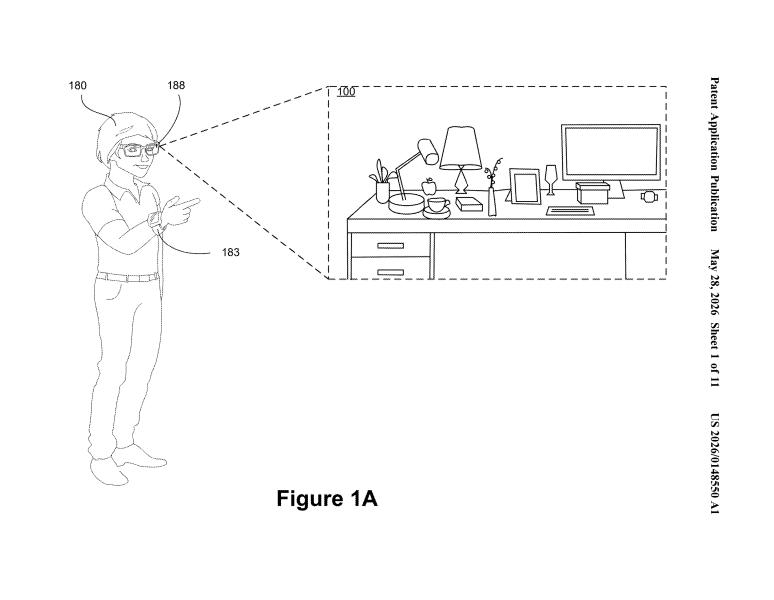
Eye-tracking lets the glasses know what you're looking at without you pointing or speaking, reducing friction between noticing something and getting information about it.
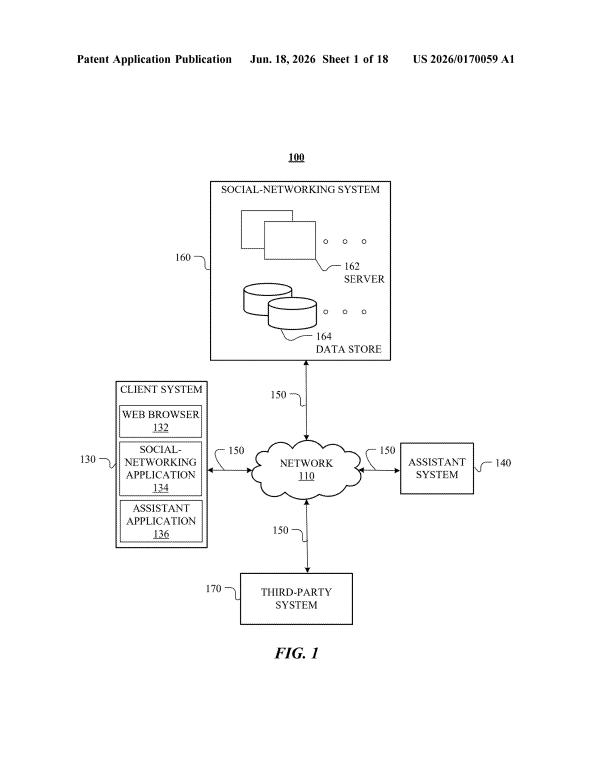
The assistant needs to know what you're pointing at when you ask about it. This filing shows how gesture and speech data merge into a single command, so glasses can ground your words in what you're actually looking at.
Gesture recognition across sensor types requires separate training for each one. This patent cuts that work by having one trained sensor model teach the others what it learned.
Polarized-light cameras embedded in the frame let the glasses track where you're looking without the bulk of traditional eye-tracking sensors, making the device thinner and less visibly instrumented.
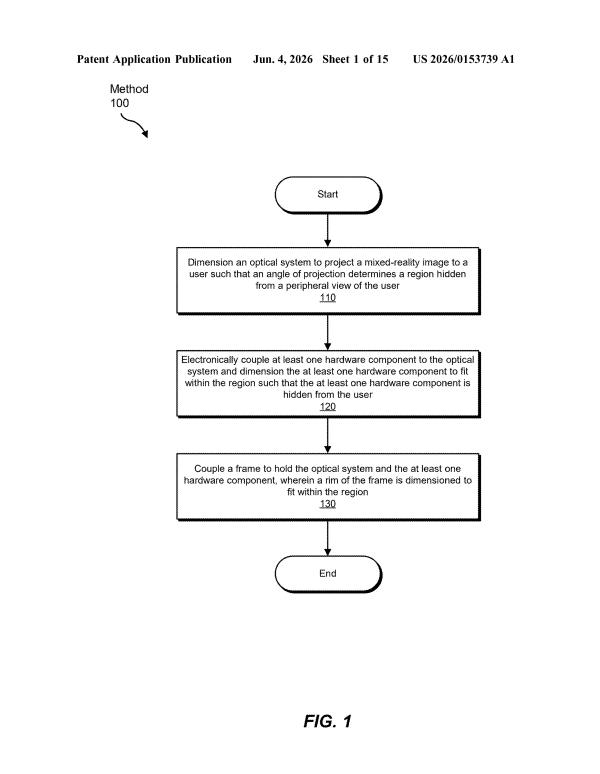
Positioning displays at an angle lets the optical stack shrink vertically, moving thick components into the peripheral blind spot so the device reads as regular eyeglasses rather than a visible headset.
Smart glasses need to show you sharp detail where you're looking while watching the periphery for gestures and movement. This dual-resolution approach lets one display do both without draining the battery, making always-on wearables feasible.
The glasses need to know which object you're talking about when multiple candidates are in view. This filing describes how they ask you to pick the right one from a visual menu instead of guessing wrong.
Smart glasses need optics aligned to fractions of a millimeter or the AR image degrades. This patent sketches a two-stage assembly method to hit those tolerances consistently during manufacturing.
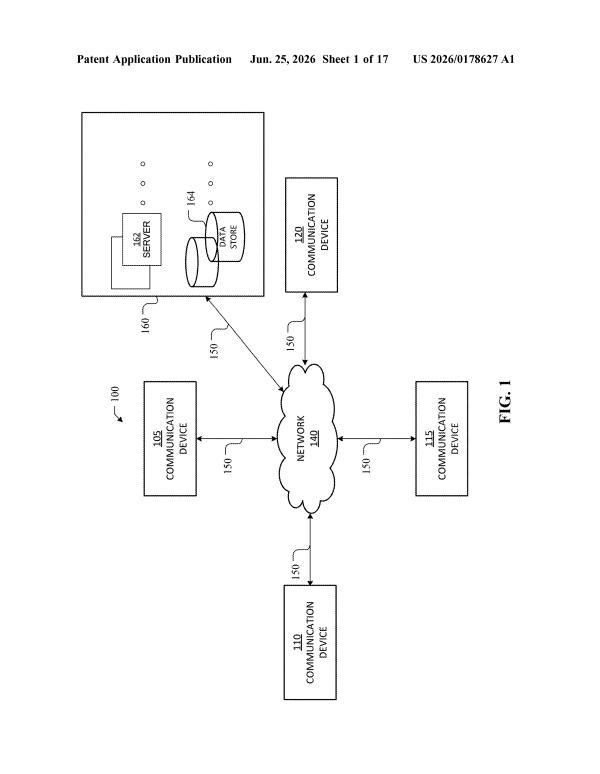
Preventing duplicate responses from multiple wearables requires knowing which device is actually positioned to help. This patent solves that by letting devices check each other's state before answering a wake word.
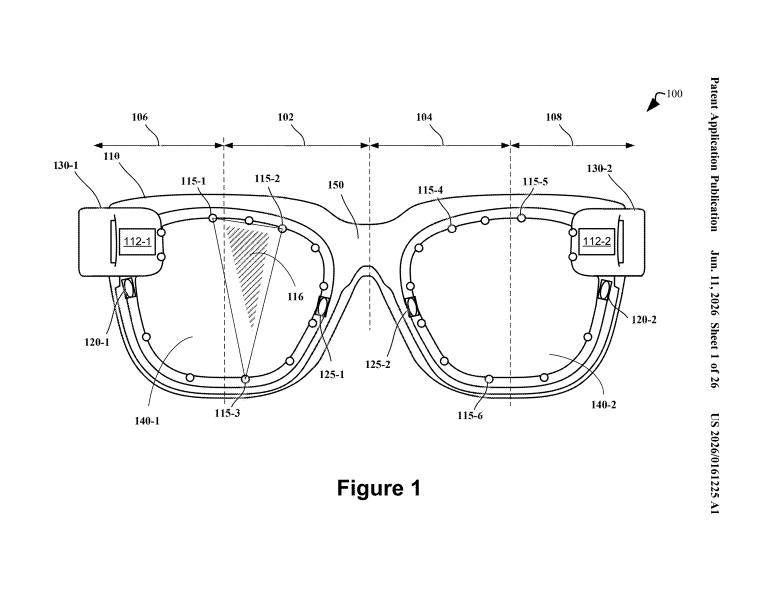
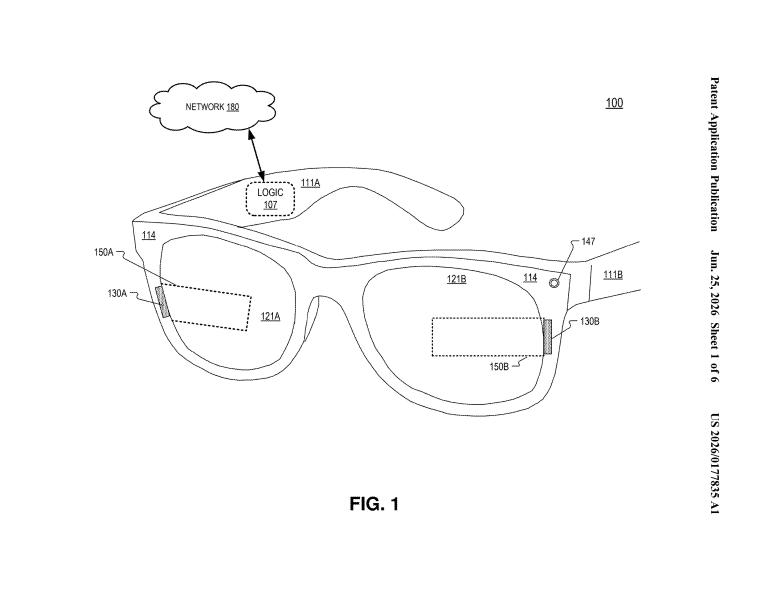
A nose-bridge sensor that detects when the left and right displays drift apart keeps the dual-screen illusion from collapsing into eye strain, solving a basic physics problem that kills the entire AR experience if left unchecked.
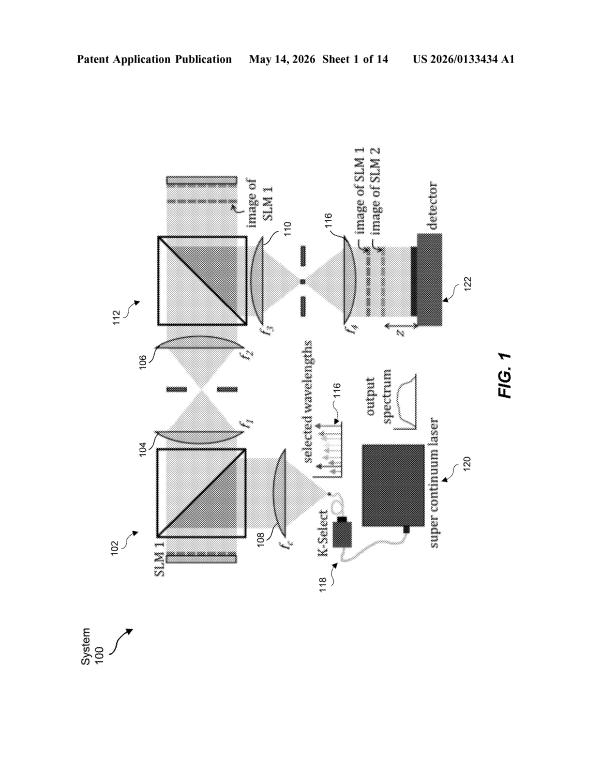
Wearable AR glasses need displays sharp enough to read without eye strain. This patent's multi-wavelength approach reduces the grainy flicker that makes holograms unwatchable for long stretches.
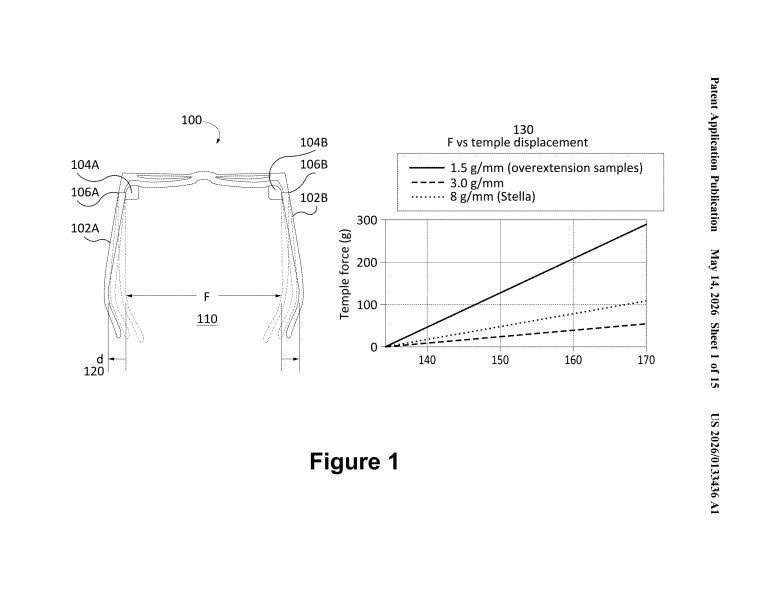
To stay wearable all day, Meta's glasses need hinges that survive the repeated stress of battery-heavy arms. This filing adds a two-pivot design that lets the frame flex without snapping the electronics inside.
A rotating nose pad that locks into preset angles solves a physical constraint: heavy AR frames slip on different face geometries, so a one-size-fits-most bridge lets users dial in fit without custom manufacturing.
Keeping a tiny camera lens sharp and stable on moving glasses requires the metal housing to absorb heat and impact without shifting the optics even slightly.
Questions readers ask
What kinds of Meta smart glasses patents does this tracker include?
It collects Meta filings on smart glasses hardware and sensing, including camera lens shielding, hinge and nose bridge design, display alignment fixes, and systems for combining gaze, gesture, and voice into one instruction. These are patent applications, not confirmed products, so they show engineering direction rather than a shipping roadmap.
Does this mean Meta is about to release new smart glasses features?
No. Patents describe ideas a company wants to protect, not features it has committed to shipping. Several filings here, like wake word arbitration and gaze-based disambiguation, suggest research into how glasses could decide what you mean, but there is no guarantee any of it reaches a retail product.
Why do so many filings focus on the nose bridge and hinges?
AR glasses pack batteries, sensors, and displays into a frame that still has to fit comfortably and align two tiny screens correctly. Several filings put sensors and charging hardware right into the nose bridge and hinge area, since a small shift there can throw off display alignment or make the glasses hard to wear.
How does gesture and voice control fit into this watchlist?
A few filings describe systems that read a gesture, like pointing, alongside a spoken command, so an assistant can figure out which object you mean without extra clarification. Related filings cover disambiguation prompts and wake word arbitration between glasses and wristbands, all aimed at making multi-signal input feel coordinated instead of confusing.
Want this weekly breakdown for a company we don't cover?
Patentlyze Pro →
The weekly email: the best of Big Tech's filings, in plain English. Free.