
Microsoft Patents Meeting Replays That Skip to the Parts Your Job Cares About
Miss a meeting and you get the whole recording, whether or not most of it concerns you. A new Microsoft patent application describes software that cuts the video down to the clips your role says you need.
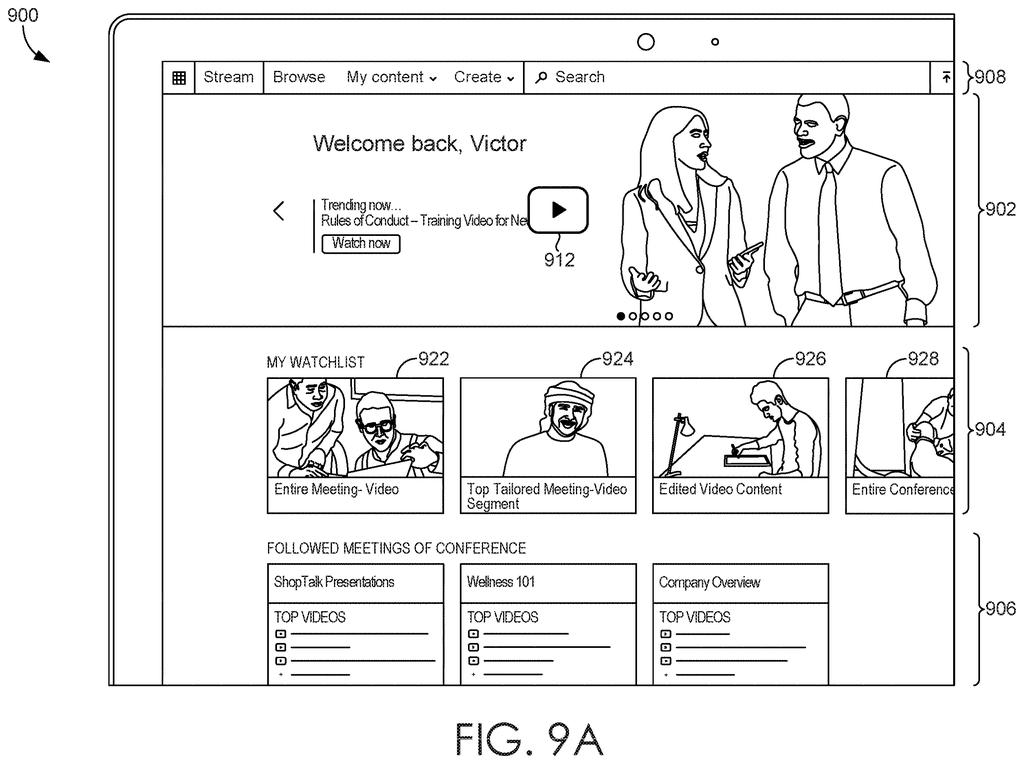
What Microsoft's personalized meeting highlights do
Right now, when you miss a meeting, you usually get the entire recording: a long video where only a small part has anything to do with your job. You scrub back and forth, guess at timestamps, and often give up.
This Microsoft patent application describes a system that cuts the recording down for you. It breaks the video into clips, then picks the ones most likely to matter to you, based on things like your role, your preferences, and what you liked or skipped before. Say a keynote covers a mixed-reality headset: a project manager on that headset team would be offered that stretch of the speech instead of the whole talk.
The highlights would be listed in the meeting app, ranked, and you could pick one to watch. Two people could get different highlight reels from the same meeting.
… determining, from the meeting-video content and based on a meeting-video tailoring machine learning model, video data and user data, wherein the meeting-video tailoring machine learning model is trained based on meeting-video tailoring features; …
Translation: An artificial intelligence model analyzes meeting videos and user details using specific learned features.
How the AI scores and ranks meeting clips
The system works in two stages. First, a clip-generator model (software trained to chop a recording into sensible pieces) analyzes the video. It looks for silences, changes in who is speaking, topic shifts in the transcript, scene changes, and text or objects on screen, then merges those signals into clips.
Second, a tailoring model (a separate machine-learning model) decides which clips belong in a highlight for a particular person. It draws on three kinds of information:
- Video data: emotion, volume, pitch variation, silence, question types, repeated content, and who is speaking
- Meeting data: the date, speaker, planned and actual length, and sponsor
- User data: your identity, role, preferences, feedback, and time zone
Segments are ranked with an analytical hierarchy process (a standard way to weigh several criteria against each other), which adds up weighted scores for things you like and weighted costs for things you would rather avoid. Each segment can carry a transcript, the speaker's name and role, and a link to their bio.
The claims center on generating at least two tailored segments from a recording and storing them where the app can reach them. Ranking and clip generation appear in narrower claims. The filing also describes thumbs up or down surveys and tracking what you skip to refine your profile.
The tailored meeting-video segment corresponds to a portion of meeting-video content that is programmatically generated based on features associated with video data, meeting data, and user data.
Translation: This clip is automatically created based on data from the video, the meeting, and the specific user.
Why shorter replays could change your workday
If this ever shipped in a meeting app, catching up could take minutes instead of an hour. You would open a recording and see a short list of highlights chosen for your role, while a colleague in a different job saw a different list from the same meeting. The filing also says the approach cuts how much video gets streamed, since a few clips take fewer computing resources than a full recording.
That matters most for the recordings people rarely finish: long all-hands calls, training sessions, and conference talks. The filing names training and trade show content as examples. It is a patent application, so it shows what Microsoft has described on paper, not what it plans to ship.
Microsoft's 42nd filing we've tracked in Enterprise AI since May adds to a run that includes one on modernizing old code and one that reads your screen.
The trade here is simple: to pick your highlights, the system has to know a lot about you. Your role, your time zone, your past feedback, and even what you skip all feed the model, and it also scores a speaker's emotion from their voice and face. That is a lot of profiling for a meeting recap.
The second cost is a miss. A ranking tuned to your job could bury the one off-topic moment that mattered, such as a reorganization announced at the end of a product talk. The filing softens this by listing the full recording next to the highlights in its sample screens.
With that safety net, the trade reads as worth it for long recordings nobody finishes. Companies would still need to decide how much profiling of their own employees they are comfortable with.
Get our take in your Top Stories
Liked this breakdown? Add Patentlyze as a preferred source on Google, and our plain-English take shows up more often in your Top Stories the next time Microsoft patent news breaks.
There are more where this came from
We read every patent application Big Tech publishes and send you the ones worth knowing. Plain English, free, every week.
The drawings
20 drawing sheets from US 2026/0313012 A1 · click any drawing to enlarge


Want this weekly breakdown for a company we don't cover? Patentlyze Pro →
Be the first to weigh in