
Microsoft Patent Routes AI Customers to Better-Matched Server Instances Based on Usage
When you ask an AI to transcribe audio one minute and analyze an image the next, the underlying hardware you're running on may not be optimized for that mix at all. Microsoft is filing a patent for a system that reassigns customers to whichever server setup best matches how they actually use the AI.
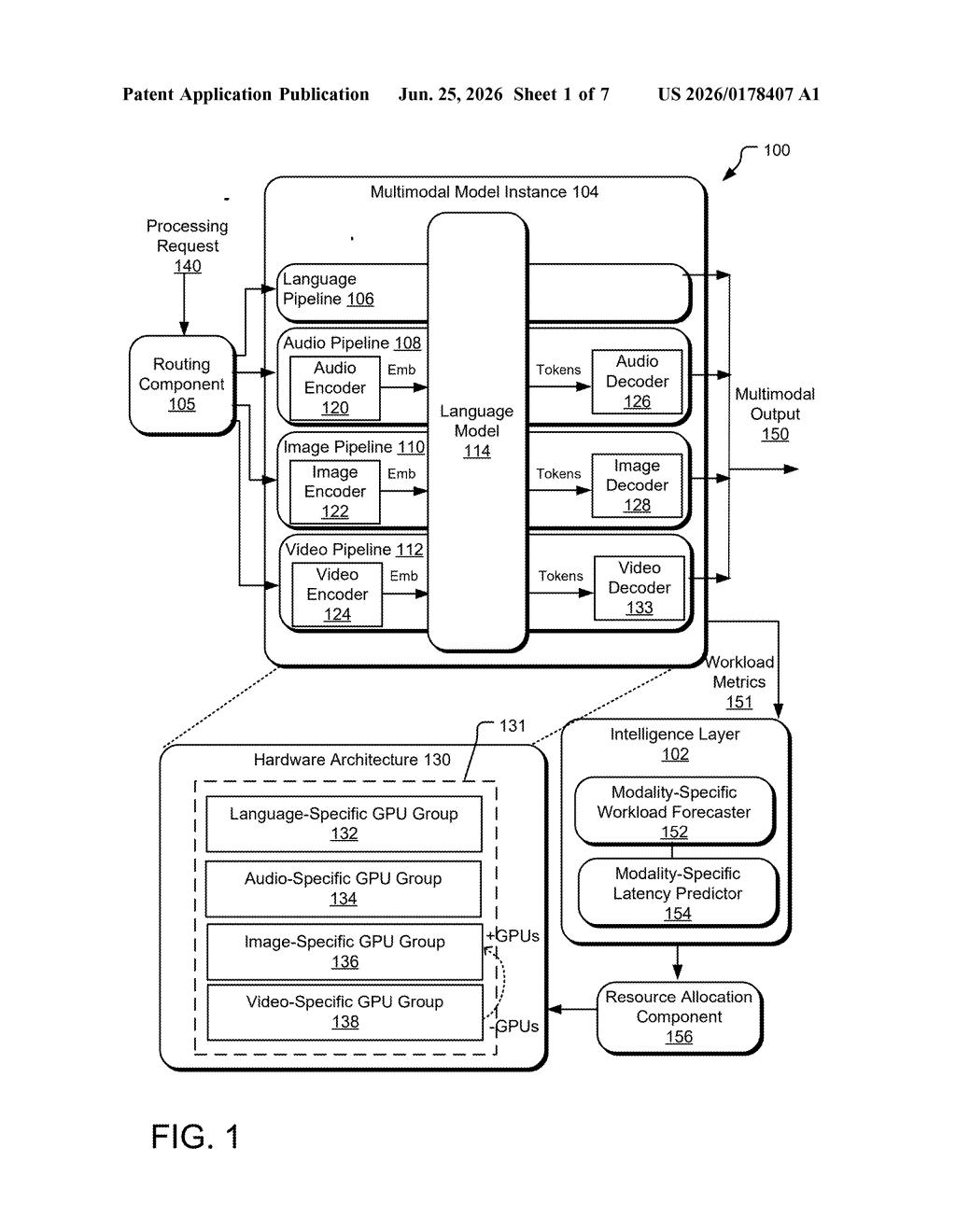
What Microsoft's AI traffic-sorting system actually does
Imagine a hotel that has three types of rooms: ones optimized for business travelers, ones for families, and ones for solo tourists. When you book, they guess which category you belong to. But if they later realize you're actually a family and put you in a business room, everyone loses out.
Microsoft's patent applies the same idea to AI services. When a company or developer uses Microsoft's cloud AI, they're assigned to a particular group of servers. But different customers use AI very differently: some mostly send text, others send lots of images or audio. The servers are tuned to handle specific mixes of those types of requests.
This system watches how a customer actually uses the AI over time, predicts what their future usage will look like, and then checks whether a different server group would be a better fit. If so, it moves them over automatically, with no action required from the customer.
How the platform predicts and reassigns model instances
The patent describes an "intelligence layer" sitting inside Microsoft's Model-as-a-Service (MaaS) platform, which is the infrastructure that lets businesses access large AI models via the cloud without running their own hardware.
Modern AI models are multimodal, meaning they handle multiple types of input: text, images, audio, and so on. Each of those input types (called modalities) requires different kinds of processing power. Microsoft's approach is to spin up multiple copies, or instances, of the same AI model, but configure each instance's hardware differently depending on the expected workload mix.
The intelligence layer does three things:
- Tracks which types of requests each customer sends over time, measured in tokens (the basic unit of AI input/output)
- Predicts what ratio of text, image, and audio requests that customer will likely send in the near future
- Compares that predicted ratio against the hardware configuration of every available instance, then reassigns the customer to whichever instance is the closest match
The similarity comparison uses a compute ensemble ratio, which is essentially a fingerprint of how a given server instance distributes its processing power across different input types. When a customer's predicted usage profile is a closer match to a different server's fingerprint, they get moved.
What this means for Microsoft's cloud AI business
Cloud AI is expensive, and a big reason is wasted compute: servers that are tuned for image processing sitting idle while customers only send text, or vice versa. This kind of dynamic reassignment, if it works well in practice, could let Microsoft pack more customers onto the same hardware without degrading performance, directly improving margins on its Azure AI offerings.
For enterprise customers using Microsoft's AI services, the practical upside is more consistent response quality without having to manually tune any settings. The system is designed to be invisible. That said, this patent covers infrastructure plumbing rather than any user-facing AI capability, so don't expect to see it mentioned in a product announcement.
This is a solid infrastructure patent with a clear commercial motive: Microsoft wants to squeeze more efficiency out of the server farms powering its AI products. It's not flashy work, but the problem it solves is real and the approach is sensible. Whether it actually ships as described, or gets absorbed into a broader resource-scheduling system, this type of patent tells you Microsoft is thinking seriously about the unit economics of running large multimodal models at scale.
There are more where this came from
We read every patent application Big Tech publishes and send you the ones worth knowing. Plain English, free, every week.
Want this weekly breakdown for a company we don't cover? Patentlyze Pro →