
Microsoft Patents a Mechanical System That Keeps Foldable Screens From Creasing When You Fold Them
Folding a screen sounds simple, but the physics of bending a rigid display around a hinge without wrinkling or cracking it is genuinely hard. Microsoft's new patent describes a small mechanical system that shifts the display's frame out of the way as you fold the device.
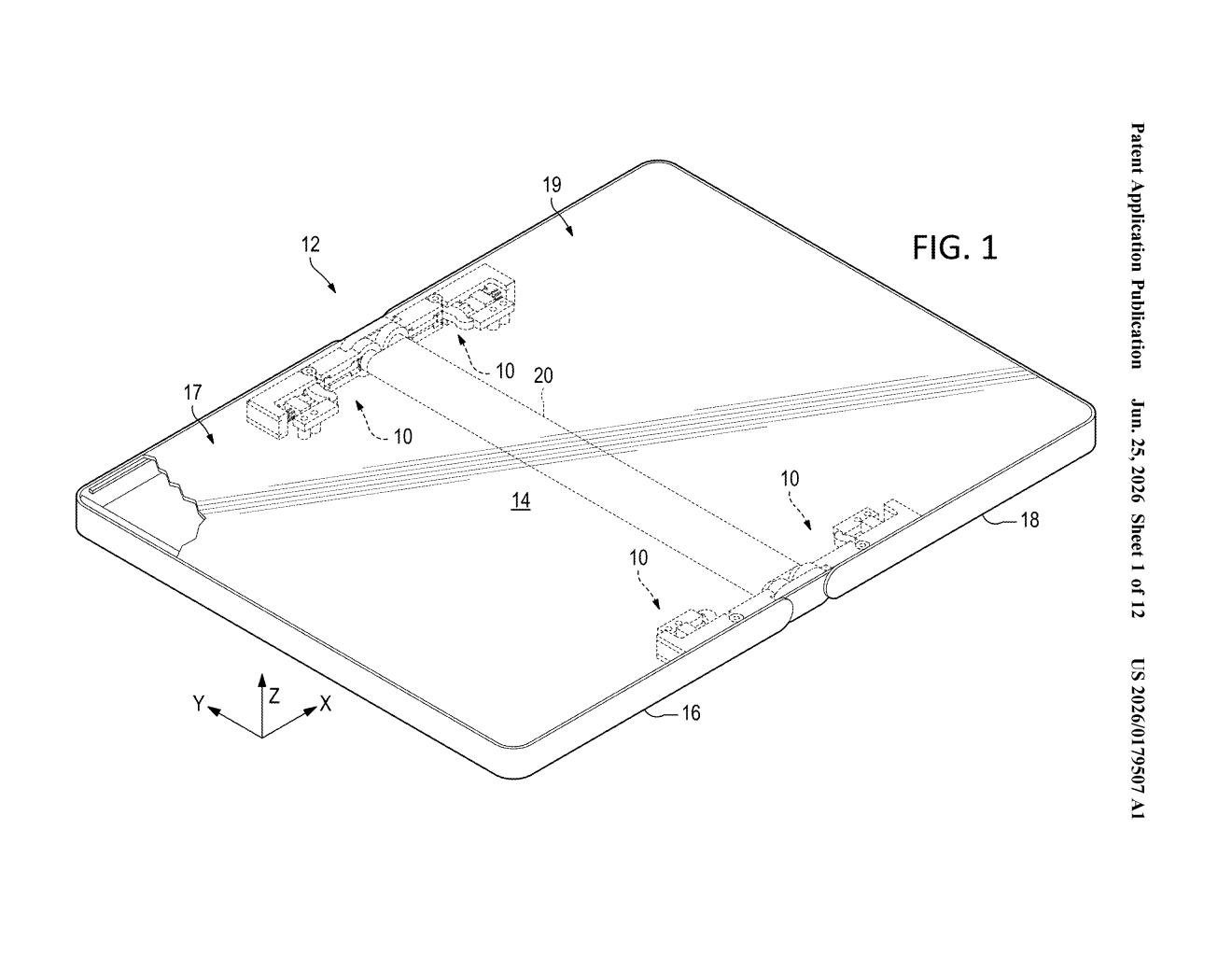
What Microsoft's foldable screen frame trick actually does
Imagine folding a piece of paper in half: the outer edge has to travel farther than the inner edge. A flexible phone or laptop screen has the same problem. When you fold the device, the display panel needs to move slightly to avoid being stretched or crumpled at the hinge. That movement has to happen automatically, in sync with the fold.
Microsoft's patent covers a compact mechanical system that slides one side of the display's frame toward the hinge as you fold the device. It uses a rotating cam (think of an egg-shaped wheel) that pushes a small lever, which in turn nudges the display frame inward. A spring keeps everything pressed together so it responds smoothly and snaps back when you unfold.
The result is that the screen gets a little bit of slack at exactly the right moment, so it bends without fighting itself. It's the kind of invisible mechanism you'd never notice when using the device, which is exactly the point.
How the cam, lever, and follower move the display frame
The patent describes a translation mechanism, meaning a system that converts one type of motion (rotation at the hinge) into another (linear sliding of the display frame).
Here's how the parts work together:
- Cam: A shaft inside the spine (the central hinge column) connects to an egg-shaped rotating piece called a cam. As the device folds, the cam rotates, and its varying-radius surface pushes outward with different force depending on the angle.
- Cam follower: A small piece that rides along the cam's surface, translating the cam's rotation into a pushing force. Think of it like a finger tracing the edge of the egg-shaped wheel.
- Multiplier lever: A pivoting lever that sits between the cam follower and the display frame. The lever is designed so that small movement near the pivot produces larger movement at the far end, essentially amplifying the cam's motion to push the frame a useful distance.
- Biasing element (spring): Keeps the whole chain of parts in contact under tension, so the mechanism works in both directions, pushing the frame inward when folding and allowing it to return when unfolding.
The display-supporting frame is mounted so it can slide on a support structure rather than being rigidly fixed, which is what gives the cam system something to actually move.
What this means for Microsoft's next foldable devices
Foldable screens are still fragile products with a reputation for cracking, creasing, and wearing out at the fold. Most of that damage comes from repeated stress at the hinge point. A mechanism that automatically gives the screen a small amount of slack during every fold cycle could meaningfully extend the panel's lifespan, which is one of the main reasons foldables have struggled to go fully mainstream.
Microsoft has experimented with foldable hardware through the Surface Duo line, and this patent suggests continued investment in the engineering behind folding displays. If this kind of frame-shift mechanism shows up in a future device, it would be one of those details that makes a product feel noticeably more polished without most users ever knowing it's there.
This is genuinely thoughtful mechanical engineering. It solves a real physical problem that every foldable device faces, and the lever-amplification approach is an elegant way to get useful movement from a very small cam rotation inside a thin hinge. It's not flashy, but it's the kind of foundational work that separates durable foldables from fragile ones.
There are more where this came from
We read every patent application Big Tech publishes and send you the ones worth knowing. Plain English, free, every week.
Want this weekly breakdown for a company we don't cover? Patentlyze Pro →