
Microsoft
Microsoft · AI / ML · Filed Jan 31, 2023 · USPTO published Aug 20, 2026 · Aug 20 release
Microsoft Patents Software That Converts Written Text to Speech Using Both the Phone and the Internet at Once
Most voice-reading tools either sound great (but need the internet) or work offline (but sound robotic). Microsoft's new patent tries to get both at once by running two engines side by side and picking the winner.
- Publication number
- US 2026/0245543 A1(US20260245543A1)
- Applicant
- Microsoft Technology Licensing, LLC
- Filed · Published
- Jan 31, 2023 · Aug 20, 2026
- Inventors
- Jinzhu LI, Guangyu WU, Yulin LI, Yinhe WEI, Sheng ZHAO, Kuan CHEN
- Status when we published
- Examiner raised objections; the company can respond
- Document
- 21 claims
- US classification
- 704/260
- Examiner
- CAUDLE, PENNY LOUISE (Art Unit 2657)
- Parent application
- National Stage Entry of PCT/CN2021/089825 (filed Apr 26, 2021)(PCTCN2021089825)
How Microsoft's hybrid voice engine picks its best output
When apps read text aloud to you today, they usually rely on either a cloud server (better voice quality, but needs a connection) or a smaller engine stored on your device (works offline, but often sounds flat and mechanical). There's rarely a middle ground.
Microsoft's patent describes a system that fires up both at the same time. When you ask an app to read something, the system checks whether it already has that audio saved in a cache. If not, it sends the text to a remote server and to the engine sitting right on your device, collects both audio results, and then picks the one that fits best based on a set of rules.
The result you hear could be entirely from the cloud, entirely from your device, or even a blend of the two. The goal is that you get decent audio quality no matter what your internet connection looks like at that moment.
… sends the received textual data to both a remote TTS engine and to a TTS engine in the device; receives speech data from both the remote TTS engine and the TTS engine in the device; and selects or combines, based on a selection policy, the speech data from the remote TTS engine or the TTS engine in the device.
Translation: The software simultaneously requests audio from the phone and the cloud, then chooses the best version to play for the user.
How the selection policy chooses between two audio streams
The patent describes a hybrid text-to-speech (TTS) architecture that coordinates two separate speech engines in parallel rather than choosing one upfront.
Here is the basic flow:
- A user application sends text to the hybrid system.
- The system checks a local cache (a saved store of previously generated audio) to see if that exact text has already been converted. If it has, it just plays the cached audio.
- If the text is new, it simultaneously sends the request to a remote TTS engine (a cloud server capable of high-fidelity, neural-quality voices) and to a on-device TTS engine (a smaller model stored locally that doesn't need internet access).
- Both engines return their audio. A selection policy (a set of configurable rules that weighs factors like network availability, latency, or voice quality targets) then either picks one result or combines parts of both.
- The final audio is handed back to the application.
The patent doesn't lock in a single selection strategy, meaning the policy could adapt based on context: prioritizing the cloud voice when on Wi-Fi and falling back to the device voice when offline or on a slow connection.
What this means for apps that read text aloud to you
Text-to-speech is no longer a niche feature. Screen readers, navigation apps, e-readers, accessibility tools, and AI assistants all depend on it. Right now, developers typically have to pick a lane: build for quality (cloud-dependent) or build for reliability (on-device, lower quality). A system that handles that tradeoff automatically means you get a more consistent experience regardless of where you are or how good your signal is.
For everyday users, the payoff is subtle but real: fewer moments where an app's voice sounds garbled or simply goes silent because the network dropped. Microsoft's approach here fits into a broader pattern of on-device AI processing that many Big Tech companies are pursuing, and you can follow that thread across the latest Big Tech patents covering voice, speech, and on-device AI infrastructure.
Microsoft's 329th filing we've tracked in our Microsoft coverage since May follows work on a physics-based deepfake detector and an AI browsing profiler.
Source: US 2026/0245543 A1 at the USPTO (PDF). Full patent text and figures are in the official publication.
Get our take in your Top Stories
Liked this breakdown? Add Patentlyze as a preferred source on Google, and our plain-English take shows up more often in your Top Stories the next time Microsoft patent news breaks.
Add Patentlyze on Google
One click.
There are more where this came from
We read the new patents from Big Tech, carmakers and more and send you the ones worth knowing. Plain English, free, every week.
The drawings · 8 sheets
8 drawing sheets from US 2026/0245543 A1 · click any drawing to enlarge


More from Microsoft
All 681 Microsoft patents →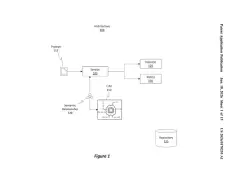
More in AI / ML
All 2,745 AI / ML patents →
Disney
Disney Patents an AI System That Scores How Closely Two Voice Performances Match
Apple
Apple Patents a Siri That Reads Your Photos and Texts Together
Samsung
Samsung Patents an AI Assistant That Adjusts Its Speaking Pace to Match the Server
Samsung