
Adobe Patents an AI That Builds Images From Multiple Reference Photos at Once
Adobe has patented an AI system that can juggle several reference images at once, each playing a different role, and combine them with a text description to generate an entirely new image. It's a meaningful step beyond single-prompt image generation.
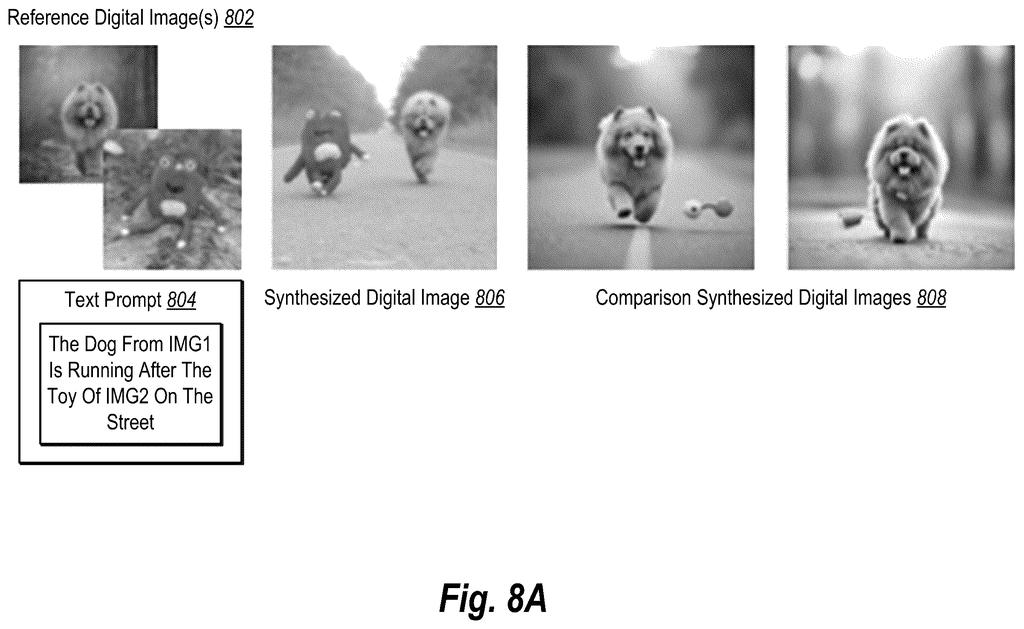
What Adobe's multi-reference image generator actually does
A graphic designer sits down to create a product photo: they have a model's pose from one image, a background from another, and a lighting style from a third. Today, blending all of that into a single new image takes real effort and skill.
Adobe's new patent describes an AI that could handle exactly that task. You feed it several reference photos, tell the system what role each one plays (pose, style, background, and so on), then write a short text description of what you want. The AI reads all of it together and generates a new image that reflects all those inputs at once.
The key idea is the role indicator: a tag attached to each reference image that tells the AI why that photo is there. Without it, the AI has no way to know whether a photo is a style guide or a subject reference. With it, the system can treat each image as its own kind of instruction.
… generating, utilizing an encoder neural network, image patch embeddings from the one or more reference digital images with one or more role indicators for the one or more reference digital images and noise patch embeddings from latent noise; …
Translation: The system converts the reference photos and random noise into digital data tags that define specific visual traits.
How the encoder assigns roles to each reference photo
The patent describes a three-stage pipeline for generating a new image from multiple inputs.
Stage 1: Encoding reference images with roles. An encoder neural network (a system that converts images into compact numerical representations) processes each reference photo. Critically, it attaches a role indicator to each one, a tag that labels its purpose, such as subject, style, or composition. It also converts random noise into noise patch embeddings, which serve as the blank canvas the final image will be built on.
Stage 2: Building a composite embedding. The system combines three things into a single unified representation:
- The encoded reference images (with their role labels)
- The noise embeddings (the blank canvas)
- An encoding of the user's text prompt (the natural language description of the desired output)
Stage 3: Diffusion generation. A diffusion neural network (a type of AI that iteratively refines a noisy image into a clean one, like developing a photograph in a darkroom) takes this composite and the role indicators and generates the final synthesized image. The role indicators travel all the way through the process, keeping the AI aware of why each reference image is present as it builds the result.
The disclosed systems combine the image patch embeddings, the noise patch embeddings, and a case prompt encoding to form a composite embedding.
Translation: All the visual clues and text instructions are merged together into a single blueprint for the new image.
What this means for designers and Adobe's AI tools
For working designers and content creators, the practical payoff of this approach is that you could direct an AI image generator the way you'd direct a photo shoot: here's the subject, here's the mood, here's the setting. Today's text-only prompts often fall short when you need precise visual references, and uploading a single image limits what the AI can understand about your intent.
Adobe's existing tools like Firefly are already in this space, so this filing looks like infrastructure work for a more capable generation of those products. The role-indicator mechanism is the filing's clearest technical contribution, and it sits squarely in the fast-moving area of interesting tech patents covering how AI interprets visual instructions. Whether the approach is distinct enough to hold up as IP is a separate question, but the design problem it targets is one creators hit every day.
Adobe's 14th filing we've tracked on controllable AI images since May adds to a set that includes turning 3D models into images and rewriting prompts before generation.
The problem this patent attacks is real and costly: current AI image generators force creators to describe everything in words, which works poorly when the visual target is specific and complex. Adobe is trying to close the gap between a designer's reference folder and what an AI can actually act on. The role-indicator idea is the right tool for that problem, because the fundamental failure in multi-image generation has always been the AI conflating inputs, not just the quantity of inputs it can accept.
There are more where this came from
We read every patent application Big Tech publishes and send you the ones worth knowing. Plain English, free, every week.
The drawings
19 drawing sheets from US 2026/0245272 A1 · click any drawing to enlarge


Want this weekly breakdown for a company we don't cover? Patentlyze Pro →
Be the first to weigh in