
Qualcomm Patents a Way to Pull Video from Multiple Streaming Servers at Once
Instead of your phone picking one video server and hoping for the best, Qualcomm is patenting a method that lets a device consciously request content from several different CDNs at once — and stitch it all together seamlessly.
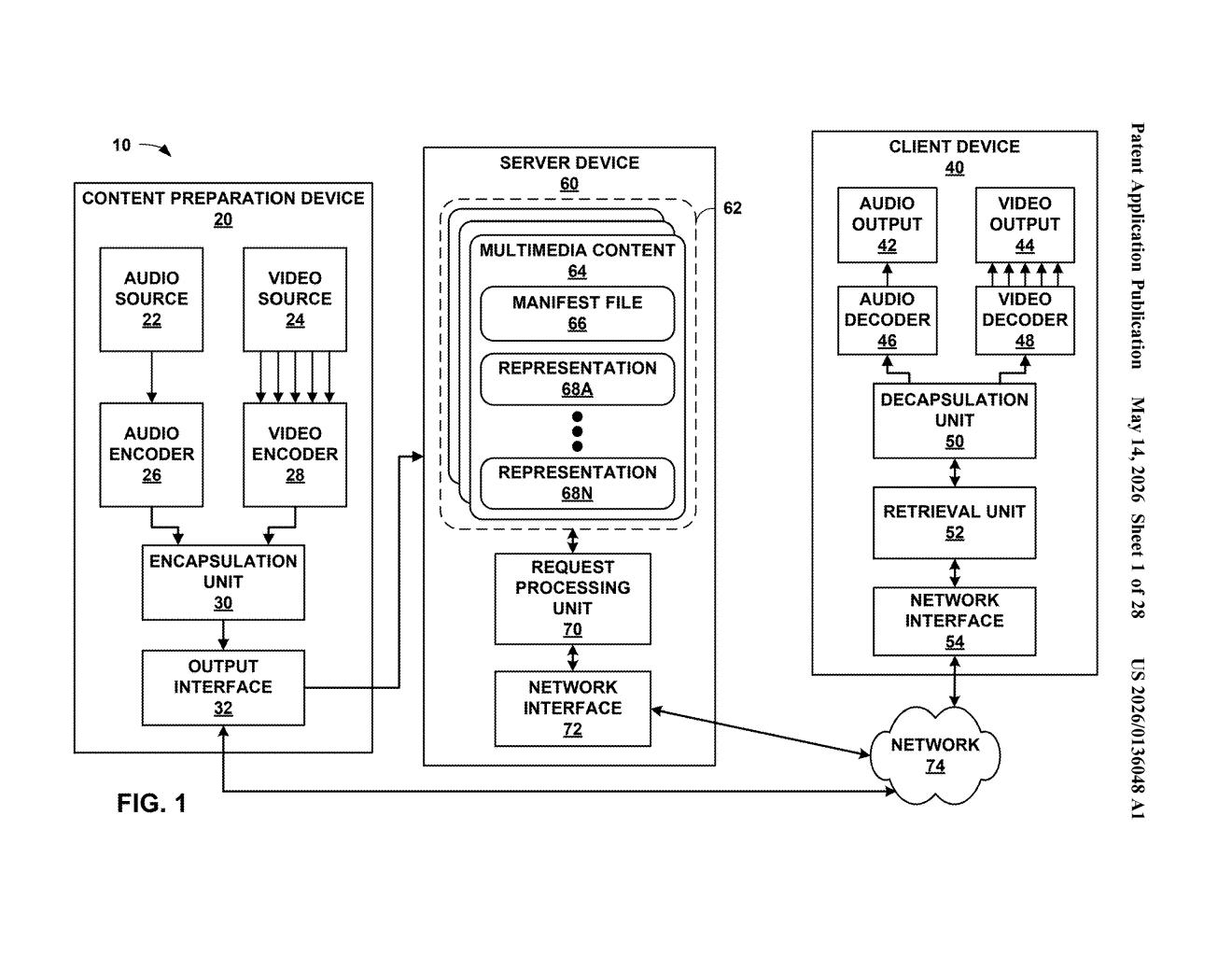
What Qualcomm's multi-CDN streaming actually does
Imagine you're watching a live sports stream on your phone and the video suddenly stalls — the server your app picked is overwhelmed. Most streaming apps today will eventually switch servers, but that switch is slow, clunky, and often causes a visible rebuffer.
Qualcomm's patent describes a smarter approach: your device proactively tells the streaming system upfront that it wants to pull different chunks of the same video from different servers at the same time. Think of it like splitting a grocery order across two stores to get everything faster — except for video data.
The system, designed to plug into 5G media streaming infrastructure (the standards-based pipeline carriers use to deliver video), coordinates which content delivery network hands you which piece. The result should be faster loads, fewer stalls, and more resilient playback — especially in crowded or patchy network environments.
How the client splits requests across multiple CDNs
The patent describes a client device — your phone, tablet, or streaming box — that is aware of multiple service locations (think: different CDN edge servers, possibly run by different providers) that all have the same media content available.
Instead of sending a single request to one server, the client explicitly signals in its request that it wants the content retrieved from multiple service locations simultaneously. A component called the Multi-CDN Controller and a Multi-CDN Processor manage this coordination on the application server side.
The actual retrieval works in parallel streams:
- A first transport session fetches one portion of the media (say, segments 1–5) from CDN-A
- A second transport session fetches another portion (segments 6–10) from CDN-B simultaneously
- The client reassembles these into a single seamless playback experience
The patent situates this inside the 5G Media Streaming (5GMS) framework — the 3GPP-standardized architecture that defines how carriers and app servers deliver media over 5G networks. It also references DASH, HLS, and CMAF — the dominant adaptive streaming formats used by virtually every major video service today, meaning this is designed to work with existing content pipelines, not replace them.
What this means for 5G video reliability
For consumers, this is about streaming that actually uses the speed and redundancy of 5G networks rather than just running the same old single-server model over a faster pipe. If your carrier's preferred CDN is congested during a big event, a multi-CDN-aware client could silently pull from a backup without you ever seeing a spinner.
For Qualcomm, this is strategically interesting because the company supplies the modem and application processors inside billions of Android devices. Baking multi-CDN awareness into chipset-level media handling — rather than leaving it entirely to app developers — could become a genuine differentiator for Snapdragon-powered devices in an era where video quality benchmarks are a real selling point for flagship phones.
This is a solid, practical engineering patent — not a moonshot. Multi-CDN delivery is already common on the server side (Akamai, Cloudflare, and Fastly all offer it), but pushing that intelligence down to the client device and standardizing it inside 5G media streaming specs is genuinely useful work. Qualcomm is essentially trying to make the phone a smarter participant in the delivery chain, not just a passive consumer of whatever server it gets routed to.
There are more where this came from
We read every patent application Big Tech publishes and send you the ones worth knowing. Plain English, free, every week.
Want this weekly breakdown for a company we don't cover? Patentlyze Pro →