
Xilinx Patents a Way to Fill Idle Chip Space During AI Calculations
Most AI chips waste a surprising amount of their own computing space every time they crunch numbers. Xilinx's new patent describes a way to fill those gaps automatically, squeezing more useful work out of hardware that would otherwise sit idle.
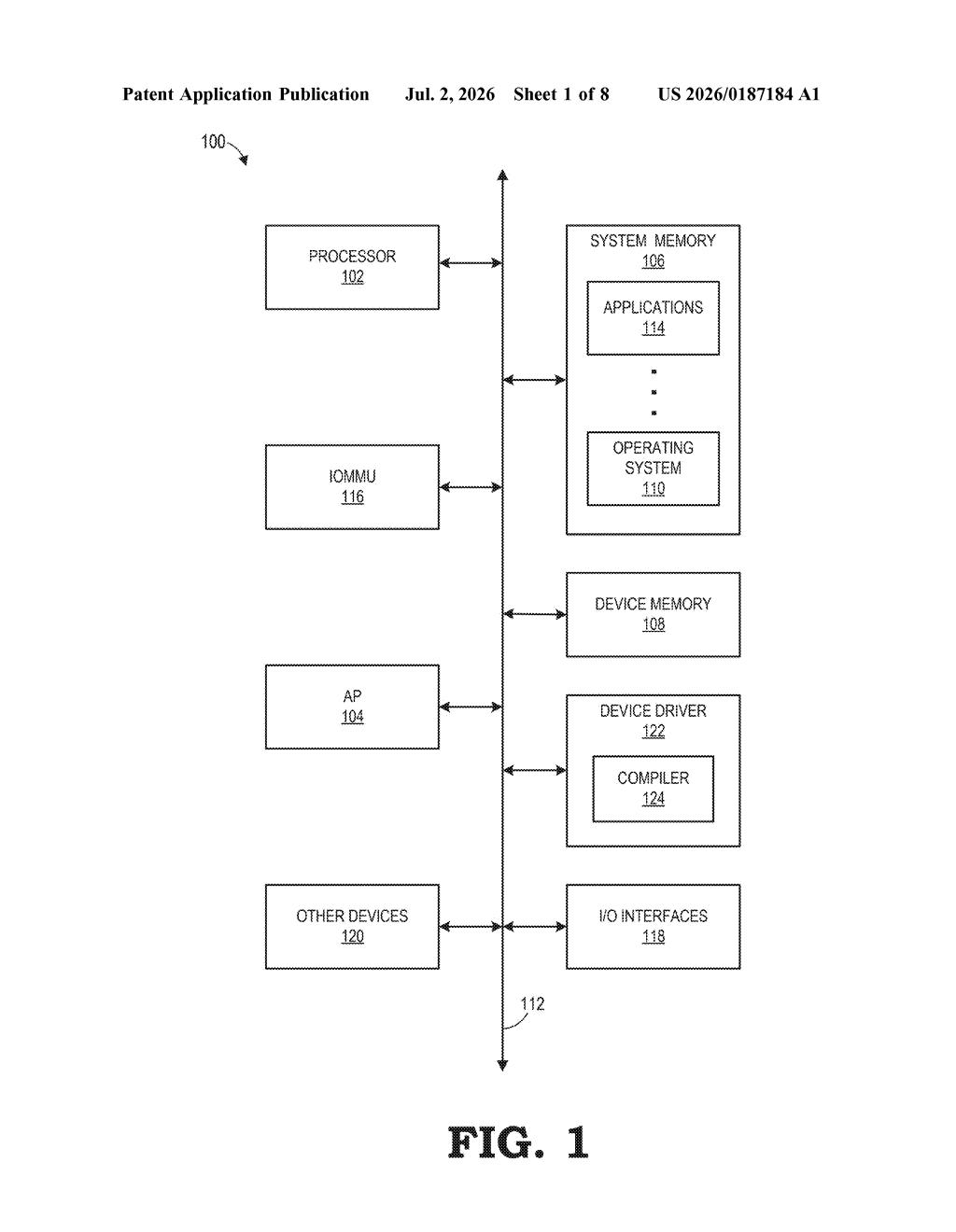
What Xilinx's matrix-padding trick actually does
Imagine a factory floor where half the workstations sit empty every shift, but you're still paying full rent on the building. That's roughly what happens inside an AI chip when the data it's processing doesn't perfectly fit the chip's built-in grid of computing slots.
Xilinx's patent describes a method where the chip copies data it already has into those empty slots, then adjusts the numbers so the final answer still comes out correct. Instead of leaving computing resources unused, the chip keeps all of its lanes busy at once.
The result is that neural network calculations can finish faster, or with less wasted energy, without changing the chip's physical design. It's a software-level trick that makes existing hardware behave more efficiently.
How the copy-and-scale method fills unused matrix rows
The patent centers on matrix multiplication, the core math operation behind nearly every neural network. AI chips handle matrix multiplication using fixed-size grids of tiny arithmetic units. When the data matrices being multiplied are smaller than those grids, some units go unused.
The method works in three steps:
- Take the first input matrix and find a row or column that contains a specific target value (such as a scaling factor or bias term). Copy those values into any empty, unused row or column slots in that same matrix.
- Mirror that move in the second input matrix, copying the corresponding row or column into its own unused slots.
- Multiply the two padded matrices together. Because the copying and a compensating scaling step (multiplying values up or down by a fixed factor) are applied symmetrically, the extra entries cancel out and the output is mathematically identical to the original result.
The technique is specifically aimed at quantized neural networks, where numbers are stored at reduced precision (for example, 8-bit integers instead of 32-bit floats) to cut memory and power use. Quantization often introduces leftover scale factors that need to be folded into the calculation, and this method finds a free place to put them inside the chip's existing arithmetic pipeline.
What this means for AI chip efficiency at the hardware level
Xilinx (now part of AMD) builds FPGAs, chips whose internal circuitry can be reconfigured to accelerate specific tasks. FPGA-based AI inference is a growing market, especially in data centers and embedded applications where power budgets are tight. A technique that extracts more throughput from fixed hardware, without any new silicon, is genuinely useful in that context.
For everyday users, the downstream effect could show up as AI features that run faster or cooler on the same device. For chip designers and AI engineers, this is the kind of low-level optimization that determines whether a given model fits within a power envelope or not.
This is a narrow, infrastructure-level patent that most readers will never notice directly. It solves a real problem, though: wasted chip real estate during quantized inference is a known inefficiency, and the copy-and-scale approach is a clean fix. It's not headline-grabbing work, but it's the kind of thing that ends up in shipping silicon.
Get our take in your Top Stories
Liked this breakdown? Add Patentlyze as a preferred source on Google, and our plain-English take shows up more often in your Top Stories the next time AMD patent news breaks.
There are more where this came from
We read every patent application Big Tech publishes and send you the ones worth knowing. Plain English, free, every week.
Want this weekly breakdown for a company we don't cover? Patentlyze Pro →