
Nvidia Patents an AI Spell-Check That Consults a Panel of Specialist Editors
Most AI spell-checkers use a single model to fix errors. Nvidia's new patent describes a system that assembles a panel of specialist AI editors, asks each one to weigh in, then blends their opinions based on who's most qualified to judge.
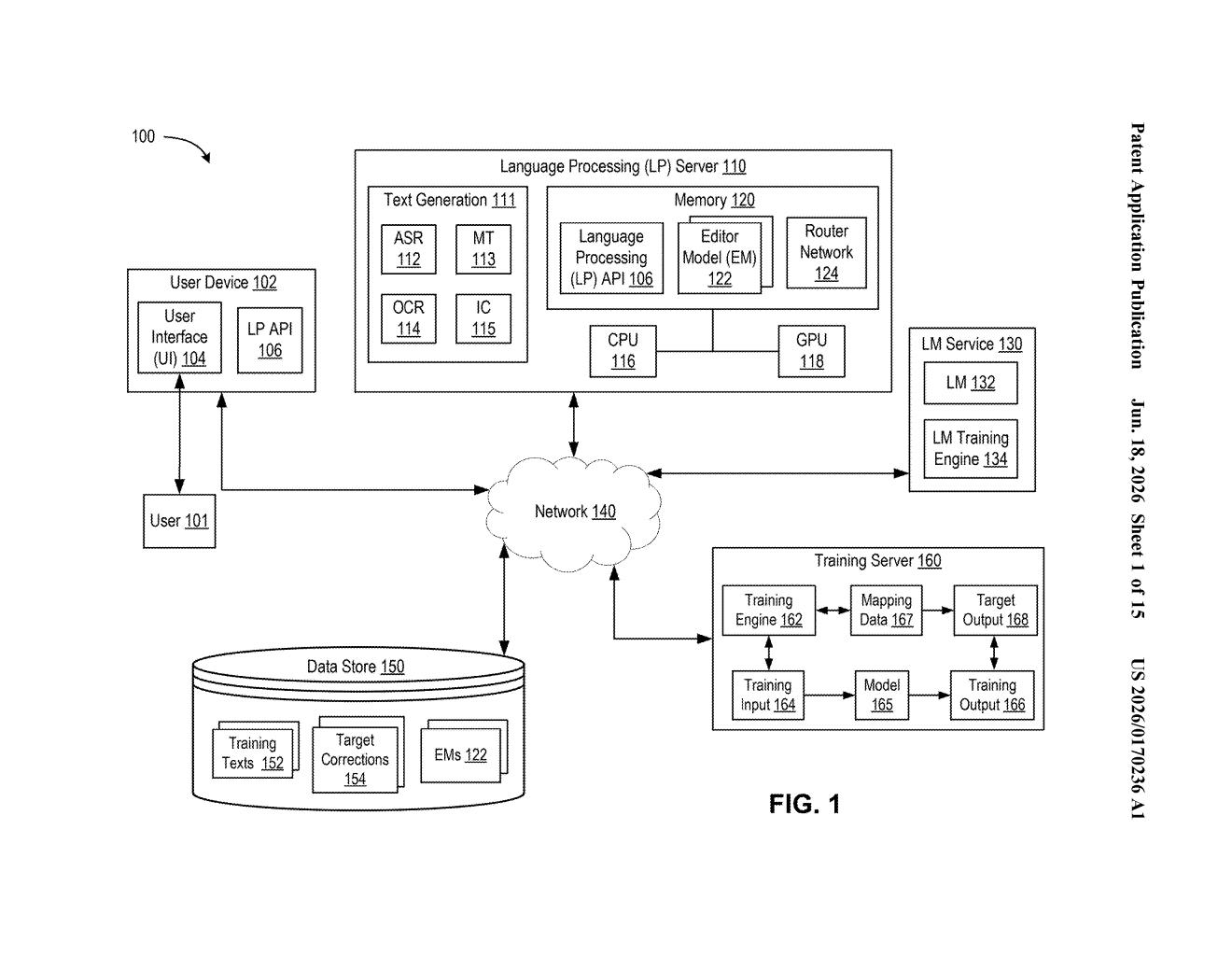
What Nvidia's panel-of-editors AI correction actually does
Imagine you wrote a medical report and sent it to an editor — but that editor happened to specialize in sports journalism. They might fix your grammar just fine, but miss the specialized terminology completely. The ideal setup would be to send it to multiple editors with different backgrounds and average their feedback, weighted by who knows medicine best.
That's essentially what Nvidia is patenting here. When a piece of text comes in — from a voice transcription system, an AI assistant, or any other language tool — a gatekeeper AI first figures out what kind of text it is and how well each specialist editor on the panel is suited to correct it. Each editor then does its own pass on the text.
Finally, the system blends all the corrections together, giving more weight to the editors whose expertise matched the text. The result is a single, improved version of the original that drew from the collective knowledge of the whole panel rather than relying on just one AI to get it right.
How the router scores and blends each editor model's output
The system has three main components working in sequence.
- Router network: A lightweight AI that reads the incoming text and produces a set of scores — one for each editor model in the panel. Each score reflects how closely the text matches that editor's area of expertise (think: medical language, legal language, conversational speech, technical jargon, etc.).
- Ensemble of editor models: Multiple specialized AI models that each independently process the same input text and produce their own corrected version. Each editor is trained on a different domain or type of language error, so they don't all fix the same things.
- Weighted combination: The system merges all the individual corrected versions into one final output. The merge isn't a simple average — each editor's contribution is scaled by the score the router assigned it. An editor that scored high for this particular text has more influence on the final result.
The patent is written broadly enough to apply to any text produced by a language tool — including automatic speech recognition (converting spoken words to text), machine translation, or general AI text generation. The correction step sits after whatever tool produced the original text, acting as a quality-control layer on top.
What this means for AI transcription and language tools
Automatic speech recognition and AI text generation both produce errors that vary by context — a medical dictation system makes different mistakes than a customer service chatbot. A single, general-purpose corrector tends to smooth over everything with the same brush, which works poorly at the edges. A system that dynamically weights specialists based on context has the potential to be meaningfully more accurate across a wider range of real-world inputs.
For Nvidia, this fits squarely into its push to sell AI infrastructure to enterprises. If this kind of correction layer ships inside something like Nvidia's Riva speech AI platform, it could make the company's transcription and language tools more competitive against Google and Amazon in specialized industries like healthcare, legal, and finance — places where a misheard word can have real consequences for you.
This is solid engineering, not a flashy announcement. The idea of mixing expert models using a learned routing mechanism is well-established in the AI research community — it's a variant of what's called a mixture-of-experts architecture. Nvidia's specific contribution here is applying that pattern as a post-processing correction layer on top of existing language tools, which is a practical and deployable angle. Worth watching if you follow enterprise speech AI, but this won't change how a consumer interacts with any product in the near term.
There are more where this came from
We read every patent application Big Tech publishes and send you the ones worth knowing. Plain English, free, every week.
Want this weekly breakdown for a company we don't cover? Patentlyze Pro →