
Nvidia Patents a Way to Clear AI Memory Without Reloading What Was Just Removed
Every time a large language model forgets something mid-conversation, it has to reload that context from scratch. Nvidia's new patent targets exactly that hidden tax on AI performance.
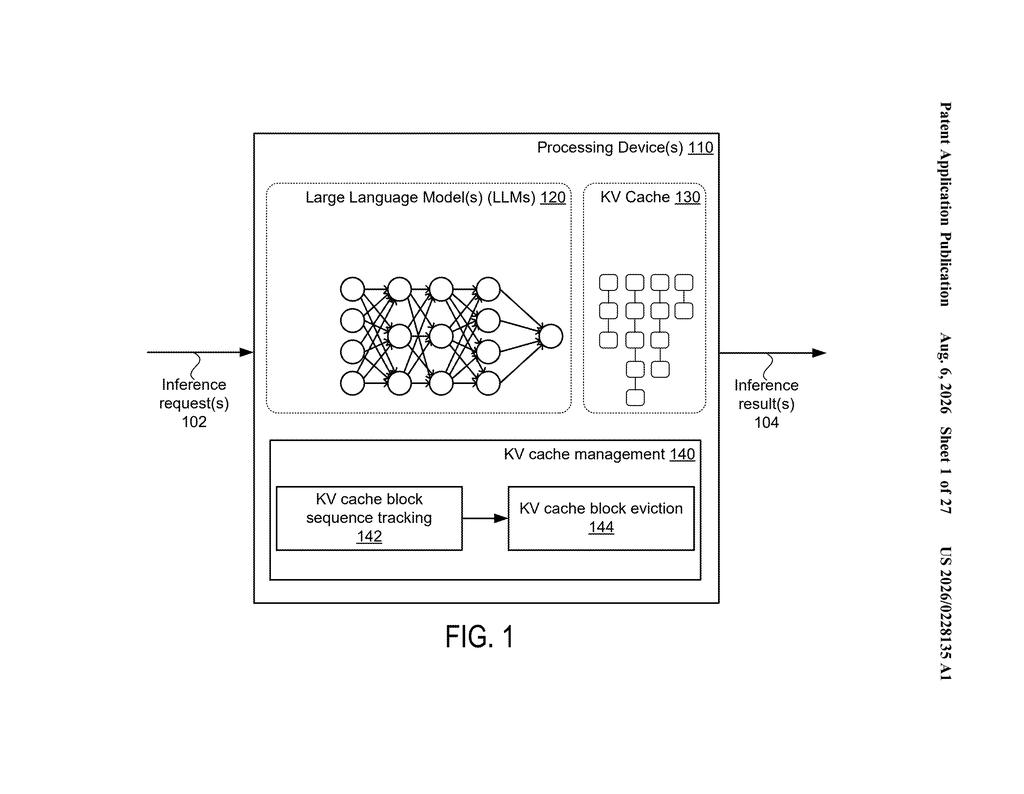
How Nvidia keeps AI responses from slowing to a crawl
Imagine you're working on a long document and your computer keeps closing tabs you still need, forcing you to reopen and reload them constantly. That's roughly what happens inside AI systems when they run long conversations or process big chunks of text.
Large language models keep a working memory called a KV cache (short for key-value cache) that stores the context of an ongoing conversation. When that memory fills up, the system has to throw some of it out to make room. The problem: if it tosses out the wrong piece, it has to reload related pieces it still needs, which wastes time and computing power.
Nvidia's patent describes a processor-level system that figures out which pieces of memory can be safely discarded without triggering those expensive reloads. Think of it as a smarter trash picker that knows which items can go in the bin without making you dig everything else back out.
one or more circuits to cause an indication to be generated of information stored within one or more large language model (LLM) key-value (KV) caches that can be evicted from the one or more KV caches without causing other information stored within the one or more KV caches to be restored to the one or more KV caches.
Translation: Hardware figures out which parts of the AI memory can be safely dropped without needing to reload them later.
Inside Nvidia's dependency-aware KV cache eviction logic
When an LLM processes a long conversation or document, it stores intermediate computation results in a key-value (KV) cache. This cache acts like short-term working memory for the model. As conversations grow longer, the cache fills up and something has to be dropped.
The naive approach is to evict (delete) entries based on simple rules like age or how often they've been accessed. The trouble is that some cached entries depend on each other. Drop the wrong one, and the system has to regenerate or restore the entries that relied on it, burning extra compute cycles to undo the mistake.
Nvidia's patent covers circuits inside a processor that can identify which KV cache entries are safe to evict without creating these restore cascades. The system generates an indication (essentially a flag or list) marking entries that have no downstream dependencies, making them free to remove cleanly.
- Tracks dependency relationships between cached entries
- Flags entries that can be dropped without side effects
- Avoids the restore cycle that wastes GPU time and memory bandwidth
The patent covers the hardware-level circuits that do this work, meaning the logic could live directly on a GPU or inference chip rather than in software.
Apparatuses, systems, and techniques to identify information to evict from a Key-Value (KV) cache.
Translation: Methods for deciding what data to clear out of the AI memory cache.
What this means for AI inference costs and speed
Running large AI models at scale is expensive, and a significant slice of that cost comes from memory management overhead during long conversations or multi-step reasoning tasks. If a data center is serving thousands of simultaneous AI sessions, unnecessary cache restores add up fast in both time and electricity.
For you as an end user, this is the kind of low-level work that determines whether a chatbot feels snappy or sluggish during a long back-and-forth. Nvidia, which supplies most of the hardware running today's AI inference workloads, has a strong incentive to solve this at the chip level rather than leaving it to software workarounds that each cloud provider has to build independently.
This is unglamorous plumbing work, but it's exactly the kind of thing that separates fast, cheap AI inference from slow, expensive inference at scale. Nvidia filing this at the processor-circuit level suggests it's thinking about baking this directly into future GPU or inference chip designs, not just patching it in software. That's worth paying attention to.
There are more where this came from
We read every patent application Big Tech publishes and send you the ones worth knowing. Plain English, free, every week.
The drawings
27 drawing sheets from US 2026/0228135 A1 · click any drawing to enlarge


Want this weekly breakdown for a company we don't cover? Patentlyze Pro →
Be the first to weigh in