
Nvidia Patents a Unified AI System That Spots, Labels, and Tracks Objects for Autonomous Machines
Most self-driving perception systems are stitched together from separate modules, each trained independently. Nvidia's new patent describes a single AI architecture trained all at once to see, label, and follow objects in the real world.
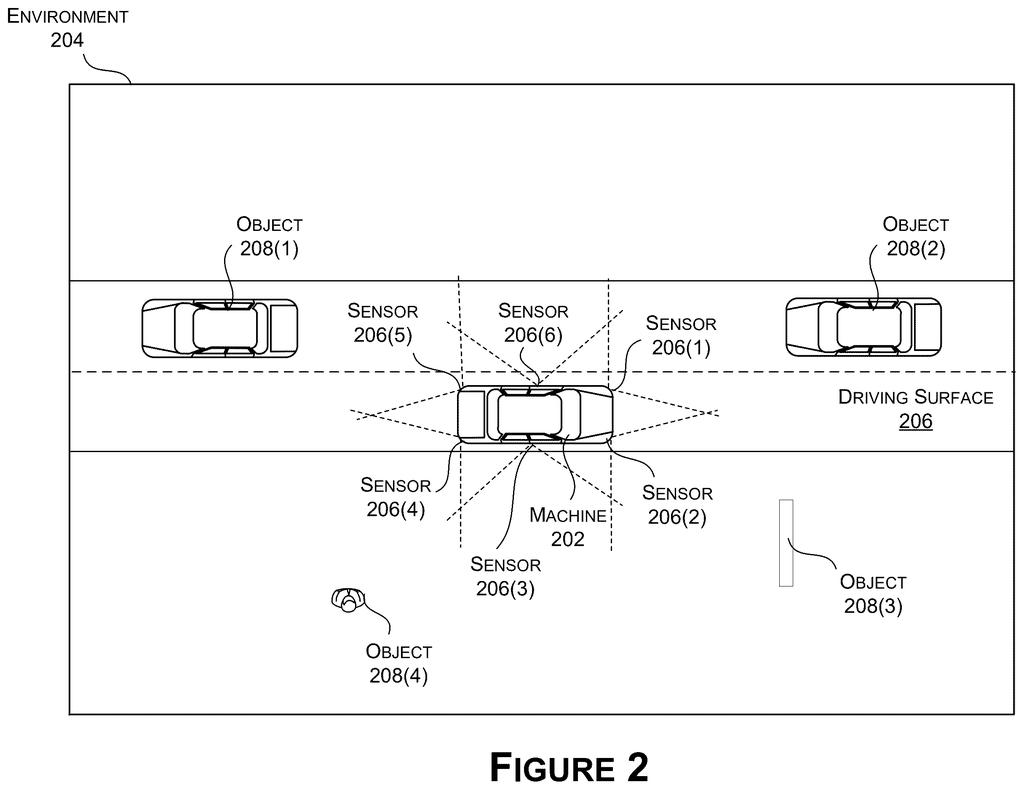
How Nvidia's perception pipeline sees the world around a robot
Imagine you're teaching a robot to drive. It needs to do three things at once: spot the car ahead, figure out what kind of object it is (car, cyclist, pedestrian), and keep following that object frame by frame as the scene changes. Traditionally, those three jobs are handled by separate software pieces that were built and trained at different times, which means they can disagree with each other.
Nvidia's patent describes building all three jobs into one AI system trained together from the start. Feed it camera images, information about how the machine is moving, and data about where the cameras are mounted, and it outputs a live, labeled map of every object around the machine, complete with predicted paths.
The system is designed for any autonomous machine, not just cars. Robots, drones, or any device that needs to understand a moving environment could benefit from this kind of unified perception layer.
How the detection, classification, and tracking models chain together
The patent describes an end-to-end perception architecture built from at least two chained machine learning models.
The first model, an encoding and detection/classification model, takes in raw image data alongside machine motion data (how the vehicle or robot is moving) and sensor calibration data (where the cameras are physically positioned and how they're oriented). It outputs bounding-box detections (where objects are in the scene) paired with classification labels (what those objects are).
The second model is a tracking model. It takes those detections and classifications and links them across time, so the system knows that the pedestrian in frame 42 is the same pedestrian from frame 38, even if they've moved. This produces tracks, which are continuous trajectories for each object.
- Input: camera images, ego-motion data, sensor calibration
- Stage 1 output: per-object locations and class labels
- Stage 2 output: multi-frame tracks per object
- Final output: commands that drive the machine's behavior
The key design choice is end-to-end training, meaning all models are optimized together rather than in isolation. That forces the detection model to produce outputs that the tracking model can actually use well, instead of each model optimizing for its own narrow goal.
What this means for Nvidia's autonomous vehicle and robotics push
For autonomous vehicles and robots, the gap between detecting an object once and reliably following it over time is where a lot of real-world failures happen. A system that trains detection and tracking jointly can learn to trade off between the two tasks in ways that separate pipelines simply can't.
Nvidia makes chips and software for autonomous driving (its DRIVE platform) and robotics (its Isaac stack). A patent covering the perception architecture that ties those products together is strategically significant. It signals that Nvidia is not just selling the compute hardware for self-driving but is building and protecting the core AI pipeline that runs on top of it.
This is core infrastructure for Nvidia's autonomous systems business, not a flashy consumer feature. The end-to-end training angle is a real engineering bet that the AI community has been moving toward for years, and Nvidia patenting a specific architecture around it matters because perception is the most contested layer in the autonomous vehicle software stack.
There are more where this came from
We read every patent application Big Tech publishes and send you the ones worth knowing. Plain English, free, every week.
The drawings
17 drawing sheets from US 2026/0220793 A1 · click any drawing to enlarge


Want this weekly breakdown for a company we don't cover? Patentlyze Pro →
Be the first to weigh in