
Qualcomm Patents an AI System That Turns Radar Signals Into Readable Object Maps
Radar sees the world differently than cameras do, and for years that gap has been a headache for AI systems trying to make sense of both. Qualcomm's new patent describes a way to convert raw radar data into structured images a neural network can actually learn from.
How Qualcomm's radar-to-image AI spots objects around you
Imagine you're driving at night in heavy rain. Your car's camera struggles to see, but radar can still detect nearby objects by bouncing radio waves off them. The problem is that radar data comes back as a messy cloud of points, not a clean picture, and AI systems trained on camera images can't easily make sense of it.
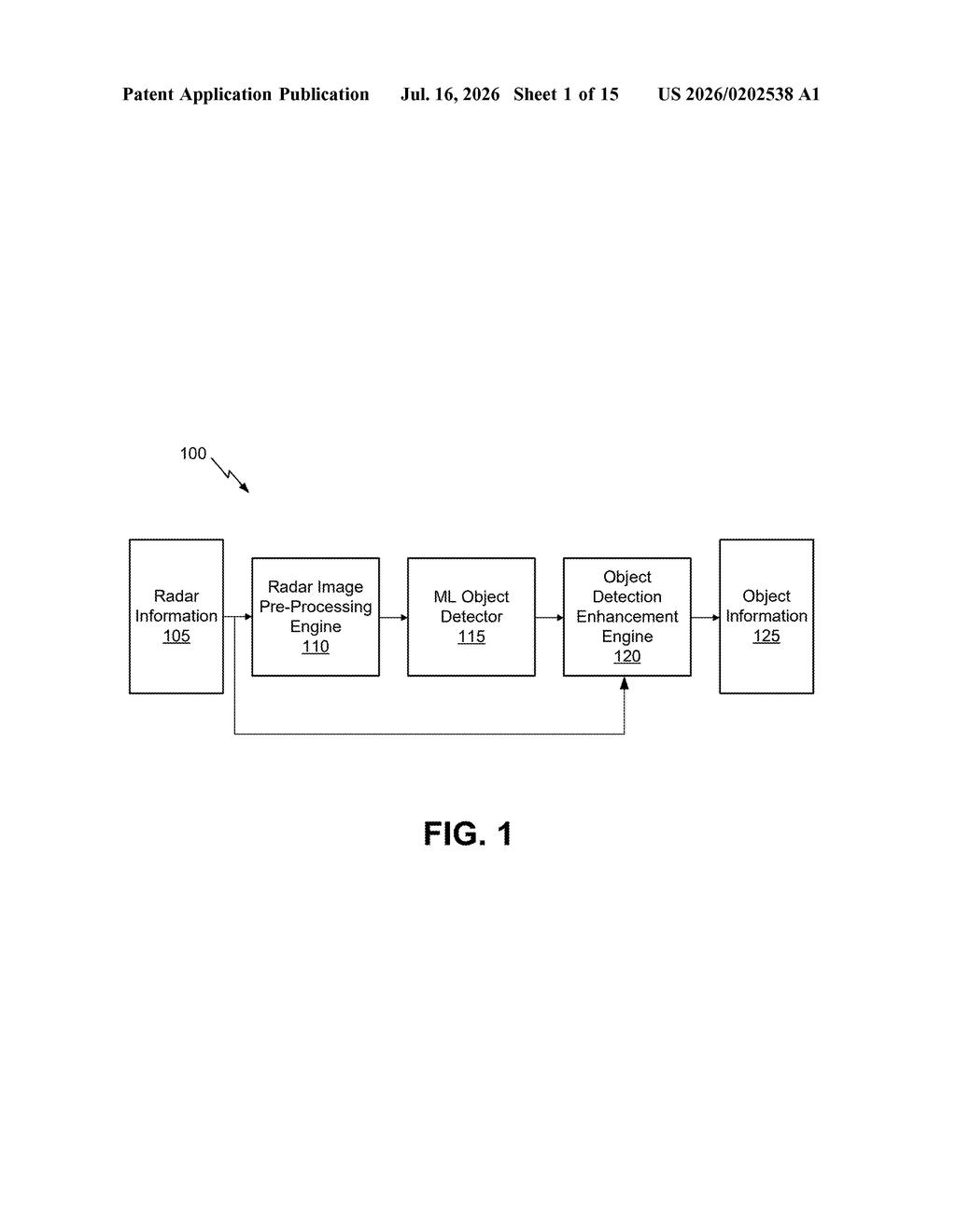
Qualcomm's patent tackles this by building a kind of translation layer. It takes the scattered radar point clouds, groups nearby points together into clusters, and then converts those clusters into a structured image with real pixel values. That image can then be fed into a standard neural network the same way a camera frame would be.
The end result is an object-detection system that can work with radar data the same way most AI systems work with photos, potentially making cars and other sensing devices more reliable when cameras can't do the job alone.
How the patch-cluster pipeline builds a radar image
The system takes raw radar returns (the signals that bounce back after radar waves hit physical objects) and processes them in several steps before handing the data to a neural network.
First, the processor groups the incoming radar points into clusters, each representing a likely object or surface in the environment. Then it defines a patch for each cluster, which is essentially a bounded region of space tied to that cluster.
For each patch, the system calculates representative values for physical properties, things like velocity, reflectivity, or range, and maps those values onto pixels in a generated radar image. The image mirrors real physical locations in the environment, so a pixel at a certain coordinate corresponds to an actual point in space.
That image is then fed into a neural network for object detection, and a second post-processing step can further refine the output using the original raw radar data. The design lets companies reuse neural networks originally trained on camera images, since the radar data has been repackaged into a familiar image format.
What this means for self-driving cars and sensing devices
Most self-driving and driver-assist systems rely heavily on cameras and LiDAR (laser-based depth sensors), but both struggle in bad weather. Radar works reliably in rain, fog, and darkness, which makes it a strong candidate for a fallback or primary sensor. The barrier has always been that radar data is hard to feed directly into the AI models that power object detection.
By converting radar signals into image-like formats, Qualcomm's approach could make it much easier to build AI models that treat radar as a first-class input, not just a backup. For you as a driver or passenger, that could mean safer automatic emergency braking and lane-keeping in conditions where today's systems go quiet.
This is practical chip-level work from a company that supplies processors to automotive and mobile platforms alike. Qualcomm is clearly positioning itself to offer radar-processing silicon that works with existing AI inference pipelines, which is a real commercial advantage. The approach is methodical rather than flashy, but the addressable market, driver-assist chips and autonomous vehicle processors, is large enough that this kind of foundational IP matters.
There are more where this came from
We read every patent application Big Tech publishes and send you the ones worth knowing. Plain English, free, every week.
Want this weekly breakdown for a company we don't cover? Patentlyze Pro →
Be the first to weigh in