
Nvidia Patents a Self-Weighing Panel of AI Safety Judges
When an AI content filter isn't sure whether something is safe, should you trust its answer? Nvidia's new patent proposes a system that asks several AI safety models the same question and then automatically gives more weight to whichever ones sound most certain.
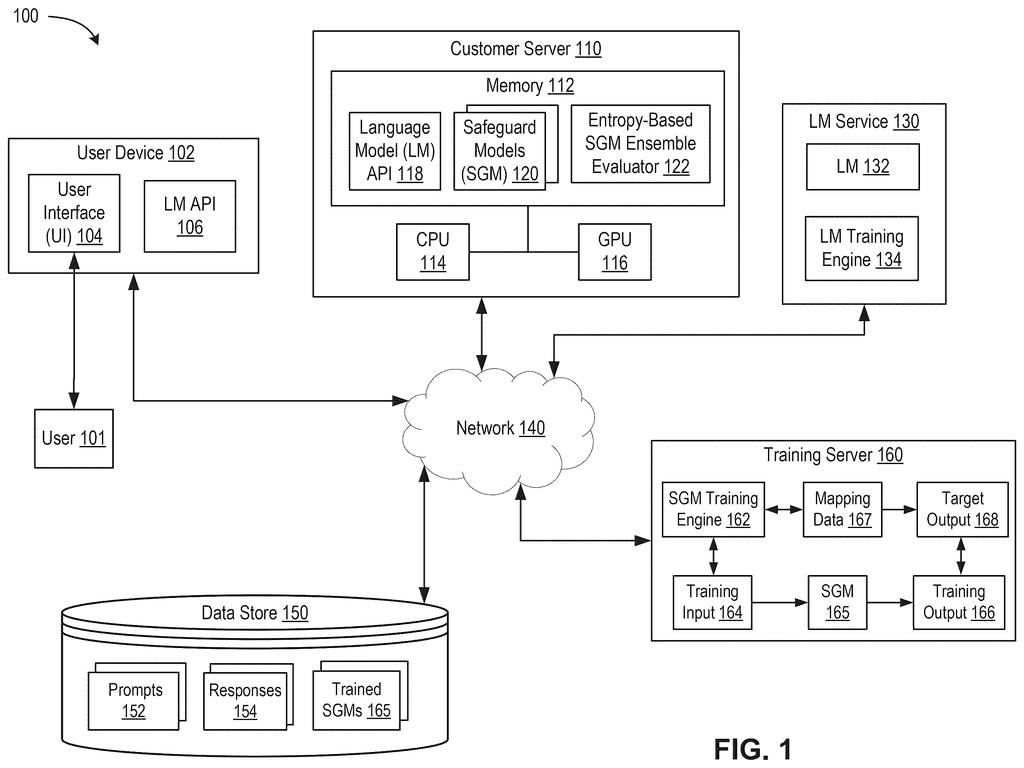
How Nvidia's AI content moderation panel works
Imagine a panel of judges scoring whether a piece of writing is safe or harmful. Each judge gives a verdict, but some judges are mumbling while others speak clearly. You'd naturally trust the clear ones more. That's the core idea here.
Nvidia's patent describes a system that runs a piece of text through several AI safety filters at the same time. Each filter doesn't just say "safe" or "unsafe", it also signals how confident it is by the spread of its internal scoring. A filter that's scattershot in its internal scoring gets a lower vote weight; a filter that's focused and decisive gets a higher one.
The final verdict is a weighted combination of all the filters' opinions, with the confident ones counting for more. Because the system figures out those weights automatically, without needing humans to label training data, it can adapt on the fly as new safety models are added or removed from the panel.
How randomness scores decide each model's voting weight
The patent describes an ensemble of safeguard models (SGMs), a collection of AI models each trained to judge whether text (a prompt, a response, or a conversation) is safe or violates content policies.
Each SGM processes the same input and produces two things: a safety verdict, and a token distribution (think of this as the model's internal probability spread across possible next words, a rough measure of how decisive or scattered its reasoning is). A model that produces a tight, concentrated distribution is behaving confidently; one that spreads probability thinly across many tokens is, in effect, shrugging.
The system then computes a randomness value for each model's distribution, essentially measuring that scatter. Models with low randomness (high confidence) are assigned higher weights; models with high randomness (low confidence) get lower weights. The final ensemble assessment is generated by combining all the individual verdicts using those updated weights.
Critically, this weighting is unsupervised, no human needs to label examples or manually tune which model to trust. The system infers trustworthiness directly from each model's own output statistics, making it practical to deploy without expensive annotation pipelines.
What this means for AI safety tools and LLM guardrails
AI companies building products on top of large language models face a real problem: no single content-safety filter is reliable all the time, but running several filters and just averaging their votes ignores the fact that some are more certain than others. Nvidia's approach gives the most confident filter the loudest voice automatically, which should produce fewer false positives (blocking safe content) and fewer false negatives (missing harmful content).
For Nvidia, this fits directly into its NeMo Guardrails and AI enterprise safety tooling business. Any company deploying a chatbot, a coding assistant, or a document-generation tool needs moderation layers, and a self-calibrating ensemble that doesn't require constant human oversight is a genuinely useful piece of infrastructure.
This is quiet, practical AI-safety engineering rather than a splashy capability announcement. The unsupervised weighting trick is the genuinely interesting bit: it sidesteps the expensive human-labeling bottleneck that makes deploying content moderation at scale so painful. It won't make headlines, but it's the kind of patent that could end up inside a lot of enterprise AI stacks.
There are more where this came from
We read every patent application Big Tech publishes and send you the ones worth knowing. Plain English, free, every week.
The drawings
15 drawing sheets from US 2026/0220548 A1 · click any drawing to enlarge


Want this weekly breakdown for a company we don't cover? Patentlyze Pro →