
Nvidia Patents a Neural Network System for Upscaling 3D Texture Maps
Nvidia wants to let neural networks do the heavy lifting of generating high-resolution textures — starting from a cheaper, low-res version and letting AI fill in the details. It's DLSS logic, but applied to texture maps instead of final frame pixels.
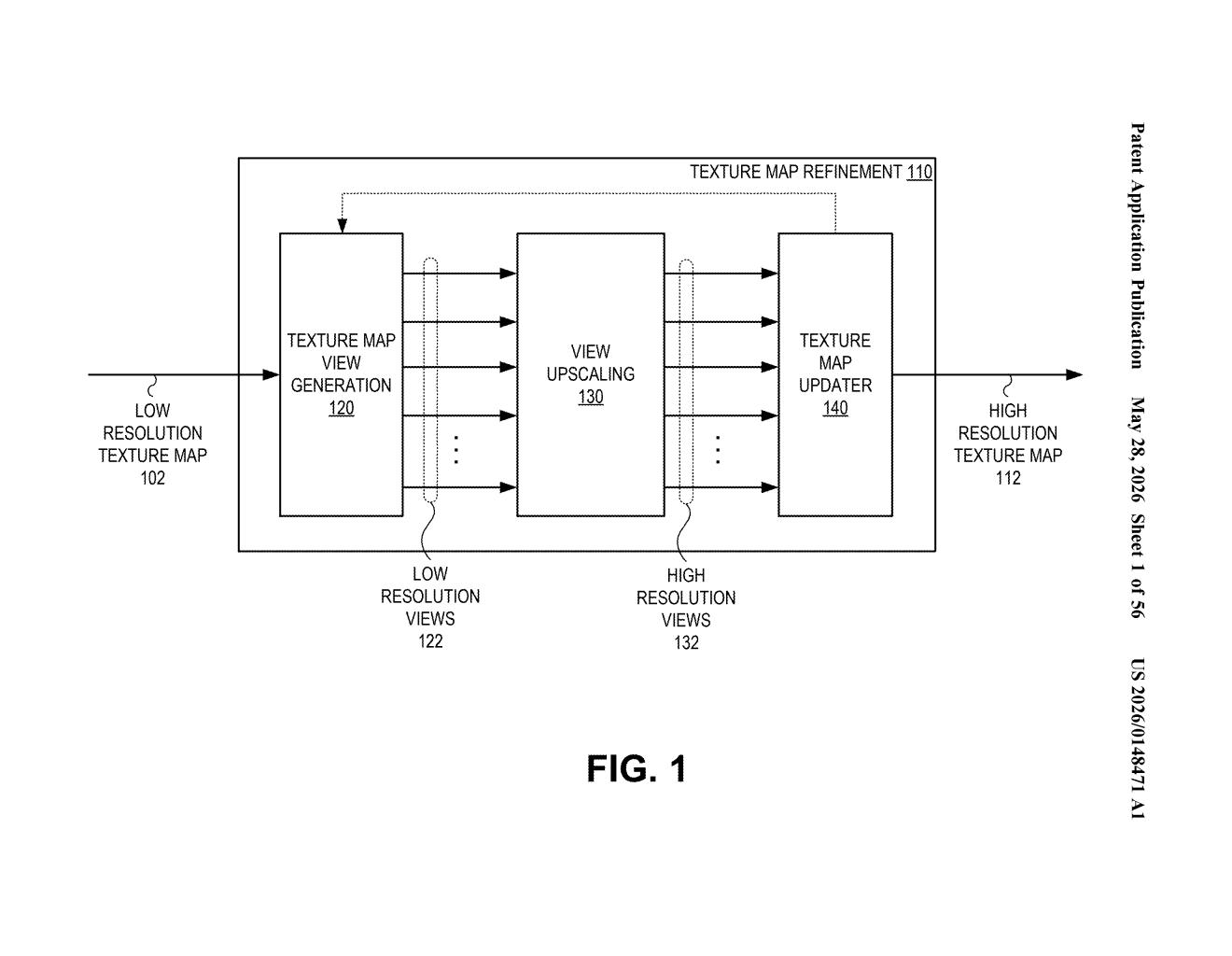
What Nvidia's AI texture upscaling actually does
Imagine you're building a 3D scene — a character's face, a city street, a spaceship hull. Every surface needs a texture map: a flat image that gets wrapped around 3D geometry to give it color, detail, and depth. Creating those maps at high resolution is expensive, both in storage and in compute time.
Nvidia's patent describes a system where you start with a low-resolution texture map and use one or more neural networks to generate a high-resolution version from it. Think of it like asking an AI to "fill in" the missing detail — similar to how photo upscaling tools can sharpen a blurry image, but tailored specifically for 3D surface textures.
The system includes a generation step, an upscaling step, and a refinement step that updates the texture based on how it actually looks from multiple viewing angles. The goal is to get high-quality textures without paying the full cost of generating them at full resolution from scratch.
How the neural network refines low-res texture maps
The patent describes a pipeline with three main stages: texture map generation, upscaling, and view-based refinement.
First, a neural network generates an initial texture map at a lower resolution — cheaper and faster to produce. Then a separate upscaling network takes that low-res map and produces a higher-resolution version (what the patent calls moving from a "first resolution" to a "second resolution").
- Low-resolution views are rendered from the low-res texture and fed into the pipeline alongside the texture itself.
- High-resolution views — renders of the scene using the upscaled texture — are generated and compared against what the upscaled map predicts.
- A texture map updater then refines the high-res texture based on the discrepancy between predicted and actual rendered views.
This multi-view feedback loop (using rendered images from multiple camera angles to evaluate and correct the texture) is key. It means the system isn't just blindly upscaling — it's checking whether the upscaled texture actually looks right when applied to 3D geometry from different perspectives, and correcting accordingly.
What this means for real-time 3D rendering pipelines
For real-time applications like games, simulation, and 3D content creation, texture resolution is a constant bottleneck. Generating or storing ultra-high-res textures is expensive, and most pipelines involve significant manual artist work to produce detail at scale. An AI system that can reliably upscale texture maps — and verify them against rendered views — could meaningfully cut that cost.
This also fits directly into Nvidia's broader push around neural rendering and generative 3D (think Cosmos, their world simulation platform, or tools for synthetic data generation). If you're generating thousands of 3D assets for training autonomous vehicles or robots, being able to auto-generate high-quality textures rather than hand-craft them is a real practical win.
This is a focused, technically credible filing that extends Nvidia's existing DLSS/upscaling expertise into the texture-map domain — a genuinely useful problem in 3D content pipelines. It's not flashy, but the multi-view refinement loop is the interesting bit: it turns upscaling from a one-shot guess into an iterative, geometry-aware correction process. Worth tracking as a building block in Nvidia's generative 3D stack.
There are more where this came from
We read every patent application Big Tech publishes and send you the ones worth knowing. Plain English, free, every week.
Want this weekly breakdown for a company we don't cover? Patentlyze Pro →