
Nvidia Files Patent for AI That Automatically Writes Dataset Documentation
Every AI model is only as trustworthy as the data it learned from, but documenting that data is tedious, error-prone, and often skipped entirely. Nvidia's latest patent tries to automate that job.
What Nvidia's auto-generated data cards actually do
Imagine you're baking a cake and someone asks, 'What's in this?' You hand them a card listing every ingredient, where it came from, and any allergens. AI models need the same thing for their training data, but creating those ingredient lists by hand takes time that most teams don't spend.
Nvidia has filed a patent for a system that reads through a dataset automatically, including its images, audio clips, annotation files, and research notes, and then uses an AI language model to write a structured summary called a data card. The card describes what's in the dataset, where it came from, and how it was labeled.
Once the card is written, the system connects it directly to the platforms where the AI model lives, so anyone who uses or audits that model can immediately see what data trained it. No manual writing required.
… generating, based at least on one or more language models processing input data representative of at least the first information, output data representing a data card that includes second information describing the one or more data sources included in the dataset …
Translation: Using AI to write summary documentation about where the training data came from.
How the system scans datasets and writes their documentation
The patent describes a pipeline that kicks in as soon as a new dataset is created for training an AI model.
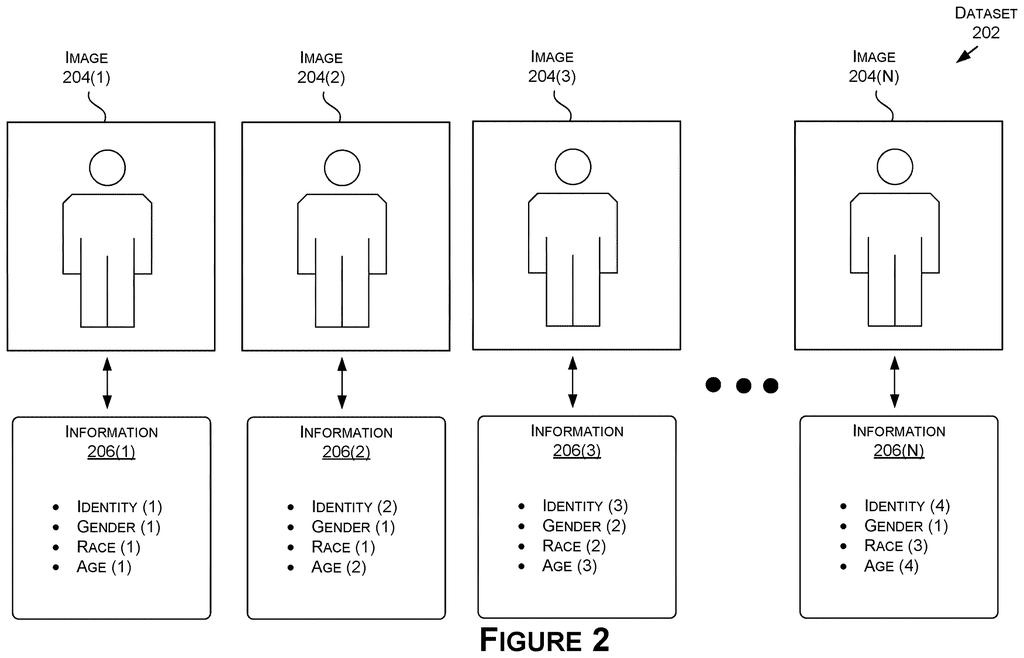
- Source scanning: The system identifies all the information attached to the dataset, including files, documents, web links, memos, research papers, and annotation or label files.
- Information extraction: It analyzes those sources to pull out the details that matter most, such as data provenance (where the data came from), collection methods, and known limitations.
- Card generation: One or more language models (the same general category of AI behind tools like ChatGPT) take that extracted information as input and produce a structured data card, a standardized document that describes the dataset in human-readable form.
- Platform integration: The finished card is attached to the AI model's development environment so it follows the model wherever it goes.
The system is designed to keep the card updated as datasets change, which is the part that's hardest to do manually. Most teams write documentation once at launch and never touch it again.
… files, documents, links, memos, research papers, annotations, labels, and/or the like—that describe data instances (e.g., images, audio clips, point clouds, etc.) included in the dataset …
Translation: The system looks at all the supporting files and tags attached to the media.
What this means for AI accountability and development speed
Data cards are increasingly expected in responsible AI development, pushed by researchers at Google, major government regulators, and enterprise procurement teams that want to audit what went into a vendor's model. Right now, writing them is a manual chore that gets deprioritized. A system that generates and maintains them automatically removes the main excuse for skipping the step.
For Nvidia, which sells the chips and the software platforms that power most commercial AI training, owning the tooling around dataset documentation ties those platforms more tightly into customers' workflows. If your data cards live inside Nvidia's ecosystem, your team stays there too.
This is unglamorous infrastructure work, but it's the kind that actually changes behavior at scale. The bottleneck to better AI accountability isn't that teams don't care about documentation; it's that writing it by hand is slow and boring. Automating it is a sensible bet, and Nvidia is well-positioned to bundle it into existing developer tools.
There are more where this came from
We read every patent application Big Tech publishes and send you the ones worth knowing. Plain English, free, every week.
The drawings
17 drawing sheets from US 2026/0228207 A1 · click any drawing to enlarge


Want this weekly breakdown for a company we don't cover? Patentlyze Pro →
Be the first to weigh in