
Nvidia Patents a Real-Time AI System That Signs Along During Video Calls
Imagine joining a video call and having a signing avatar appear automatically, translating everything the speaker says into your preferred sign language in real time. That's the core idea behind Nvidia's latest patent.
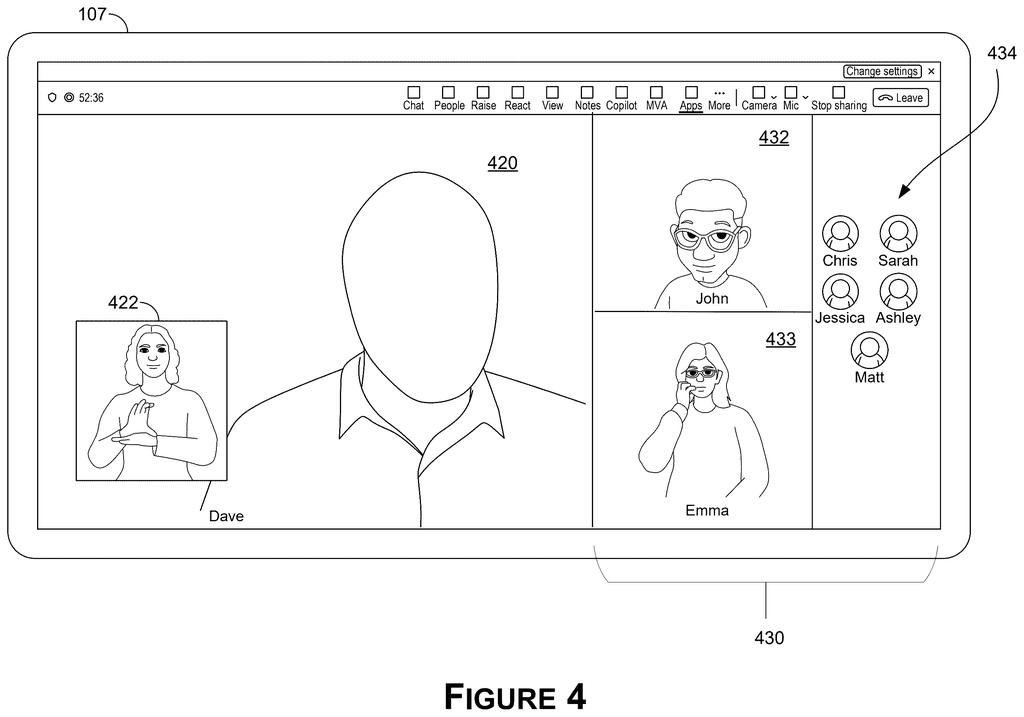
What Nvidia's live sign language translator actually does
Picture a work meeting on Zoom or Teams. Someone on the call is deaf and uses American Sign Language. Right now, that person either needs a human interpreter booked in advance or relies on imperfect captions. Nvidia's patent describes a system that handles this automatically, in the moment, without a human interpreter.
The system listens to incoming speech, figures out which sign language the recipient prefers (ASL, BSL, and others are each distinct languages), and then generates a video of a signing avatar overlaid on the call. Alternatively, it can modify the actual video feed of a participant to show that person appearing to sign the translated content, rather than inserting a separate avatar.
It works in the other direction too: if a deaf participant is signing on camera, the system can read those signs and convert them into spoken audio or text for hearing participants. The goal is a two-way, real-time bridge between spoken and signed communication.
How the framework detects, translates, and renders signing
The patent describes a sign language translation framework that operates on incoming and outgoing data feeds during live video communications.
On the spoken-to-signed side, the pipeline works roughly like this:
- The system receives an inbound audio or video data feed containing spoken content.
- It detects that a translation is needed and identifies which sign language the recipient prefers, stored as a user preference.
- A machine learning model translates the spoken content into sign language translation data, meaning a structured representation of the signed output.
- That data is then rendered as video, either as an animated avatar overlay (a virtual character signing over the call interface) or as an augmented video feed that modifies the appearance of an actual meeting participant to show them performing the signs.
On the signed-to-spoken side, the system analyzes incoming video frames, detects sign language being used, and converts that into spoken audio or text that hearing participants can follow.
The framework is designed to handle multiple distinct sign languages, acknowledging that ASL and BSL, for example, are not the same language and that user preference determines which is applied. The rendering step, whether avatar or modified participant video, relies on Nvidia's strengths in real-time graphics and model inference.
What this means for deaf and hard-of-hearing users
For the roughly 70 million deaf people worldwide who use sign language as a primary language, the gap in real-time communication during video calls is a genuine daily barrier. Human interpreters are expensive, hard to book on short notice, and not always available for spontaneous conversations. A real-time AI alternative built directly into a video call platform could meaningfully change that picture.
Nvidia is well-positioned here because this kind of system is computationally heavy: rendering a realistic signing avatar or warping a live video feed in real time demands serious GPU power. The patent also points toward a potential integration path with existing video conferencing software, since the framework is described as working with client applications rather than as a standalone product.
This is one of the more socially meaningful patents Nvidia has filed in recent years. Sign language translation is a genuinely hard problem that has seen limited commercial investment, and Nvidia framing it as a real-time video pipeline rather than a standalone app is clever because it slots naturally into tools people already use. Whether the avatar rendering is good enough to be actually useful is the open question, but the direction is right.
There are more where this came from
We read every patent application Big Tech publishes and send you the ones worth knowing. Plain English, free, every week.
The drawings
7 drawing sheets from US 2026/0220394 A1 · click any drawing to enlarge


Want this weekly breakdown for a company we don't cover? Patentlyze Pro →
Be the first to weigh in