
Samsung Patents a Fix for the Visible Seams That Appear When Phones Process Photos in Pieces
When a phone's image processor works on a photo, it often chops it into smaller chunks called tiles. Done carelessly, that creates faint grid lines across the final image. Samsung's new patent describes a way to make those joins invisible.
What Samsung's tile-blending patent actually does to your photos
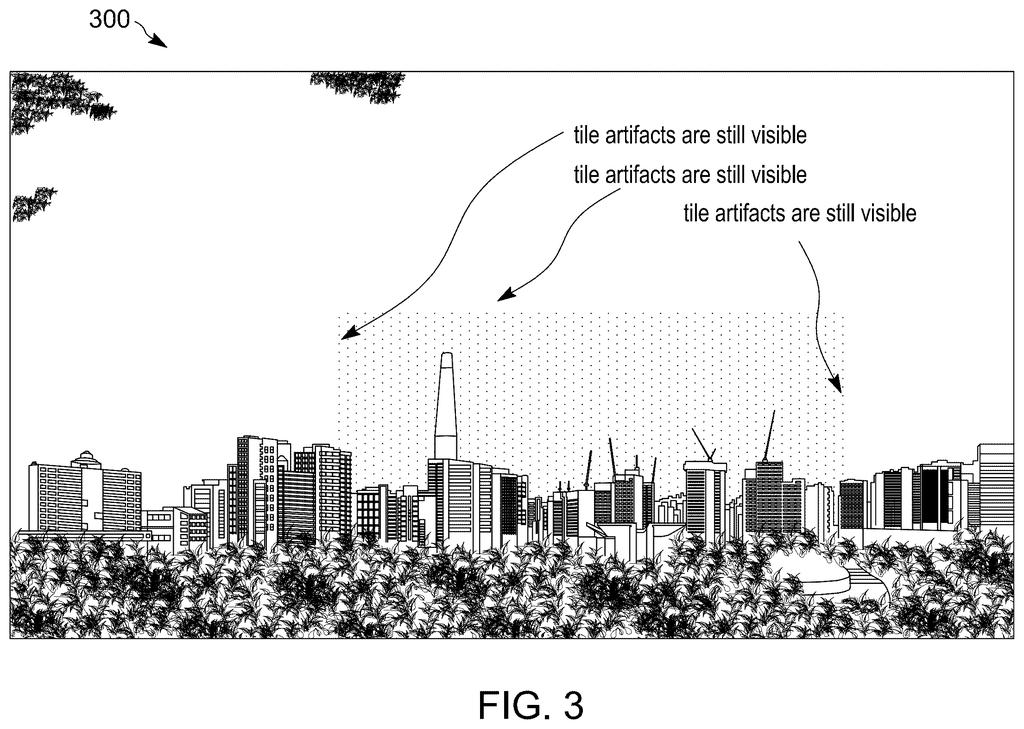
Imagine a photo editor cutting a picture into a grid of squares, tweaking each square separately, then gluing them back together. If the adjustments to neighboring squares don't match up perfectly, you end up with faint lines or brightness jumps across the image, like tiles on a floor where the grout doesn't quite line up.
Samsung's patent describes a method that, as each processed square is placed into the final photo, adjusts its brightness and color to match its neighbor before the join is made. Where two squares overlap, the method blends them together pixel by pixel so the transition is gradual rather than hard-edged.
The idea is to handle this during the image processing pipeline itself, so your final photo never shows the seams at all. It's a behind-the-scenes fix for an artifact most people would notice only if they zoomed in closely.
How Samsung's scaling coefficients stitch tiles together
The patent describes processing an image tile by tile, which is common in image signal processors and AI-based photo pipelines that can't hold an entire high-resolution image in memory at once.
For each tile, the system applies two mathematical adjustments before placing it into the output image: a scaling coefficient (multiplying pixel brightness values, effectively changing contrast) and an offset coefficient (adding a fixed amount to pixel values, effectively shifting brightness up or down). Together these two values let the system match the tone of an incoming tile to the one already placed before it.
The blending logic then works in two modes:
- For pixels in the overlap zone between two adjacent tiles, the final pixel value is a combination of the already-placed pixel and the incoming tile's adjusted pixel, producing a smooth blend.
- For pixels that are only in the new tile and don't overlap with anything already placed, the adjusted tile's pixel value is used directly.
The result is a continuous-looking image even though it was built from independently processed fragments.
What this means for processed photos on Samsung devices
Tile-based image processing is standard on smartphones, particularly when AI enhancement or noise reduction is applied at full resolution. Any mismatch between tiles can show up as banding or brightness steps, especially in flat areas like skies or skin tones, exactly the places where your eye is most sensitive to inconsistencies.
For Samsung, which competes heavily on camera quality in its Galaxy lineup, a cleaner stitching method could reduce one class of image artifact without requiring a complete overhaul of the underlying processing pipeline. You would likely never see the mechanism at work, but the absence of seam artifacts in heavily processed shots is the whole point.
This is a narrow, practical engineering patent aimed at a real problem in mobile imaging pipelines. It won't headline a product launch, but tile-seam artifacts are a genuine nuisance that shows up in AI-processed photos, and a principled fix at the processing level is more reliable than trying to patch it in post. Worth watching if you care about Samsung camera quality.
There are more where this came from
We read every patent application Big Tech publishes and send you the ones worth knowing. Plain English, free, every week.
The drawings
9 drawing sheets from US 2026/0212466 A1 · click any drawing to enlarge


Want this weekly breakdown for a company we don't cover? Patentlyze Pro →