
Apple Patents a Chip That Learns Memory Patterns to Fetch Data Faster
Every time your iPhone or Mac app stumbles while loading data, the chip is playing catch-up. Apple's new patent describes a memory prefetcher that watches its own mistakes and gets better at guessing what data a program will need next.
What Apple's self-learning memory prefetcher actually does
Imagine a chef who stocks the countertop with ingredients before you even call out the next dish. A chip does something similar: it tries to load data into fast memory before a program actually asks for it. When the prediction is right, everything runs faster. When it's wrong, time is wasted.
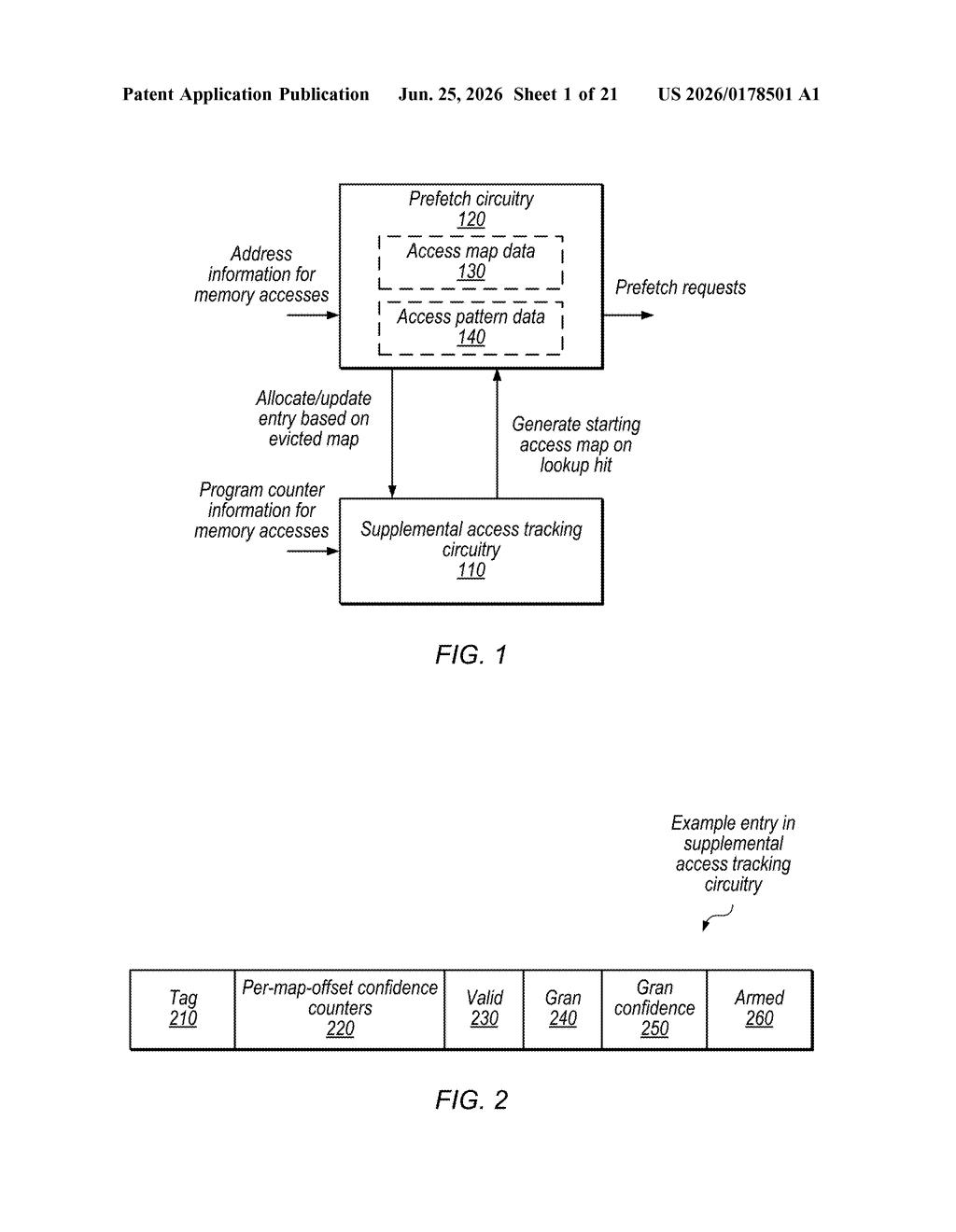
Apple's patent describes a prefetcher that adds a learning layer on top of the usual prediction system. When the chip's working memory fills up and older data gets pushed out, a secondary circuit records what that data looked like and which part of the program triggered the load. Over time, it builds a statistical picture of each program's habits.
The next time that same part of a program runs, the chip doesn't start from scratch. It uses the learned pattern to give the main prefetcher a head start, so data is ready sooner. The learning is based on a statistical method called Bayesian inference, which lets the chip update its predictions as it sees more evidence rather than relying on fixed rules.
How the Bayesian circuit builds and refines starting access maps
The patent describes a two-stage prefetch system built into a processor.
Stage 1: primary prefetch circuitry. This is the conventional part. It maintains an "access map" for each region of memory, tracking which parts of that region a program has touched and in what order. Using stored patterns, it predicts future accesses and loads data into the data cache before the program requests it. When the cache fills up, older access maps get "evicted" (pushed out to make room).
Stage 2: Bayesian prefetch circuitry. This is the new learning layer. When a map is evicted, the Bayesian circuit captures two things: what the access pattern looked like, and the program counter value (a number that identifies exactly which instruction in the program triggered those memory accesses). It stores this as a statistical baseline.
When a later eviction comes in with a matching program counter, the circuit updates its statistical model using Bayesian inference (a method that adjusts probability estimates as new evidence arrives, rather than replacing old data entirely).
- On a future program-counter match, the circuit generates a pre-populated "starting access map."
- This map is handed to the primary prefetcher at the moment a new memory region is allocated.
- The primary prefetcher can immediately begin loading data using the learned pattern rather than waiting to observe accesses from zero.
What this means for Apple chip performance and battery life
Prefetchers are already standard in every modern chip, but they typically learn within a single run of a program and forget everything when that context is gone. Apple's approach lets the chip carry forward statistical knowledge across repeated code executions, which is most valuable for apps you open frequently on the same device.
For Apple silicon products, where performance and power efficiency are closely tied (fetching data late forces the CPU to stall and burn extra cycles waiting), a prefetcher that arrives at better predictions faster could translate to snappier app launches and lower energy use. This kind of low-level memory optimization is exactly the type of work that compounds across a chip design without requiring any changes to how apps are written.
This is deep processor plumbing, not a flashy feature, but Apple's chip team has historically used exactly this kind of incremental prefetch improvement to widen the performance gap between Apple silicon and competitors. The Bayesian angle is a real technical choice, not marketing: it lets the circuit accumulate soft evidence rather than waiting for a hard pattern to repeat, which pays off on workloads that are frequent but not perfectly regular.
There are more where this came from
We read every patent application Big Tech publishes and send you the ones worth knowing. Plain English, free, every week.
Want this weekly breakdown for a company we don't cover? Patentlyze Pro →