
Samsung Patents a Magnetic Handshake That Stops Robots Charging Badly
Before a Samsung robot starts charging, it wants to prove it's actually docked correctly, using a tiny magnet and a sensor, not just a physical connection. It's a surprisingly clever fix for a surprisingly common problem.
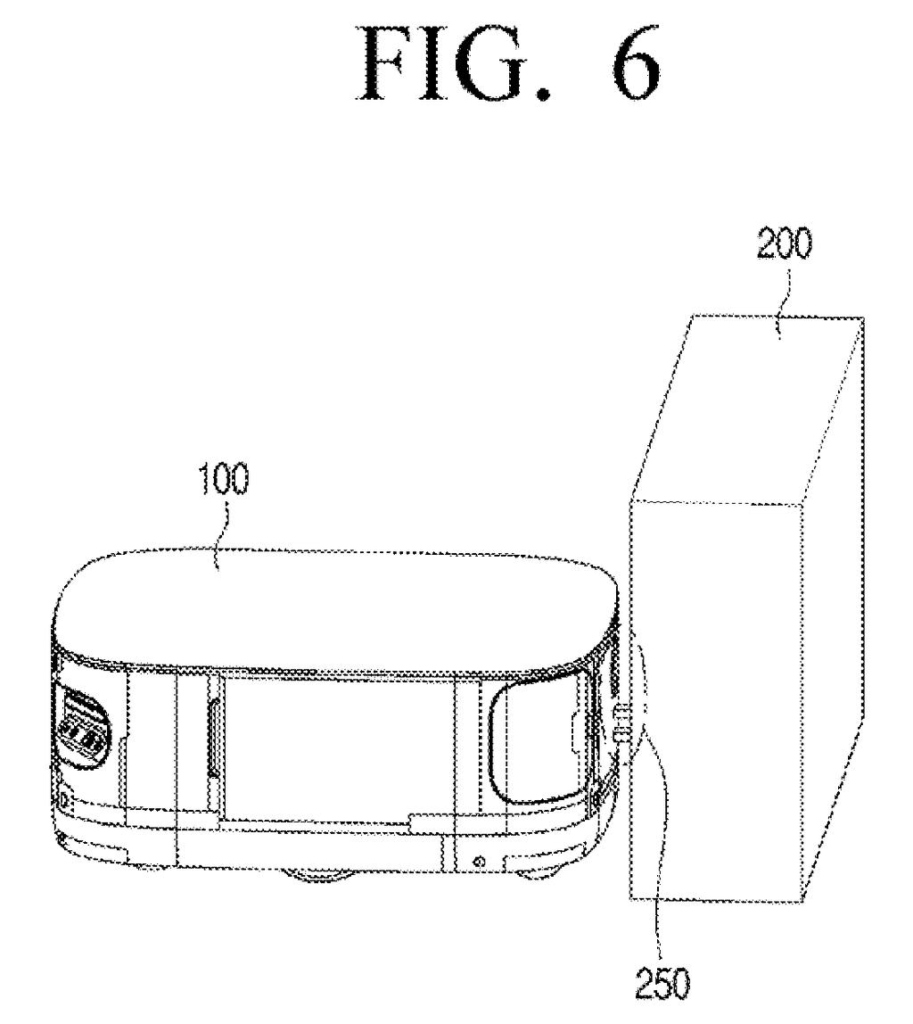
How Samsung's robot confirms it's docked before charging
Imagine plugging in your phone charger, but the cable looks connected even when it isn't seated right. Your phone shows "charging" but barely gains any power. Robots face the same problem when they roll back to their charging stations: they can appear docked without making a reliable connection.
Samsung's patent describes a two-step confirmation system. When a robot docks, it activates a built-in electromagnet. The charging station has a sensor (called a Hall sensor) that detects magnetic fields. If the station picks up that magnetic field, both sides know the robot is actually in position, and charging begins.
Think of it like a secret handshake between the robot and its dock. The robot says "I'm here" with a magnetic pulse, the station says "confirmed," and only then does power flow. It's a low-cost way to prevent wasted charging cycles or a robot that wanders off half-charged.
How the electromagnet and Hall sensor complete the circuit
The patent describes a robot equipped with a communication interface, an electromagnet, a battery, and onboard processors. The charging station has a Hall sensor, a device that detects the presence and strength of a magnetic field.
The sequence works like this:
- The robot detects a low-battery event and navigates to its charging station.
- Once physically docked, the station sends the robot a "docking status" message over their wireless communication link.
- The robot then activates its electromagnet, generating a localized magnetic field.
- The station's Hall sensor confirms it detects that field, completing the verification loop.
- Only after that confirmation does the station begin delivering power to the robot's battery.
The key insight is that the magnetic check acts as an independent, physical confirmation layer on top of the digital communication. Even if the robot thinks it's docked and the station thinks it's docked, the magnet-sensor pair provides a final, low-level sanity check before high-current charging begins. This guards against misalignment scenarios where contacts are close but not properly touching.
What this means for home and warehouse robot reliability
For consumer robots like robotic vacuums or home assistants, a failed charging dock is an annoyance. You come home to a dead robot that thought it charged all day. For warehouse or industrial robots running around the clock, a missed charge can stall an entire workflow. A reliable docking confirmation solves a real operational pain point without adding complex camera systems or expensive sensors.
Samsung has been expanding its robotics portfolio, and this kind of foundational reliability work matters more than it looks. Electromagnets are cheap and Hall sensors are everywhere (they're already in smartphones to detect flip-case closures). Building a robust charging handshake from commodity components is exactly the kind of practical engineering that separates products that work daily from ones that need constant babysitting.
This isn't a flashy patent, but it's solving a genuinely frustrating problem. Charging reliability is one of the unsexy details that determines whether a robot is actually useful in daily life or just a novelty. Samsung is clearly thinking about the infrastructure layer of home and commercial robotics, not just the headline features.
There are more where this came from
We read every patent application Big Tech publishes and send you the ones worth knowing. Plain English, free, every week.
The drawings
7 drawing sheets from US 2026/0217147 A1 · click any drawing to enlarge


Want this weekly breakdown for a company we don't cover? Patentlyze Pro →