
Salesforce Files Patent for a Three-AI Team That Writes and Grades Its Own Instructions
Getting an AI to do what you want often takes days of trial and error with the wording. Salesforce's patent application hands that tinkering to three AI models that write, test and grade the instructions on their own.
What Salesforce's teacher-student-principal trio does
Imagine you ask an AI to write a thank-you email for customers who sent feedback. The first try comes back stiff and generic, so you tweak your wording, try again, and repeat. Now picture that tweaking happening without you.
Salesforce's patent application describes three AI models with different jobs. A "teacher" writes the instructions. A "student" follows them and produces the email. A "principal" grades the result against a checklist and sends notes back to the teacher, who rewrites the instructions and goes another round.
The loop stops once the grade clears a passing score. Only then do you see the result. The filing says this can cut the time needed to build a good set of instructions from days to seconds or minutes.
… generating, by the third machine learned model and based on the third input, feedback data comprising values indicating whether the output meets one or more quality criteria of the task; …
Translation: The third AI acts as a grader, checking if the work meets the required quality standards.
How the grader sends a draft back for another try
The filing describes a loop built from three separate AI models, usually large language models (the text-generating AI behind chatbots). Each gets a system prompt (a standing note telling it what role to play).
- Teacher: takes the user's task, such as "create a customer appreciation email template," and writes the instructions (the "prompt") for the next model.
- Student: follows those instructions and produces the draft. It can look up data in databases when the instructions say so.
- Principal: scores the draft against quality criteria and can call an outside testing tool.
The filing's example checklist has 21 questions, each scored 1 to 5, covering things like completeness, tone, personalization and compliance. The teacher gets the scores and the draft back. Below the threshold, it rewrites the instructions using the feedback, and optionally a knowledge base. At or above it, the result goes to the user's screen and can be saved as a reusable template, tagged with the type of model used.
The filing also describes variations: two student models from different AI makers, several competing teachers, or a second grader focused on safety. In its email example, one rewrite lifts low scores on engagement and personalization to mostly 5s.
The first machine learned model may determine whether to end the iterative process or perform another iteration to produce more refined instruction prompts.
Translation: The first AI decides whether the job is finished or needs to be done over again.
Why Salesforce is automating AI instruction writing
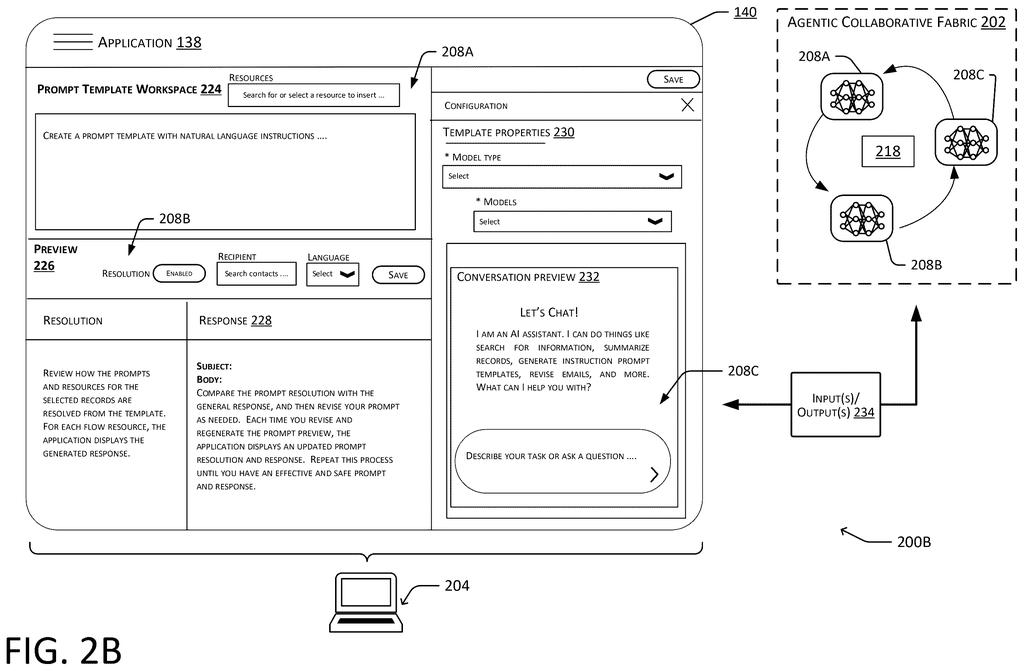
If you use AI at work, the wording of your request often decides whether you get something useful or something bland. This patent application aims to move that trial and error off your plate: the system writes the instructions, checks the result and retries before showing you anything. The filing names Salesforce's Prompt Builder as one place it could be built in, where a follow-up like "make the tone more professional" makes the grader raise its tone standard.
The examiner's first review rejected the claims as filed, which is routine at this stage and usually followed by amendments. The filing also targets a chore companies face when they switch AI providers: instructions that work well on one model often need rewriting for another, and this loop is meant to find versions that give similar results across several.
That makes this Salesforce's 14th filing we've tracked since July in our AI agents working together watchlist, building on their work around agents showing their reasoning and plug-in AI apps.
If you have ever rewritten the same AI request five times to get a decent email, this idea targets exactly that chore. What you would notice is that the first answer you see has already survived a grading round.
The weak spot is the grader. A model scoring another model's work is only as good as the checklist it is handed, and the filing's own example asks for 21 separate judgments on a 1 to 5 scale. If that checklist is sloppy, every round of polishing aims at the wrong target.
You would most likely meet this inside business software, as a template builder that hands over finished email text. Expect it to save time on routine writing, and expect a person to still read the result before it goes out.
Get our take in your Top Stories
Liked this breakdown? Add Patentlyze as a preferred source on Google, and our plain-English take shows up more often in your Top Stories the next time Salesforce patent news breaks.
There are more where this came from
We read every patent application Big Tech publishes and send you the ones worth knowing. Plain English, free, every week.
The drawings
6 drawing sheets from US 2026/0339925 A1 · click any drawing to enlarge


Want this weekly breakdown for a company we don't cover? Patentlyze Pro →
Be the first to weigh in