
Samsung Patents a System That Lets Users Dial In How Hard Their Powered Suit Pushes Back
Samsung is working on a way to let you pick a workout and a "feel" from a menu, then have a powered exosuit automatically adjust its resistance to match, no engineering knowledge required.
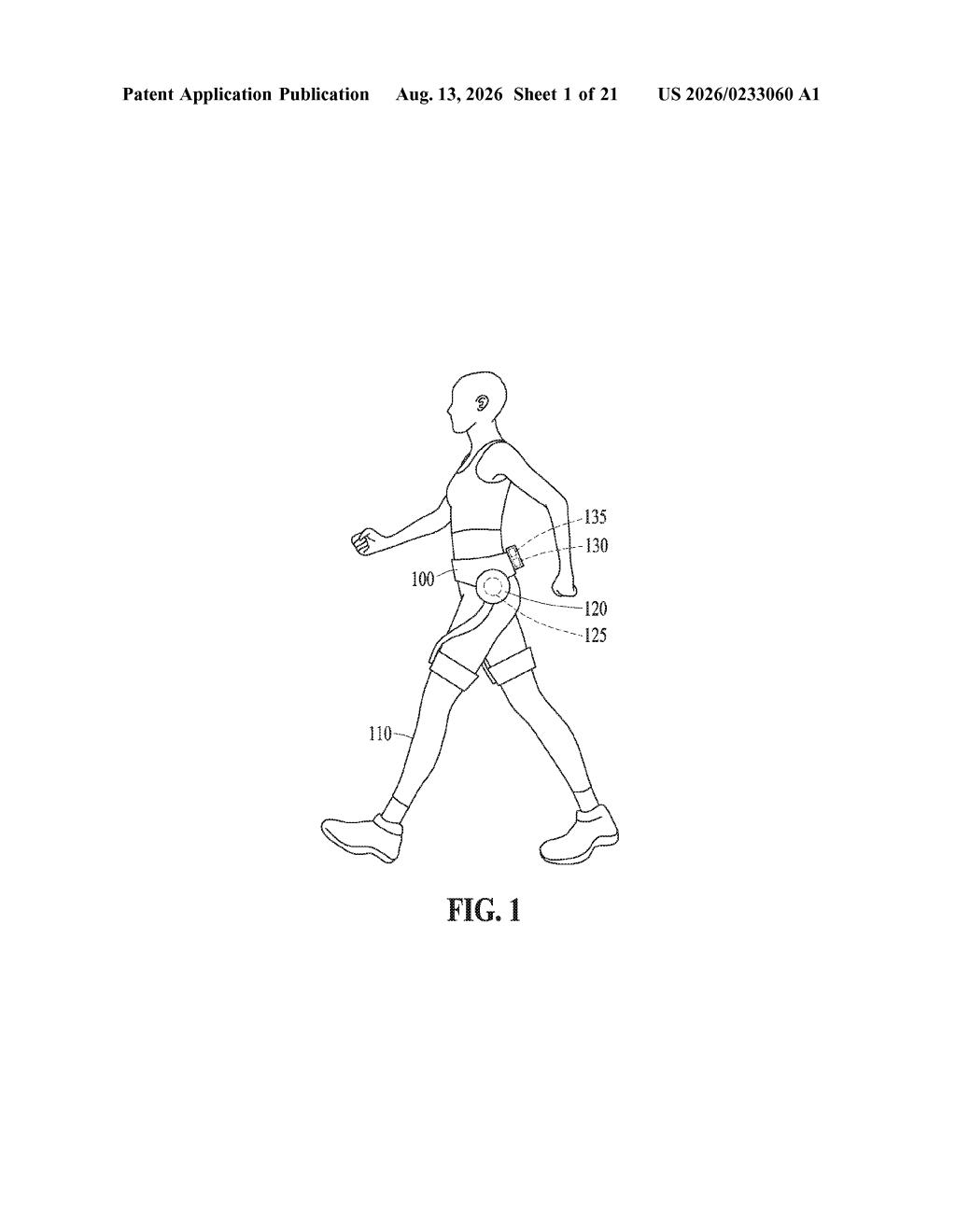
What Samsung's exercise suit control system actually does
Imagine you strap on a powered exercise suit, the kind with motors at your hips that push back or assist your legs as you move. Right now, getting that suit to behave differently for a slow strength session versus a fast cardio drill would require someone technical to reconfigure it. Samsung's patent wants to make that as easy as picking a song on a playlist.
The idea is a two-step menu. First, you choose the type of exercise you want to do. Second, you pick an exercise experience, something like "high resistance" or "natural feel." The device then automatically calculates exactly how much force the suit's motors should apply, and when, based on how your hips are actually moving.
You wouldn't need to understand anything about motors or joint angles. The system watches your body and adjusts the resistance profile in real time to match the experience you selected. It's closer to adjusting a treadmill's incline than programming a robot.
… based on a second user input comprising a selection of an exercise experience attribute associated with the piece of target exercise content, determine a torque profile of the piece of target exercise content; generate a control signal for driving the exercise assistance device based on the determined torque profile; …
Translation: The suit sets its motorized resistance based on how the user wants the workout to feel.
How the torque profile adjusts to your hip movement in real time
The patent describes a control system that sits between a user-facing app or device and a powered exosuit (called an "exercise assistance device") worn at the hips.
The workflow has two clear steps:
- Content selection: The user picks a piece of "exercise content" from a list of candidates, essentially choosing a workout type.
- Experience attribute selection: The user then picks a quality of that workout, such as how much resistance or how natural the movement should feel.
Once those two inputs are made, the system generates a torque profile (a precise, moment-by-moment map of how much rotational force the motors should apply). That profile is computed using real-time data from the user's body: hip joint angles, how fast the hips are rotating, how quickly that rotation is accelerating, and even the difference between what the left and right hips are doing. This symmetry tracking is notable because it means the suit can compensate if your two sides are moving unevenly.
A control signal based on that profile is then sent wirelessly to the exosuit, which drives its motors accordingly. The electronic device handling all this logic could be a phone, tablet, or dedicated controller.
… determines a torque profile of the target exercise content on the basis of a second user input including a selection of an exercise experience attribute associated with the target exercise content …
Translation: The system figures out how hard the suit should push back based on your chosen settings.
What this means for powered exosuit fitness gear
For anyone who might actually use a powered exercise suit, the gap between "technically capable" and "easy to use" is often what keeps the technology in a lab. A system that hides complex motor-control math behind a two-tap menu makes the device accessible to people who have no interest in configuring hardware, which is almost everyone. If Samsung brings this to a consumer product, the practical payoff is a workout tool you can actually adjust on the fly without stopping to fiddle with settings.
The patent also signals that Samsung sees fitness exosuits as a real consumer category worth building UX infrastructure around, not just a medical or industrial tool. Samsung's wearable health hardware ambitions, from the Galaxy Watch to the Galaxy Ring, give this filing some grounding in a real product direction. Coverage of similar wearable and fitness-tech filings runs regularly through Big Tech patent news, where the pattern of companies building exercise-device control layers has become a recognizable thread.
This one earns its keep at setup time: if you've ever tried to use a powered rehabilitation or fitness exosuit, the setup process alone can sap your motivation before the workout starts. A menu-driven experience layer that translates 'I want a tough hip-flexor session' into precise motor commands is exactly the friction-reduction that determines whether a piece of hardware actually gets used. Samsung is essentially filing a UX patent for a hardware category that doesn't yet have mainstream UX, which puts them ahead of the experience problem before the product problem is fully solved.
There are more where this came from
We read every patent application Big Tech publishes and send you the ones worth knowing. Plain English, free, every week.
The drawings
21 drawing sheets from US 2026/0233060 A1 · click any drawing to enlarge


Want this weekly breakdown for a company we don't cover? Patentlyze Pro →
Be the first to weigh in