
Samsung Patents a Call-Blocking System That Stops Spam Calls Before Your Phone Rings
Most phones today let a spam call ring before blocking it. Samsung's latest patent describes a system that kills the call before your phone even makes a sound.
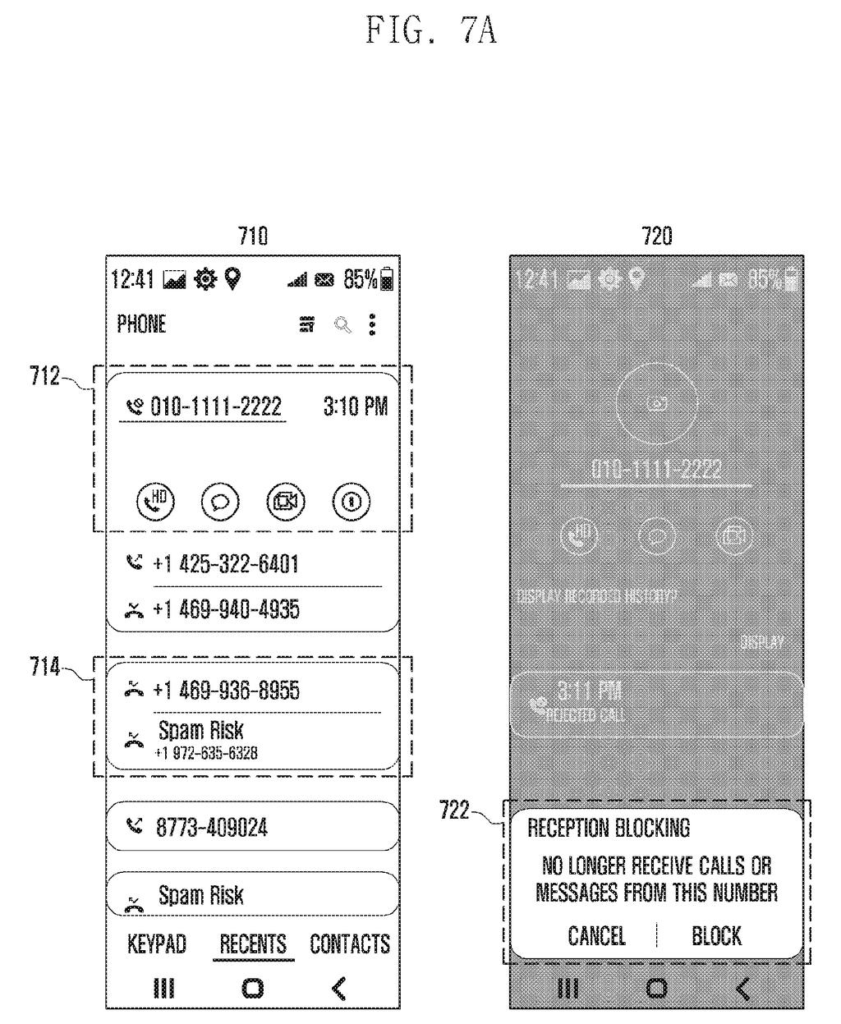
How Samsung's pre-ring call blocking would work on your phone
Ever picked up a call only to realize it was a robocall you'd already blocked three times? The block works eventually, but not before your phone rings, buzzes, and interrupts whatever you were doing.
Samsung's patent describes a way to stop that. When a call comes in, your phone checks the incoming number against your blocked list before it does any of the work needed to actually connect the call. If the number is on the list, the phone sends a rejection message back to the caller's network right away. Your screen never lights up. Your ringtone never plays.
The key difference from how most blocking works today is where in the process the check happens. Current systems often let the call start connecting, then hang up. This approach cuts it off at the first signal, which means less processing, less battery drain, and a quieter phone.
… control to transmit a message rejecting the incoming call to the external device in a state in which operations for preparing establishment of a call connection are not performed based on the number of the incoming call being not included in the blocked number list.
Translation: The phone drops the call without ever starting the connection process.
How the IMS layer intercepts and rejects calls upstream
The patent centers on controlling what's called the IMS layer (IP Multimedia Subsystem, the part of your phone's software that manages voice calls over modern cellular networks like 4G and 5G).
Here's the sequence the patent describes:
- An incoming call arrives as a signaling message from the network.
- The phone's processor tells the IMS layer to pull up the stored blocked-number list from memory.
- The IMS layer checks whether the incoming number matches anything on that list.
- If there's a match, the phone sends a rejection message back to the external device (the carrier network or the caller's server) before completing any of the setup steps normally required to ring.
The claim specifies that call-connection preparation steps are skipped entirely when a block applies. That's the technical hook: the phone never tells its own audio stack, display, or vibration motor to do anything. The rejection is handled purely at the signaling layer.
The patent also covers the inverse case: if the number is not on the blocked list, the phone proceeds normally with call setup.
… a second message for rejecting call reception is transmitted to an external device in a state in which at least one of operations for call connection is not performed.
Translation: The device sends a rejection message before the phone has to wake up or ring.
What earlier spam blocking means for everyday phone users
For you as a phone user, the practical difference is simple: blocked numbers don't make your phone do anything visible or audible. No half-second ring, no screen flash, no missed-call notification from a number you already told your phone to ignore. It's a cleaner experience than what most Android and iOS devices offer today, where blocking often happens after the call has already started connecting at the system level.
There's also a quieter efficiency argument. Every step in setting up a call, even one you're about to reject, costs a small amount of battery and processor time. Cutting the process off earlier reduces that overhead. Whether that savings is large enough to matter in practice depends on how many blocked calls you receive, but for people who get dozens of spam calls a day, it could add up.
Samsung's 1261st filing we've tracked since May in our Samsung coverage adds to a run that includes keeping earbuds in sync and a dual-purpose slide motor.
The design cuts a call short before your phone has done much of anything, which saves processing time but also means the blocked list has to be right before any other check can run. If a number lands on that list by mistake, the caller gets a rejection with no opportunity for your phone to catch the error or let you intervene.
That early cutoff also strips away context that a later check might use, like whether the incoming call resembles an emergency line or a legitimate voicemail system. Blocking before those signals are available is a reasonable bet in most cases, but the patent says nothing about what happens when the bet is wrong.
For everyday spam calls, the tradeoff reads as clearly worth making. The gap is around edge cases, and any real-world version of this system will live or die by how carefully it handles the exceptions the patent does not address.
There are more where this came from
We read every patent application Big Tech publishes and send you the ones worth knowing. Plain English, free, every week.
The drawings
9 drawing sheets from US 2026/0281167 A1 · click any drawing to enlarge


Want this weekly breakdown for a company we don't cover? Patentlyze Pro →