
Samsung Patents a Speaker Design That Reshapes How the Coil Sits Inside
Samsung has patented a subtle but specific change to the inside of a speaker: a small groove cut into the metal housing so the coil can sit closer to the magnet without grinding against it. The goal is more consistent, linear movement from the part that makes your speaker vibrate.
What Samsung's groove-and-coil speaker tweak actually does
Every speaker, from a giant home audio system to the tiny one in your phone, works by pushing a thin membrane (called a diaphragm) back and forth very fast. That motion creates the pressure waves your ears interpret as sound. The part that does the pushing is a coil of wire sitting next to a magnet, and how precisely that coil moves determines how clean the sound is.
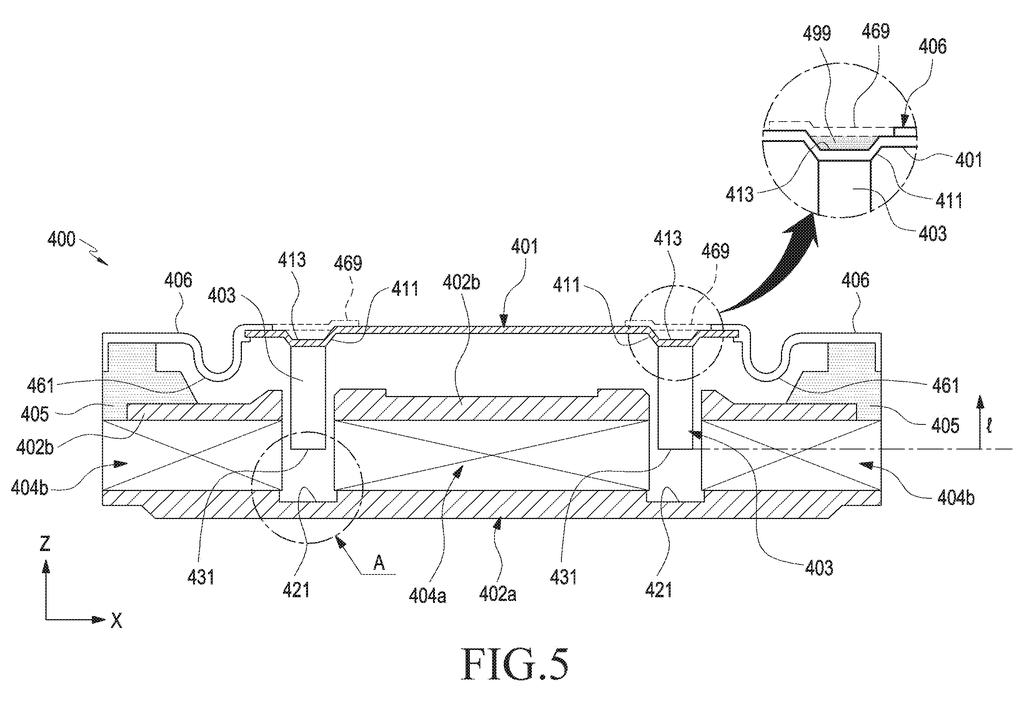
The problem is that in small, tightly packed speakers, the coil can rub or misalign as it moves, distorting the audio. Samsung's patent describes cutting a small groove into the metal yoke (the structural plate the magnet mounts on) so the coil has a defined space to move into without contact. The coil lines up directly with that groove, keeping its motion straight rather than wobbly.
The practical pitch is better BL characteristics, which is just engineer shorthand for how efficiently electrical power converts into physical movement. A more linear, efficient conversion means less distortion and potentially louder or cleaner audio from a small speaker.
… a yolk disposed to face the diaphragm and including an avoidance groove formed on a surface thereof facing the diaphragm …
Translation: The speaker features a specially notched metal base designed to give internal parts extra clearance.
How the avoidance groove changes coil and magnet behavior
The patent covers a speaker assembly built around four main parts: a frame, a diaphragm (the moving membrane), a yoke (a metal plate that provides magnetic structure), and a coil wound directly onto one face of the diaphragm.
The key detail is the avoidance groove cut into the yoke's surface facing the diaphragm. The coil is positioned so that its bottom face aligns directly over this groove. When an electrical audio signal flows through the coil, the interaction between the coil's induced magnetic field and the magnet mounted on the yoke pushes and pulls the diaphragm back and forth linearly. The groove means the coil never makes contact with the yoke during that travel, removing a common source of friction and mechanical distortion.
Samsung's design accommodates two magnet configurations:
- A first magnet mounted on the yoke and positioned inside the coil (the coil wraps around it)
- A second magnet positioned outside the coil (it surrounds the coil)
Both arrangements work with the same groove geometry. The BL product (short for force factor, a standard measure of how much mechanical force a speaker's motor generates per amp of current) stays more consistent across the coil's travel range, which is what Samsung means by "improved BL characteristics."
What this means for speakers in phones and small devices
For the average person, this kind of internal speaker change shows up as marginally cleaner audio from a thin device, or the same audio quality from a physically smaller speaker. Phones and tablets are always fighting for internal space, and a speaker that can move accurately in a tighter package is useful engineering.
In terms of real products, Samsung makes speakers for its phones, tablets, and smart home devices, all of which would benefit from this kind of efficiency gain. The improvement is incremental rather than transformational, but audio quality has become a genuine differentiator in the premium phone market, so even small gains in how efficiently a speaker converts electricity to sound carry commercial weight.
Samsung's 25th filing in Audio patents we cover since May follows earlier work on pre-playback audio parsing and phone-controlled Bluetooth broadcasts.
Claim 1 locks in a specific physical arrangement: a groove cut into the yoke (the metal backbone of the speaker motor) must sit directly across from the moving coil, and a magnet must sit either inside the coil or around it. That combination is the full scope of what this patent covers, nothing more.
In practice, that means anyone building a speaker with this exact groove-and-coil alignment for smoother coil movement would need to clear this patent. A manufacturer could sidestep it by solving the same problem through a different physical approach, say by reshaping the coil housing or adjusting the suspension, because the claim only reaches this particular geometry.
At millions of units per year, a patent on the shape of a metal part matters. Consistent tolerances in speaker motor assembly drive real quality and cost differences, and owning the rights to one proven geometric solution gives Samsung a concrete manufacturing advantage.
There are more where this came from
We read every patent application Big Tech publishes and send you the ones worth knowing. Plain English, free, every week.
The drawings
11 drawing sheets from US 2026/0281626 A1 · click any drawing to enlarge


Want this weekly breakdown for a company we don't cover? Patentlyze Pro →
Be the first to weigh in