
Samsung Display Patents a Precisely Spaced Frame for Keeping Screens Centered
A screen that shifts even slightly inside its frame can crack, flex unevenly, or show pressure marks. Samsung Display's new patent is essentially a recipe for getting that fit exactly right.
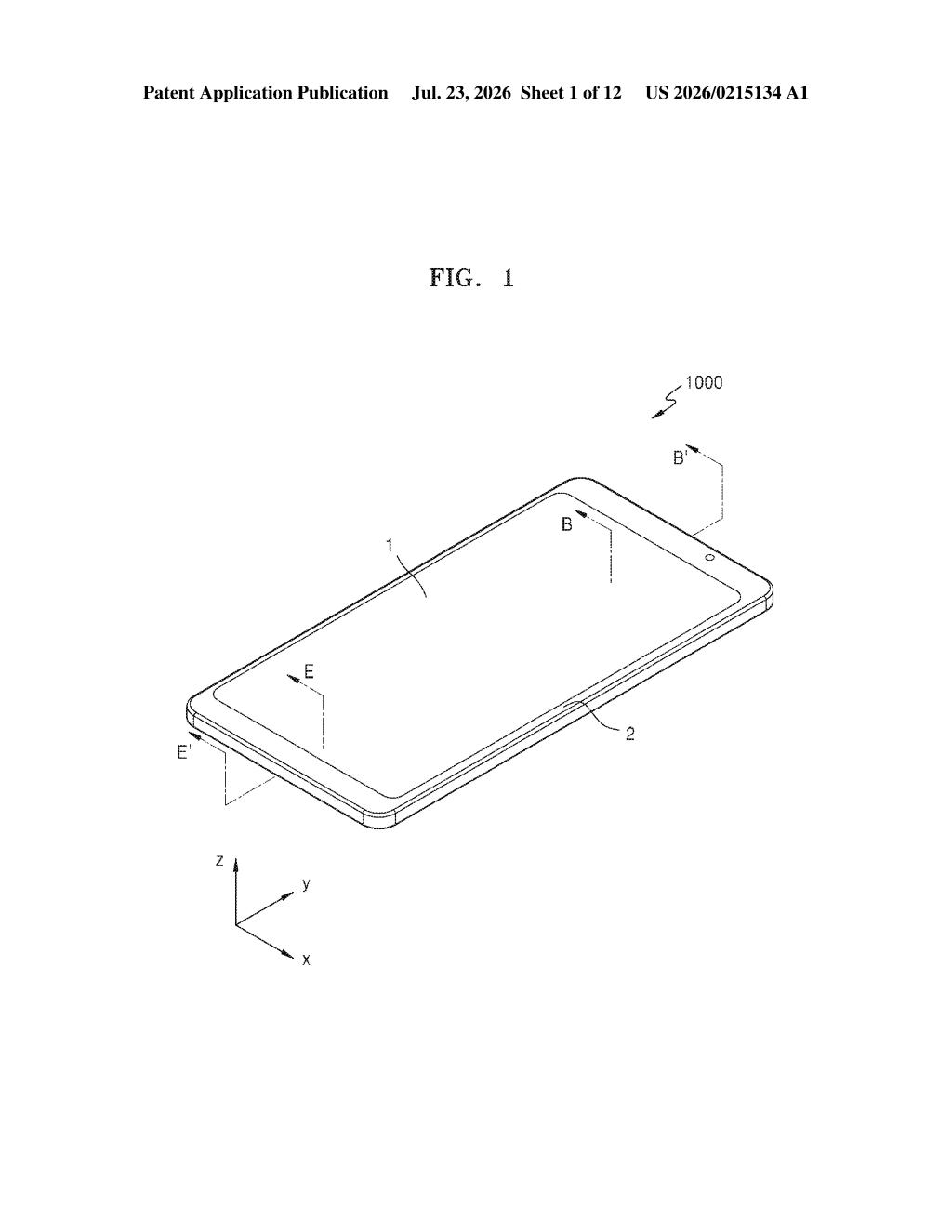
How Samsung's frame keeps a screen from shifting inside a device
Imagine sliding a framed picture into a box that's just barely too loose. The picture rattles, knocks against the sides, and eventually gets damaged. The same problem applies to the screens inside phones and tablets, where even a millimeter of slop in the frame can cause the display to flex or crack under pressure.
Samsung Display's patent describes a frame design with a very specific rule: the gap between the frame's inner wall and the top surface of the screen has to be roughly equal to the gap between a bottom ledge and the underside of the screen stack. The ratio of those two gaps has to stay between 0.8 and 1.2, meaning neither gap can be dramatically larger than the other.
The idea is that equal pressure from all sides keeps the display centered and stable. If one gap is much wider than the other, the screen can tilt or bow, which puts stress on the layers inside. This kind of spec is the unglamorous engineering work that separates displays that survive drops from ones that don't.
How the 0.8-to-1.2 spacing ratio holds the display stack in place
The patent covers a display stack made of four layers: a lower plate (a structural backing), a display panel (where the image is actually generated), a glass layer on top of that, and a window protection layer (the outermost surface you touch).
All four layers sit inside a frame that wraps around the outside of the stack. The frame has two key features:
- An extension part that runs vertically alongside the edges of the display stack.
- A protrusion part that juts inward at the bottom to create a shelf the lower plate rests near.
The patent defines two gaps. The first separation distance is the horizontal gap between that inward-jutting shelf and the side of the lower plate at the bottom. The second separation distance is the horizontal gap between the vertical wall of the frame and the side of the topmost protection layer.
The core claim is that the ratio of those two gaps must be between 0.8 and 1.2. In practice, that means the top gap and bottom gap have to be within about 20% of each other. If one is significantly wider, the display is off-center, which introduces uneven mechanical stress across the stack's layers.
What tighter frame tolerances mean for display durability
For consumers, the payoff is a display that's less likely to develop pressure spots, dead zones, or cracks along the edges after repeated drops or long-term use. Screens fail at their weakest point, and an off-center fit creates one.
For Samsung Display as a component supplier, this kind of manufacturing specification matters because it affects yield rates and warranty costs across millions of panels. A patent on a precise tolerance ratio also gives Samsung a basis to differentiate its display modules from competitors when pitching to device manufacturers who license or purchase display assemblies.
This is unglamorous but real engineering. Samsung Display is essentially patenting a tolerance spec, which sounds trivial until you realize that getting frame-to-display fit wrong at scale costs manufacturers enormous amounts of money in returns and repairs. It's not the kind of patent that generates headlines, but it's exactly the kind that gets licensed into supply chain agreements.
There are more where this came from
We read every patent application Big Tech publishes and send you the ones worth knowing. Plain English, free, every week.
The drawings
12 drawing sheets from US 2026/0215134 A1 · click any drawing to enlarge


Want this weekly breakdown for a company we don't cover? Patentlyze Pro →
Be the first to weigh in