
Sony Patents a Video Encoding Trick That Skips Redundant Color Transform Data
Sony is patenting a subtle but meaningful tweak to video encoding: skip writing transform type metadata entirely when any color channel is already bypassing the transform step — saving bits without losing quality.
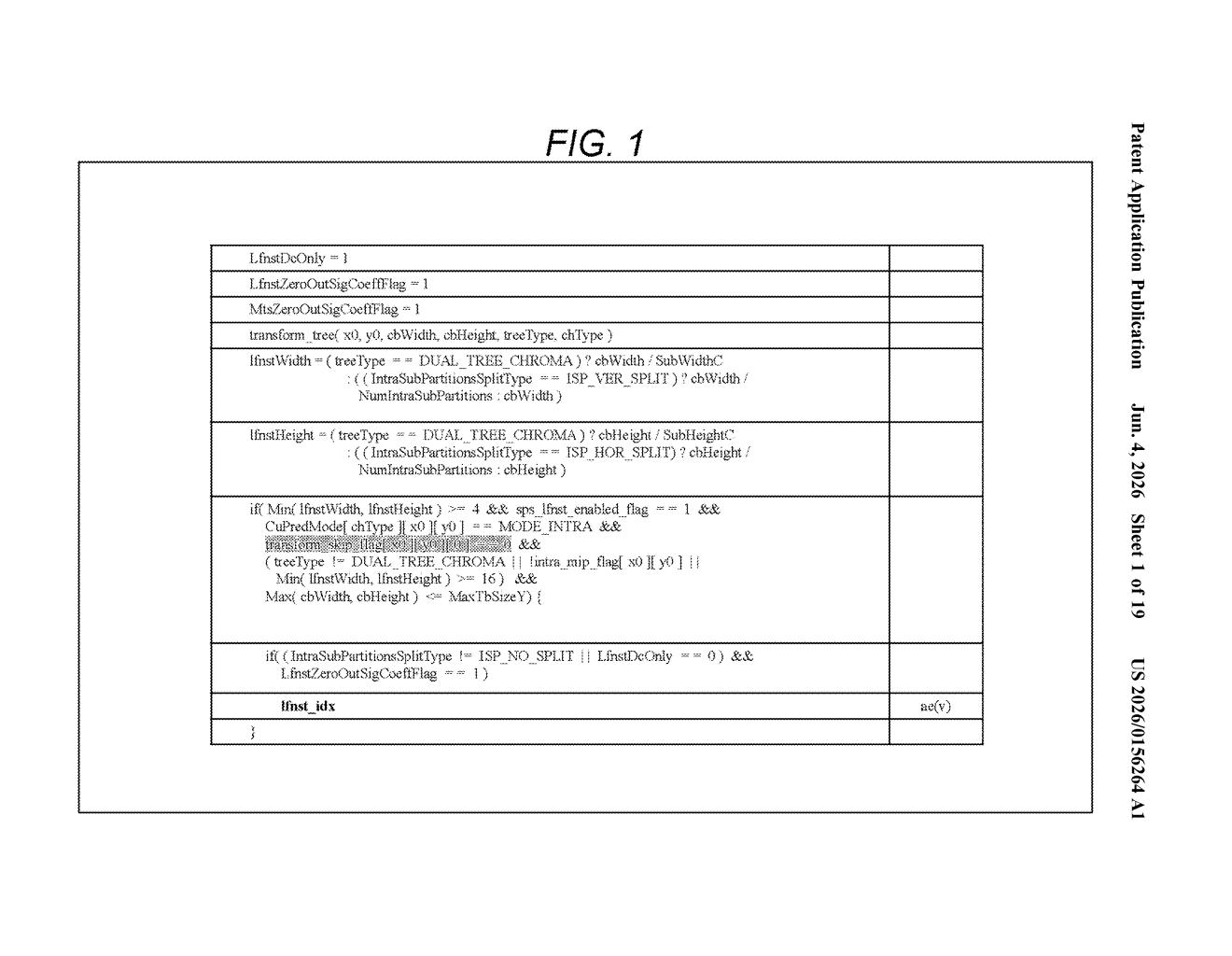
What Sony's secondary transform skipping actually does
Imagine your video encoder as a very meticulous packer. For every block of video it compresses, it normally writes a note explaining which compression trick it used — even when some of those notes are completely pointless because certain steps were skipped entirely.
Sony's patent targets exactly that wasted note. When your encoder decides to skip the "secondary transform" step for even one color channel in a video block, writing down which type of secondary transform was used becomes meaningless. This patent says: in that case, just don't write it at all.
The result is that video files — or streams — carry slightly fewer redundant bits per block. Multiplied across millions of blocks in a movie or video call, those savings add up to measurably better encoding efficiency without touching image quality.
How the encoder decides when to drop transform identifiers
Video encoders like those built on the VVC (Versatile Video Coding) standard apply multiple rounds of mathematical transforms to compress image data. The first transform (a DCT, for example) converts pixel values into frequency data. A secondary transform then further compresses that frequency data — but only when it's beneficial to do so.
To tell the decoder which secondary transform was used, the encoder writes a small identifier called the secondary transform identifier (LFNST index) into the bitstream. The problem: if a transform skip flag is set to "true" for any of the three color components (Y for luma, Cb and Cr for chroma), the secondary transform was never applied — making that identifier completely useless data.
Sony's patent formalizes a rule for when to omit that identifier entirely:
- The encoder only writes the secondary transform identifier when operating in single-tree mode (where luma and chroma share the same block partitioning structure).
- All three transform skip flags — for the Y, Cb, and Cr components — must be false (meaning none of them bypassed the transform step).
- If any one of those flags is true, the identifier encoding is skipped altogether.
The decoder, following the same logic, simply assumes no secondary transform was applied when it sees a skipped flag — no ambiguity, no extra signaling needed.
What this means for video codec efficiency
Every unnecessary bit written into a video bitstream is a bit that could have carried actual image data instead. This kind of conditional signaling — only encoding metadata when it's meaningful — is a core technique in modern codec design, and the gains compound across high-resolution or high-frame-rate content.
For Sony, this fits squarely into its ongoing work on VVC and next-generation codec implementations, which power everything from broadcast cameras to PlayStation media playback to professional video production pipelines. If this technique makes it into a finalized codec profile, you'd benefit from slightly better quality at the same bitrate — or the same quality at a lower one — without any change to how you watch or record video.
This is a focused, incremental codec optimization — not a headline feature. But incremental codec work is exactly how standards bodies and silicon vendors extract meaningful efficiency gains over time, and Sony is a serious player in the VVC standardization space. Worth tracking if you follow codec development or Sony's imaging hardware roadmap.
There are more where this came from
We read every patent application Big Tech publishes and send you the ones worth knowing. Plain English, free, every week.
Want this weekly breakdown for a company we don't cover? Patentlyze Pro →