
New Patent Helps Robots Navigate Buildings With Precision
GPS is useless indoors, and that's a real problem for robots navigating warehouses, hospitals, or office buildings. Sony's new patent describes a way to help a moving machine figure out where it is by comparing what its sensors see right now to a pre-labeled map of the space.
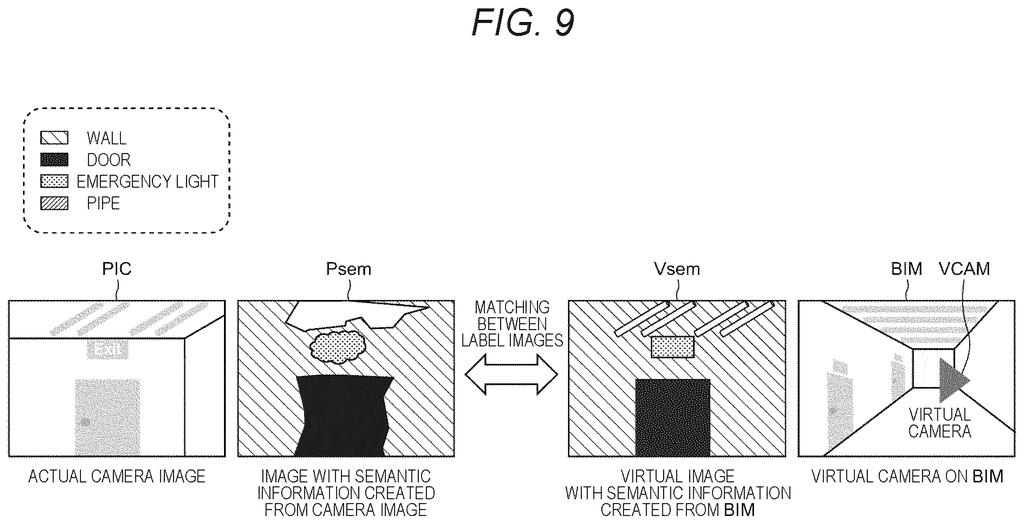
How Sony's indoor positioning system actually works
Imagine a delivery robot trying to navigate a hospital corridor. It can't use GPS indoors, so it needs another way to figure out where it is. Sony's patent describes a system that gives the robot a pre-built map of the building, where each area is labeled with what it actually is (a hallway, a doorway, a stairwell) and not just its shape.
As the robot moves around, its sensors (think lidar or depth cameras) scan the surroundings in real time. The system then compares those live scans against the labeled map, matching scan data against the correct type of area rather than treating the whole building as one undifferentiated blob. A wall in a corridor is matched against other corridor walls; a door frame is matched against other door frames.
The result is more reliable position tracking, because the system is comparing apples to apples instead of mixing up structurally similar-looking spaces. Sony says this applies to mobile bodies inside buildings, which in practice means robots, drones, or autonomous indoor vehicles.
… robustly estimating a position and an attitude of a mobile body with respect to an environment.
Translation: Figuring out exactly where a robot is located and which way it is facing.
How the sensor-to-map matching pipeline breaks down
The patent describes a four-step pipeline for indoor localization (figuring out where a moving machine is).
- Structure information to shape information: A building's architectural data (floor plans, 3D models) is converted into a format that matches what the robot's sensors actually output, so the two can be compared directly.
- Semantic extraction: From that same architectural data, the system pulls out semantic information (meaning labels) for each region: this area is a corridor, that area is a room entrance, this is a pillar. Think of it like color-coding a map by room type instead of just drawing the walls.
- Semantic estimation on live sensor data: As the robot's sensors capture the environment in motion, the system estimates which semantic category each part of the live scan belongs to. So the robot's sensor sees something and the system guesses: that's probably a doorway.
- Attribute-based matching: Instead of matching the entire live scan against the entire map at once, the system matches sensor data to map data category by category. Doorway readings are matched against doorway map regions; corridor readings against corridor map regions. This reduces the chance that a narrow hallway gets confused with a similarly-shaped storage room wall.
The core idea is that adding meaning to geometric data makes the position estimate more reliable, especially in buildings where many areas look structurally identical.
… extracting, from the structure information, semantic information representing a meaning of each region constituting the environment; …
Translation: Figuring out what different areas of a building are actually used for.
What this means for robots operating in real buildings
Indoor navigation is one of the harder unsolved problems in robotics. Buildings are full of symmetrical corridors, repeated room layouts, and featureless walls that confuse purely geometry-based systems. By layering semantic labels on top of shape data, Sony's approach gives the robot extra context that narrows down where it could possibly be.
This matters most for autonomous robots operating in complex indoor environments like hospitals, warehouses, and airports, where a positioning error of even a few meters can cause real problems. If Sony integrates this into its robotics or smart-building product lines, it could make indoor autonomous navigation meaningfully more dependable for operators who can't afford constant manual correction.
This is solid, practical robotics engineering rather than a splashy AI announcement. The idea of sorting sensor data by semantic category before matching it to a map is a sensible incremental improvement on existing localization methods, and it addresses a real pain point. It's worth tracking if you follow Sony's robotics ambitions, but it's not a standalone breakthrough on its own.
There are more where this came from
We read every patent application Big Tech publishes and send you the ones worth knowing. Plain English, free, every week.
The drawings
11 drawing sheets from US 2026/0227780 A1 · click any drawing to enlarge


Want this weekly breakdown for a company we don't cover? Patentlyze Pro →
Be the first to weigh in