
Salesforce Patents a System That Saves AI Answers and Reuses Them Later
Running the same question through an AI model over and over is expensive and slow. Salesforce's new patent describes a way to ask once, store the answer, and serve it back the next time someone asks something similar.
How Salesforce's AI answer cache actually works
Imagine your company's sales dashboard flags an unusual dip in revenue last March. An AI analyzes that dip and writes up an explanation. Now imagine a second employee, or a hundred employees, asking the same question about that same March dip. Without a smarter system, the AI would have to redo all that work every single time.
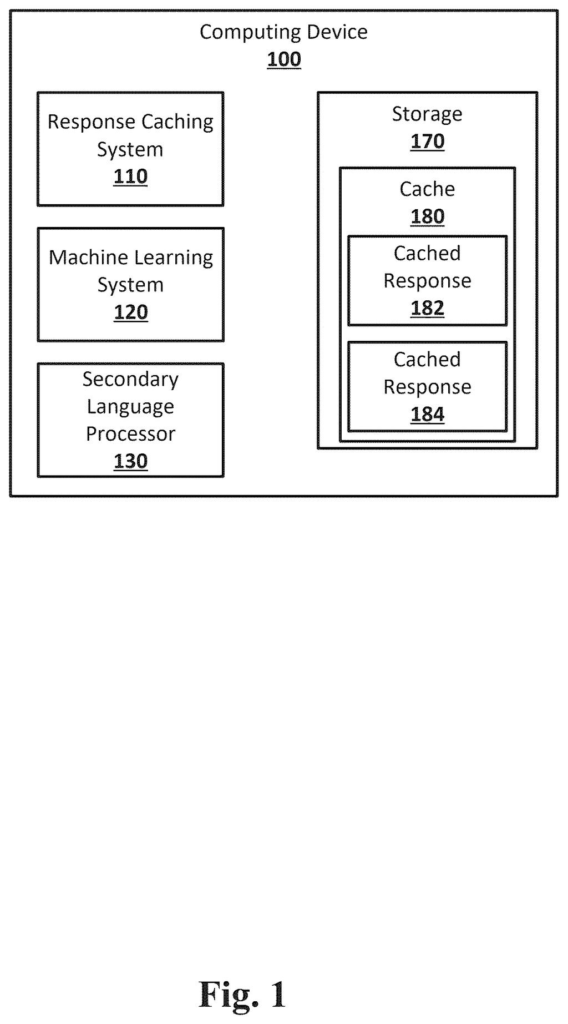
Salesforce's patent describes a caching system (essentially a memory shelf) that stores AI-generated text answers alongside the specific data and time window they describe. When a new user asks a question that matches what's already on the shelf, the system pulls the saved answer instead of running the AI again.
There's also a second step: a lighter AI model takes that stored answer and condenses it into a fresh summary tailored to the new user's request. So you still get a personalized-feeling response, but most of the heavy computational lifting only happened once.
How the cache matches stored answers to new user questions
The patent covers a pipeline designed for time-series data, the kind of data that has both a value and a timestamp (think sales figures, sensor readings, or server metrics). The system works in a few stages:
- Point-of-interest detection: The system scans incoming data vectors (sequences of timestamped numbers) and identifies a range of time values worth investigating, essentially flagging anomalies or patterns.
- First AI call: That flagged slice of data, along with a structured question, gets sent to a primary machine learning model for a full text analysis.
- Cache storage: The resulting text response is stored alongside a vector identifier (a tag for which data stream it refers to) and an index marking the exact time window. This is the answer shelf.
- Cache lookup: When a user later asks about a specific data source and time period, the system checks whether a matching answer already exists in the cache.
- Summarization pass: A secondary, lighter language model takes the cached answer and produces a condensed summary for the user, allowing the output to feel fresh without re-running the expensive primary model.
The net effect is that the costly AI analysis happens once per data window, while subsequent users get fast, lightweight summaries drawn from that stored result.
What this means for AI costs in enterprise software
For enterprise software like Salesforce's CRM and analytics products, AI inference costs add up fast when thousands of users are querying overlapping data. A caching layer that stores and reuses AI-generated answers could meaningfully reduce those costs while also returning answers faster, which matters when employees are checking dashboards in real time.
For you as a user, the practical effect would be quicker responses to data questions without a noticeable drop in quality, because the summarization step still tailors the output to your specific request. The tradeoff is that cached answers reflect the data at the time the original analysis ran, so very fresh or rapidly changing data streams would still need a new AI call to stay accurate.
This is unglamorous infrastructure work, but it's the kind of patent that actually ships and saves money. Caching AI responses for time-series analytics is a sensible optimization for any company running AI across large numbers of enterprise users, and Salesforce has exactly that problem at scale. Don't expect a product announcement tied to this, but do expect the idea to appear inside Einstein or Agentforce.
There are more where this came from
We read every patent application Big Tech publishes and send you the ones worth knowing. Plain English, free, every week.
The drawings
7 drawing sheets from US 2026/0220182 A1 · click any drawing to enlarge


Want this weekly breakdown for a company we don't cover? Patentlyze Pro →
Be the first to weigh in