
Sony Patents a Finger Ring That Controls AR Displays With a Tap
Sony has filed a patent for a smart ring worn on one finger that lets another finger tap or gesture to control virtual objects in AR or VR space, and the display automatically repositions itself depending on whether you're wearing the ring on your left or right hand.
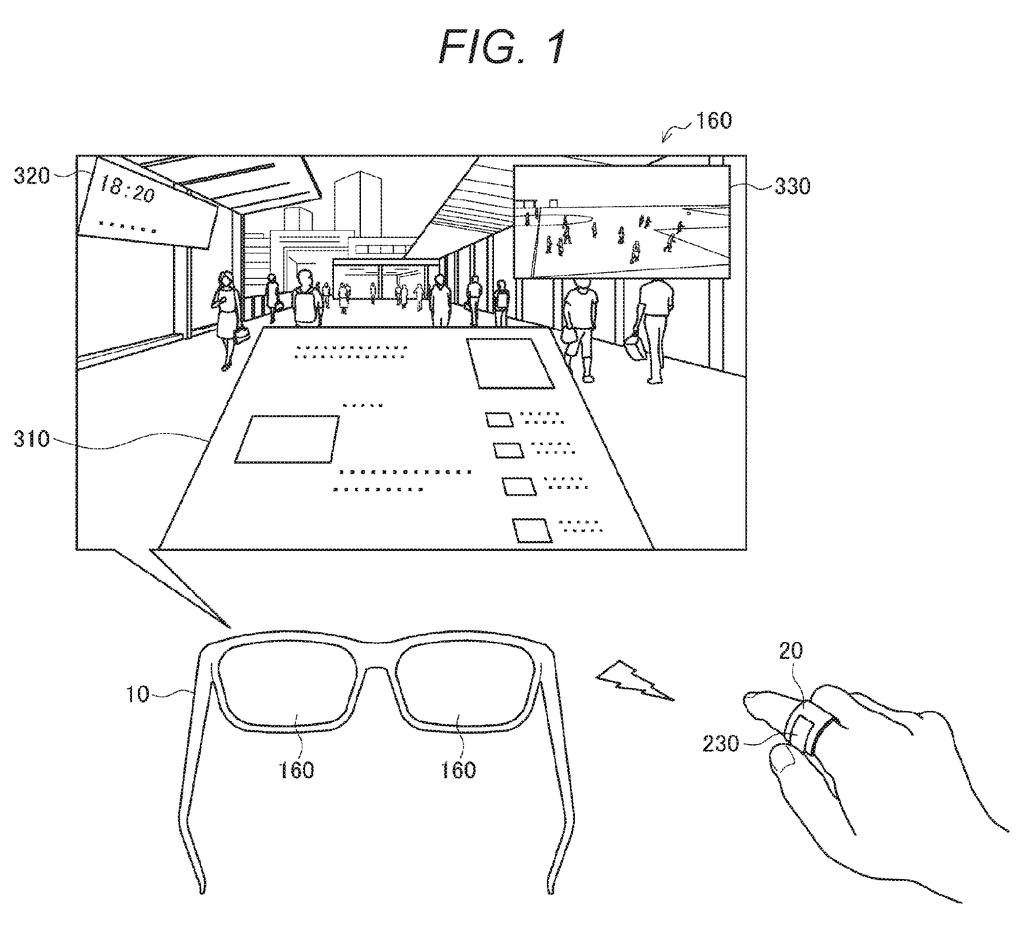
What Sony's tap-to-control AR ring actually does
Imagine you're wearing an AR headset and need to tap a floating menu to answer a message, but your hands are full or you don't want to wave at thin air. Sony's patent describes a thin ring you slip onto a finger that watches what your other fingers do and sends those taps or gestures wirelessly to your headset or phone.
The clever part is that the system knows which hand you're wearing the ring on. If you switch it from your right hand to your left, the virtual objects displayed in front of you shift position automatically so they're always within natural reach. No digging through settings, no awkward stretching.
The goal, as Sony frames it, is an input method that feels natural in everyday life rather than something you have to learn or think about. A ring is small, stays on your finger, and doesn't require you to pick up a remote or touch a screen.
obtain first information indicating whether an input device is supported by a left hand or a right hand of a user; and determine a display position of a first virtual object based on the first information …
Translation: The system figures out which hand wears the ring to place augmented reality images correctly.
How the ring detects fingers and shifts the AR layout
The patent covers two overlapping inventions described together. The first is a ring-shaped input device that sits on one finger and uses sensors to detect when adjacent fingers tap, pinch, or gesture against it. Those inputs are sent wirelessly (Bluetooth is the obvious candidate) to an external device such as a phone, tablet, or AR headset.
The second piece, captured in the lead claim, is an information processing apparatus (essentially the software running on the headset or connected device) that figures out whether the ring is on your left or right hand. Based on that determination, it calculates where to place a virtual object in your field of view, either overlaid on the real world in AR or positioned in a fully virtual space.
The positioning logic matters because the ring acts as a pointing or tapping device, so the virtual button or menu needs to be somewhere your ring-hand can comfortably reach. If the system places a floating control panel to the right when you've switched the ring to your left hand, every interaction becomes uncomfortable.
Key components listed in the patent:
- A ring-shaped main body worn on a finger
- One or more sensors that detect another finger's movement or contact
- A wireless communication unit
- A control unit that packages and transmits the input data
- Companion software that reads left-or-right-hand status and adjusts the displayed virtual object accordingly
… ring-shaped main body portion to be mounted on a finger of a user; one or more sensors that are provided in the main body portion and that detect information regarding an operation input by another finger …
Translation: A wearable ring uses sensors to detect taps and gestures made by your other fingers.
What this means for hands-free AR headset control
For anyone using AR glasses or a VR headset, input is still the unsolved problem. Hand tracking works but tires your arms. Controllers are accurate but you have to pick them up. A ring you already have on your finger collapses that friction considerably. Sony's approach also handles a detail most input research ignores: people are not always consistent about which hand they use, and a system that adapts to you rather than demanding you adapt to it is a real quality-of-life difference.
a growing pile of Sony spatial-computing filings suggests the company is treating the input layer as seriously as the display layer in its AR and VR work. If this ring design shows up in hardware tied to a PlayStation VR successor or a standalone headset, the left-or-right-hand detection could be the kind of small feature that makes the whole experience feel considered rather than bolted together.
Sony's 25th filing we've tracked since July in the AR glasses race builds on earlier applications like shutter glasses for public screens and compressing spatial audio.
The detail that earns its place in this patent is automatic hand detection. Swap the ring from your right hand to your left mid-use, and the device figures it out without you opening a settings screen. That moment of invisible correction is where most wearables fail their users.
A ring that misreads every third tap would become an obstacle faster than any device you carry in your pocket, because you cannot put it down mid-task. The engineering here focuses on making the sensing reliable and continuous, which suggests Sony understands that a wearable either earns constant trust or gets taken off permanently.
For everyday use, the concrete promise is simple: controls that follow your actual hand, not the hand the device assumed you would always use. That is a small thing until it breaks, and then it is everything.
There are more where this came from
We read every patent application Big Tech publishes and send you the ones worth knowing. Plain English, free, every week.
The drawings
27 drawing sheets from US 2026/0277324 A1 · click any drawing to enlarge


Want this weekly breakdown for a company we don't cover? Patentlyze Pro →