
New Sony Patent Fixes Timing Mismatch Between Two Different Sensors
Two sensors watching the same room but running at different speeds create a subtle but real problem: the data they produce doesn't line up. Sony's new patent describes a way to reconcile that mismatch automatically.
What Sony's dual-sensor timing fix actually does
Imagine two cameras pointed at the same scene, but one takes photos twice as fast as the other. When you try to combine their pictures into one view, the faster one has moved on to a newer moment while the slower one is still catching up. The result is a blurry or inconsistent combined image.
Sony's patent tackles exactly that problem. One sensor captures full frames at a steady pace. A second sensor works faster internally, producing several quick "sub-snapshots" for every one frame the first sensor takes, but then bundles them into a slower overall output. Sony's system picks the right sub-snapshots based on the timing of the first sensor's frames, then assembles a custom version of the second sensor's data that lines up cleanly.
The end result is that both streams of data are synchronized before they're combined, giving the system a more accurate picture of what's happening in the space being observed.
How the system selects and merges sub-frames
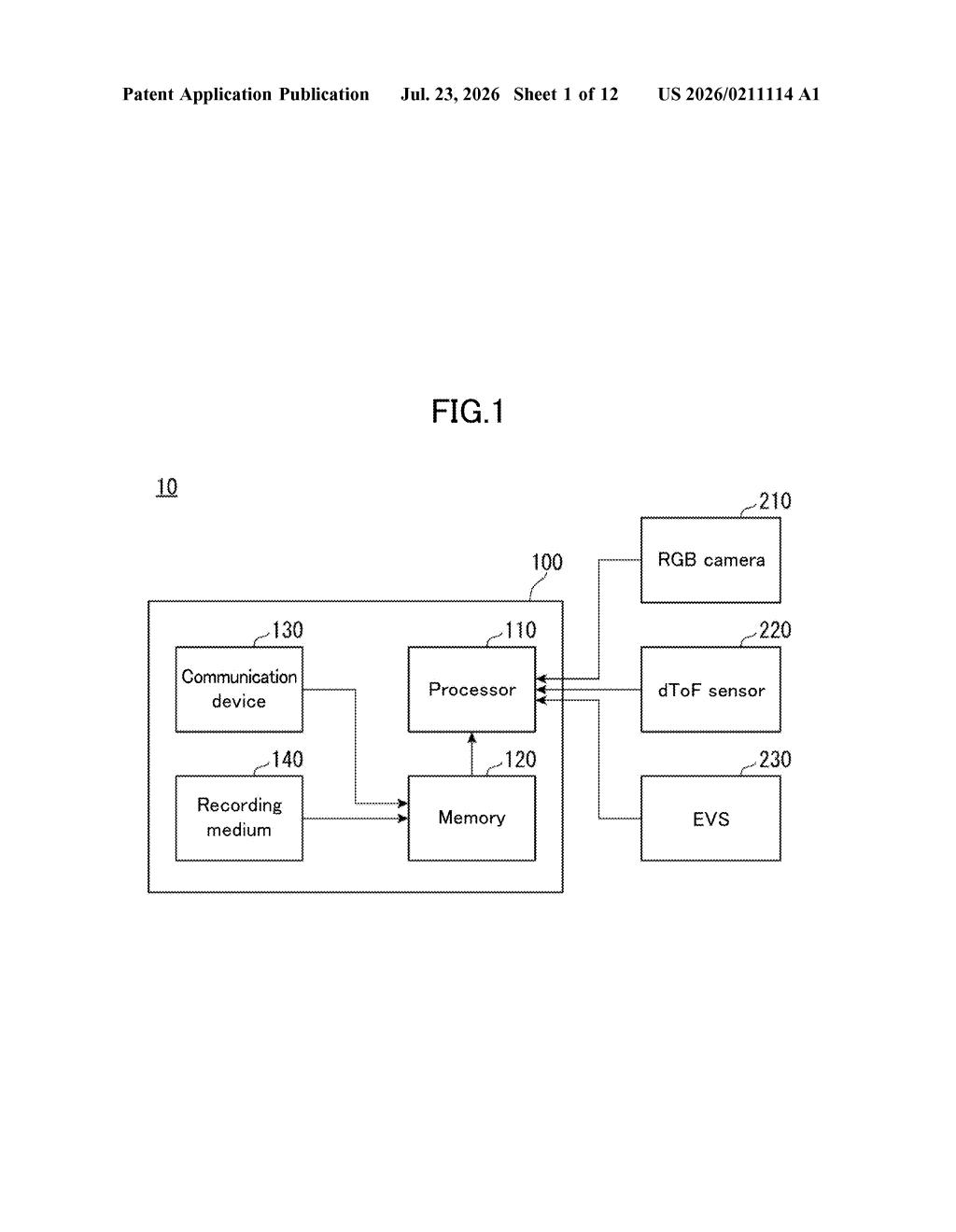
The patent describes a processor-based system that ingests data from two sensors scanning the same physical space. Sensor one (the "first sensor") produces frames at a fixed, relatively slow interval. Sensor two (the "second sensor") operates differently: it generates multiple rapid sub-frames internally, then groups them into a slower overall output rate that is actually longer than the first sensor's interval.
The timing mismatch between these two outputs is the core problem. If you simply fuse (combine) the two streams as-is, the data points won't correspond to the same instant in time, producing inaccuracies.
Sony's solution adds a selection step. The system uses the reference time of each first-sensor frame as an anchor. It then reaches into the second sensor's bundle of sub-frames and picks at least two that best bracket or match that anchor timestamp. Those chosen sub-frames are used to construct a tailored version of the second sensor's output before fusion happens.
The fusion step then combines this time-matched second-frame data with the first-frame data. By aligning them temporally before merging, the combined output is more spatially and temporally consistent than a naive blend would be.
What this means for PlayStation's depth-sensing future
Depth sensing is central to how modern gaming hardware, mixed-reality headsets, and motion-capture systems understand a player's body and environment. When two sensors feeding into that understanding are out of sync, the system makes mistakes: a hand that has already moved appears to still be in the old position for a fraction of a second, which can break tracking or create artifacts.
Sony Interactive Entertainment is the maker of PlayStation and has invested in spatial-sensing technology for VR and camera accessories. A patent like this fits neatly into efforts to improve how a headset or camera array processes the physical world. The technique is sensor-agnostic as described, meaning it could apply to combinations like RGB cameras paired with depth (time-of-flight or structured-light) sensors, which are common in modern spatial computing hardware.
This is a focused, practical engineering patent rather than a headline-grabbing concept. Sensor fusion timing is a real problem anyone building spatial hardware has to solve, and Sony is patenting their specific approach. It won't make news on its own, but it's exactly the kind of infrastructure work that separates polished tracking from jittery tracking in a finished product.
There are more where this came from
We read every patent application Big Tech publishes and send you the ones worth knowing. Plain English, free, every week.
The drawings
12 drawing sheets from US 2026/0211114 A1 · click any drawing to enlarge


Want this weekly breakdown for a company we don't cover? Patentlyze Pro →