
Sony Files Patent for Radar-Based Body Fluid Monitoring
Sony is exploring a way to measure fluids inside your body, like blood, using radar signals bounced through your skin. No needle, no finger prick, no lab.
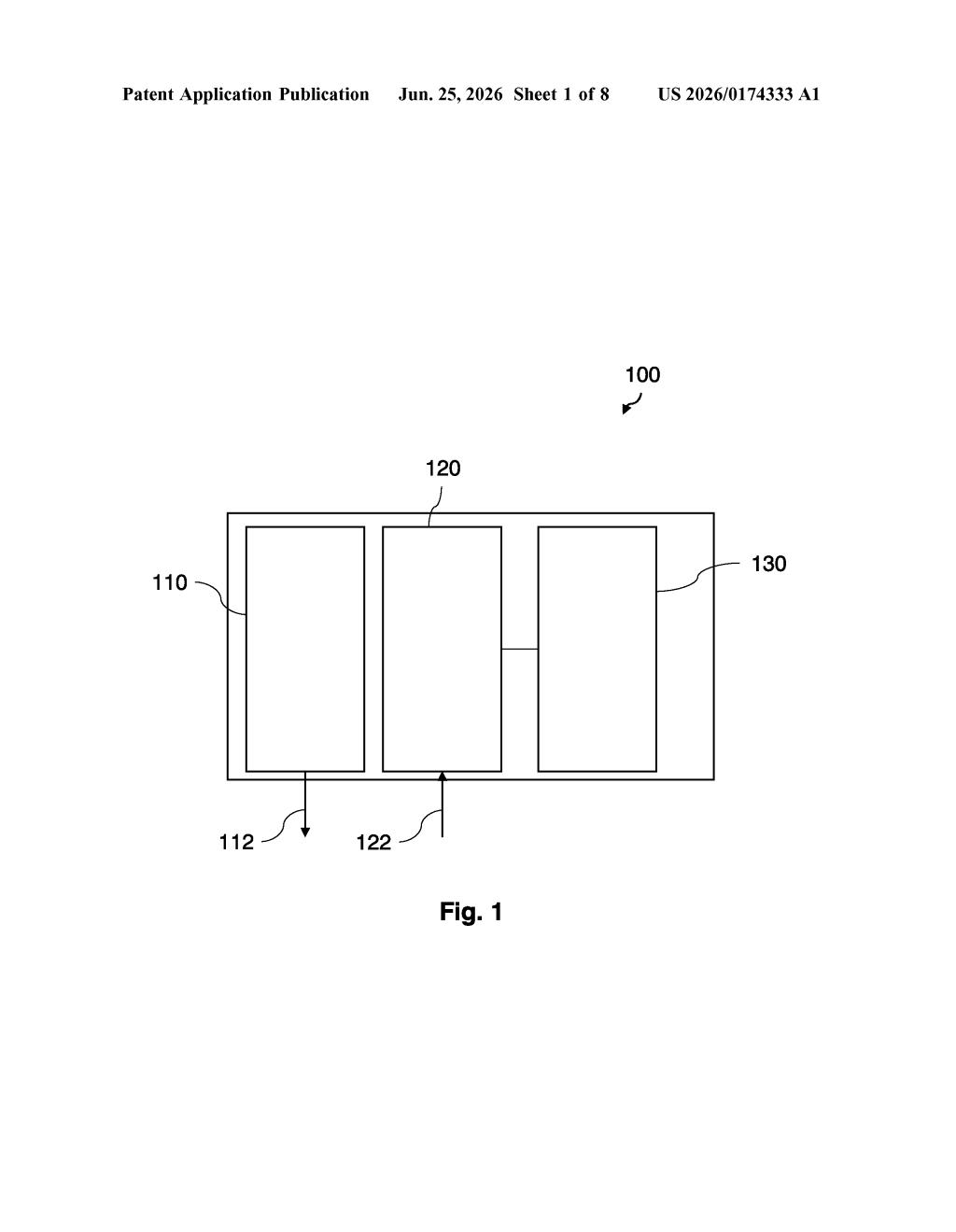
What Sony's radar-based fluid monitor actually does
Imagine checking your blood sugar or hydration level the same way a weather radar tracks rain clouds: by bouncing a signal off it and reading what comes back. That's the core idea in this Sony patent. A small device worn on your wrist (or elsewhere on your body) would fire a radar-like signal into your tissue, and a receiver would pick up the echoes that bounce off the fluids inside.
A processing chip then reads those reflected signals to figure out information about what's in your body fluids, potentially things like glucose levels, hydration, or other markers that today require a blood draw or a continuous sensor implanted under your skin.
The key word here is non-invasive. Everything happens from outside your body. Sony's approach uses a well-established radar technique called frequency-modulated continuous wave (FMCW), the same family of technology used in car collision-avoidance systems, adapted to work at the scale of human tissue.
How FMCW radar bounces signals off body fluids
The patent describes three core components working together: an FMCW transmitter, a receiver, and a processing circuit. The transmitter emits a continuous radio signal whose frequency sweeps up and down in a pattern (that's the "frequency-modulated" part). When that signal hits a boundary between tissue types or fluid pockets inside your body, part of it reflects back.
The receiver captures those returning echoes. Because the outgoing signal is constantly changing frequency, comparing the transmitted signal to the received one tells you how long the signal took to bounce back, which translates into distance and material density. This is the same principle radar uses to measure how far away a car is, but applied at millimeter scales inside biological tissue.
The processing circuit then extracts information about the body fluid from those reflection patterns. The patent is deliberately broad about what "information" means: it could be fluid volume, composition, or concentration of specific molecules like glucose.
FMCW is already widely used in automotive radar and industrial distance sensors because it's power-efficient and precise at short ranges. Scaling it down to a wearable form factor for biological sensing is the engineering challenge Sony is patenting around here.
What this means for needle-free health monitoring
If this works at a clinical level, the implications for people who need to monitor their blood sugar daily are significant. Continuous glucose monitors today require a small filament inserted under the skin. A radar-based wearable that sits on your wrist and measures the same data without any skin penetration would remove a real barrier for millions of people managing diabetes. Non-invasive glucose monitoring has been a holy grail for wearable health tech for decades, and many companies have tried and failed to crack it.
This patent is early-stage and broad, which means Sony is staking out the territory rather than announcing a finished product. But it does signal that Sony is pursuing health monitoring as a serious hardware direction for its wearable lineup, beyond fitness tracking and audio.
Non-invasive glucose monitoring is one of the hardest unsolved problems in consumer health hardware, with a long list of failed attempts behind it. Sony's FMCW approach is technically credible on paper (the radar technique is proven in other domains), but the gap between a working patent and a clinically accurate consumer device is enormous. This is a real research direction worth watching, not a product announcement.
There are more where this came from
We read every patent application Big Tech publishes and send you the ones worth knowing. Plain English, free, every week.
Want this weekly breakdown for a company we don't cover? Patentlyze Pro →