
Samsung Patents a Washing Machine That Adjusts Its Own Spin-Cycle Safety Limits
Most washing machines shake violently with an uneven load and either power through or stop entirely. Samsung's new patent describes a machine that learns from each spin cycle and adjusts its own safety thresholds accordingly.
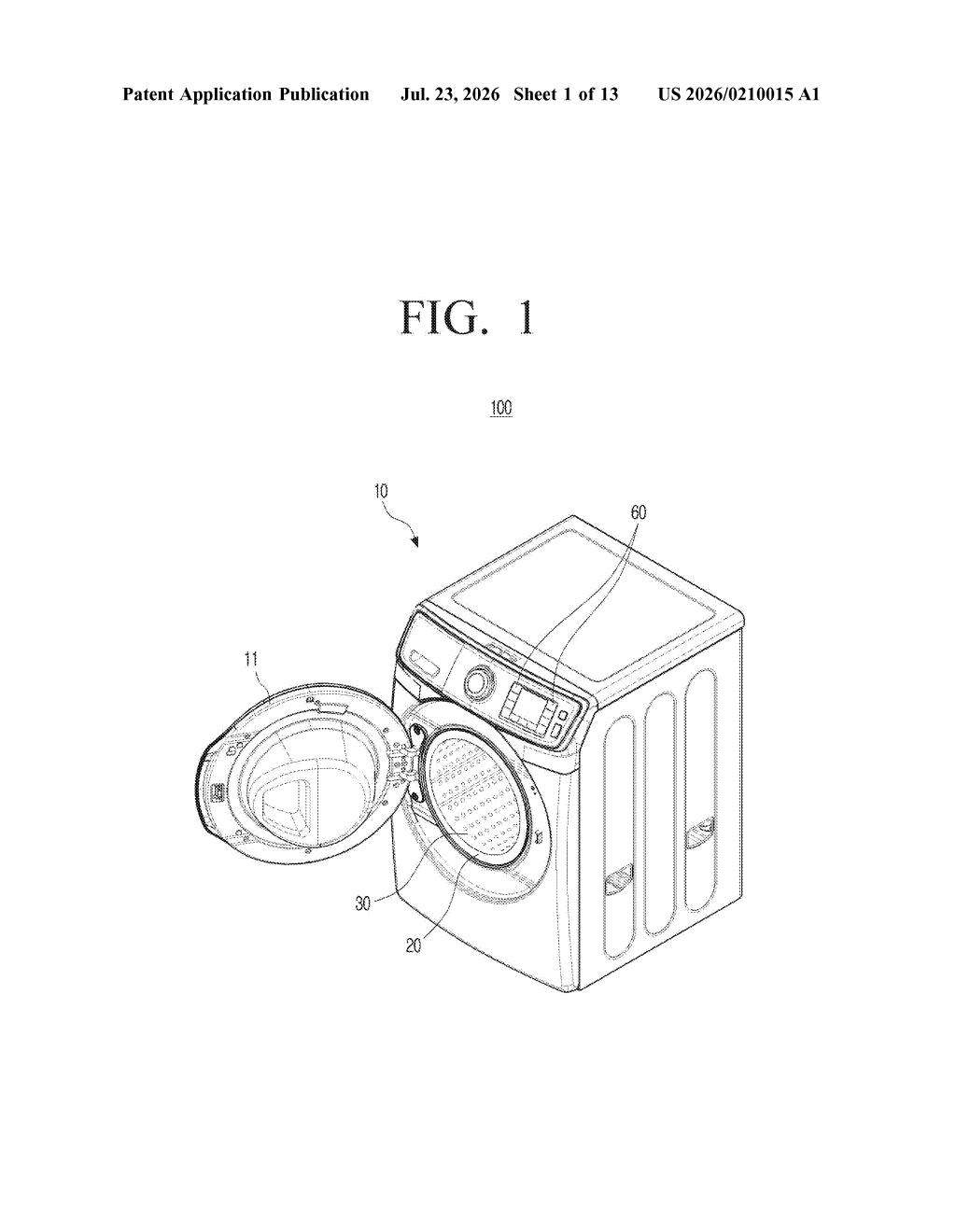
What Samsung's self-calibrating spin cycle actually does
Imagine stuffing a heavy towel and a few light socks into your washing machine before a spin cycle. The drum is lopsided, and if it spins too fast, it shakes, bangs, and can even walk across the floor. Most machines either ignore this or play it very safe by capping the spin speed, which means your clothes come out wetter than they need to be.
Samsung's patent describes a system that watches two things at once: how hard the motor is working at a low spin speed (which hints at how unevenly the load is distributed) and how much the drum actually shakes when it speeds up. By comparing those two readings, the machine builds a predicted vibration value for future loads.
The clever part is what happens next. Instead of using a fixed, one-size-fits-all rule for when to slow down, the machine updates its own threshold based on what it just learned. Over time, it can spin faster when the load allows it and hold back when past data suggests it should.
How the machine links motor current to drum vibration data
The patent lays out a two-stage measurement process that runs at the start of every dehydration (spin) cycle.
Stage one: low-speed current check. The motor spins at a relatively slow first speed. A current sensor measures how much electrical current the motor draws. An unevenly distributed load forces the motor to work harder on each rotation, so current fluctuations become a proxy for load imbalance. The machine converts this into an unbalance value.
Stage two: high-speed vibration check. If that unbalance value falls below a stored limit, the machine is allowed to ramp up to a faster second speed. At that higher speed, a vibration sensor directly measures how much the drum is shaking.
The key innovation is the final step: the machine compares the low-speed current reading against the high-speed vibration reading and calculates a predicted vibration value. It then uses that prediction to update the unbalance limit for next time. If a load that looked borderline on current turned out to be fine on vibration, the limit relaxes. If it turned out badly, the limit tightens. The threshold is not fixed; it adapts based on real-world results from that specific machine.
What this means for washing machine noise and drum damage
For everyday users, this could mean clothes that spin drier without the machine rattling across the laundry room floor. A static safety threshold has to be conservative enough to cover worst-case loads on every machine, in every installation. A machine that calibrates its own threshold to its actual behavior in its actual location can afford to be less conservative.
For Samsung, this is an incremental but practical move in appliance intelligence. Adding current and vibration sensing to a washing machine is not new, but tying those readings together into a self-updating limit gives the control software a feedback loop that static rules don't have. It's the kind of quiet engineering that affects reliability and energy efficiency without requiring any new hardware category.
This is a sensible, unglamorous patent that solves a real annoyance. The self-updating threshold idea is genuinely useful because it adapts to how your machine is installed and how you tend to load it, rather than assuming the worst every time. Don't expect a press release, but do expect something like this to appear in a mid-range Samsung washer within a few years.
There are more where this came from
We read every patent application Big Tech publishes and send you the ones worth knowing. Plain English, free, every week.
The drawings
13 drawing sheets from US 2026/0210015 A1 · click any drawing to enlarge


Want this weekly breakdown for a company we don't cover? Patentlyze Pro →
Be the first to weigh in