
X Development Patents an AI System That Ranks Microbes by How Confident It Is in Them
Most lab screening tools pick winners by looking at average results. X Development's new patent wants to pick winners by also measuring how much you can trust those results.
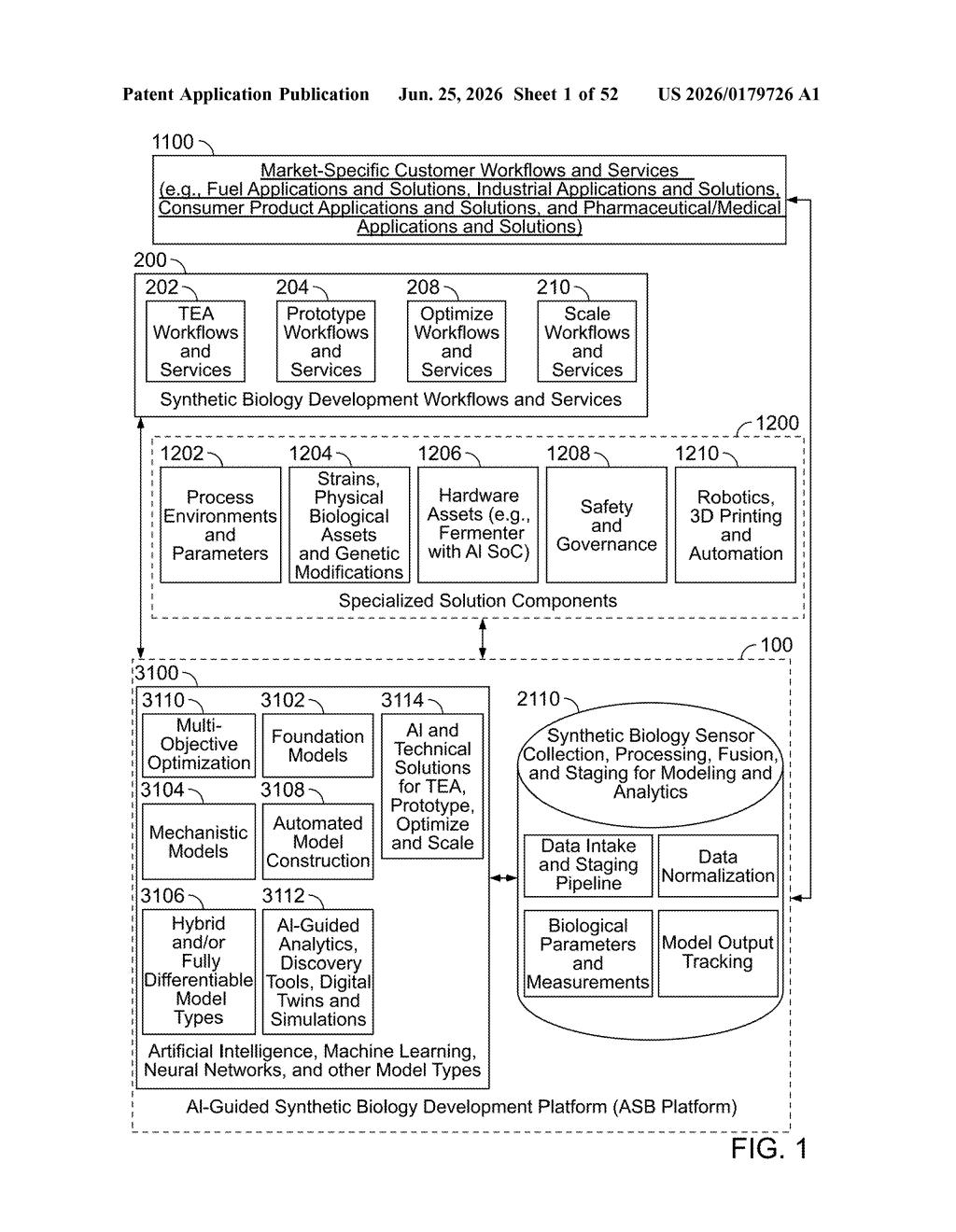
What X Development's strain-screening AI actually does
Imagine a biotech lab testing hundreds of bacterial strains to find one that produces more of a useful chemical. Some strains look great on paper, but the data behind that result is thin or noisy. Others look only decent, but you have rock-solid evidence they consistently outperform. A naive ranking system would favor the flashy-looking result and ignore the reliable one.
X Development's patent describes an AI platform that handles this more carefully. Instead of giving each strain a single score, the system represents each strain as a probability distribution, essentially a range of likely performances with a confidence level attached. A strain only gets called a "hit" if it has a specified probability of beating the baseline strain by a meaningful margin, not just once, but reliably.
That distinction matters in biology, where experiments are expensive, noisy, and hard to repeat. By baking uncertainty into the selection process from the start, the system aims to send fewer false positives into the next round of testing.
How the probability model scores and ranks each strain
The patent describes a computational pipeline with a few distinct steps.
- Data collection: Raw performance measurements are gathered across many strains, likely including metrics like yield, growth rate, or chemical output.
- Probabilistic normalization: Rather than converting raw numbers into a single cleaned-up score, the system uses a probabilistic approach to normalize the data. This means each strain's performance is expressed as a distribution of probable values, capturing both the best guess and how uncertain that guess is.
- Hit definition: A "hit" (a strain worth advancing) is defined not by crossing a fixed threshold, but by having a specified probability of outperforming a parent or control strain by a predetermined margin. For example, a strain might need at least an 80% probability of beating the parent by 20% to qualify.
- Candidate identification: The system flags strains meeting that criterion for further investigation.
The approach draws on ideas from Bayesian statistics (a branch of statistics that explicitly tracks and updates uncertainty rather than ignoring it). This is particularly useful in biology, where sample sizes are often small and measurement noise is high.
What this means for AI-guided biotech research
Screening biological strains is one of the most time-consuming and costly steps in biotech development, whether you're engineering microbes to produce medicines, fuels, or food ingredients. Every false positive that advances to the next round of experiments wastes significant resources. A system that filters based on confidence, not just apparent performance, could meaningfully cut that waste.
X Development is Alphabet's moonshot division, the same group that houses projects like Waymo and Wing. The company has been involved in computational biology through projects like Mineral and Dandelion. This patent suggests an interest in AI-driven strain engineering pipelines, which are increasingly central to synthetic biology startups and large pharmaceutical manufacturers alike.
This is a technically sound approach to a real and expensive problem in biotech. Probabilistic hit calling isn't new as a concept in statistics, but baking it into an end-to-end AI screening platform is a meaningful engineering contribution. Whether X Development is building this for internal use or positioning it as a platform product for other labs is the more interesting open question.
There are more where this came from
We read every patent application Big Tech publishes and send you the ones worth knowing. Plain English, free, every week.
Want this weekly breakdown for a company we don't cover? Patentlyze Pro →