
Google Patent Aims to Let Augmented Reality Recognize Objects Without Draining Performance
Figuring out what's in a camera frame, a wall, a table, a person, takes serious processing power. Google's patent describes a way to do that work once and reuse the answer across many frames, which is exactly the kind of trick AR glasses need to run all day without burning through a battery.
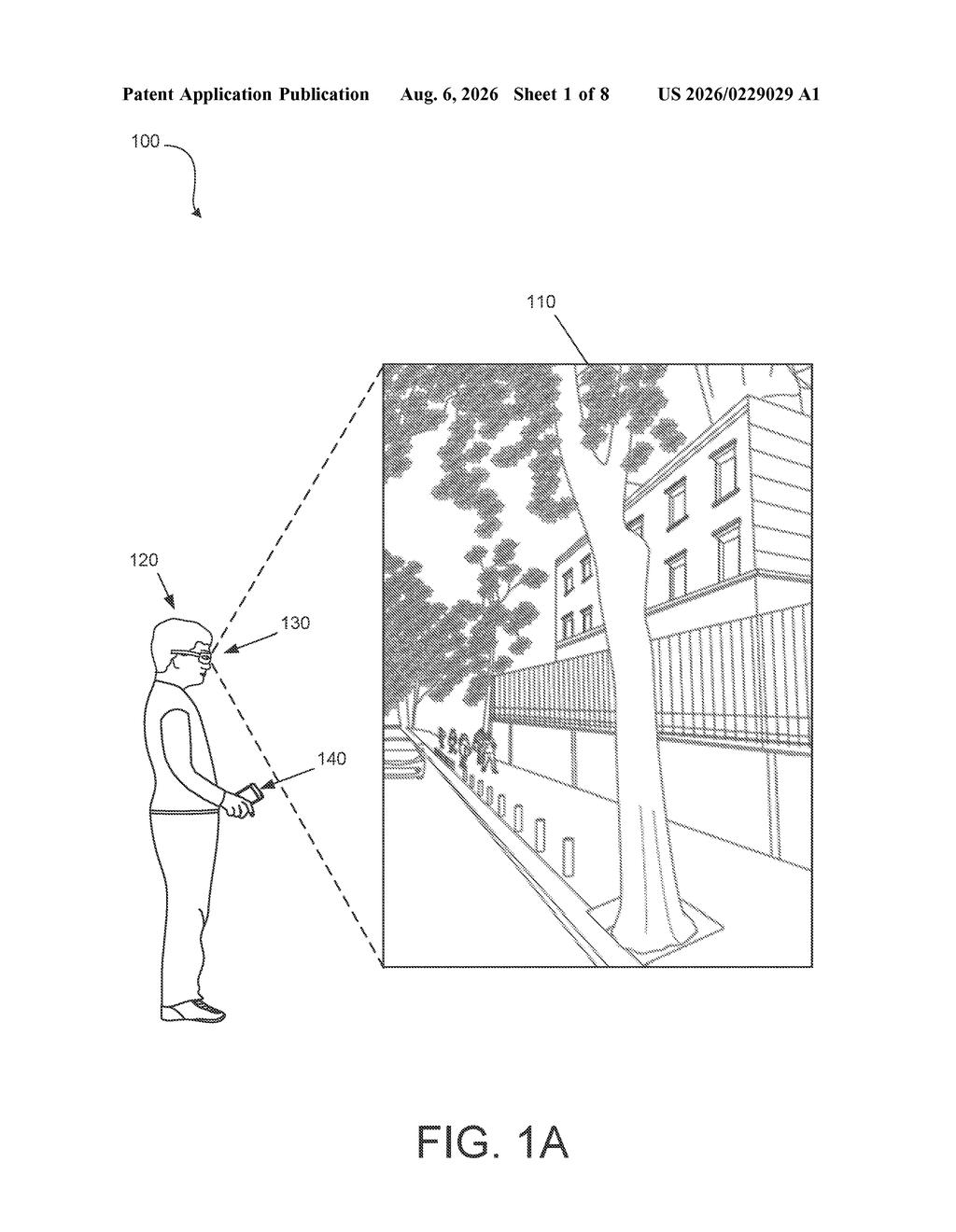
How Google's AR glasses avoid repeating the same visual work
Imagine your AR glasses need to know, in every single moment, what they're looking at: that's a chair, that's a door, that's your hand. Right now, doing that analysis on every camera frame is expensive. It takes a lot of computing muscle and drains the battery fast.
Google's patent describes a shortcut. Instead of running the full analysis on each frame, the system does a thorough job on one frame, stores the results, and then stamps those results forward onto the next frames. It tracks how the scene has moved or shifted and repositions the stored labels to match. If something big has changed, it updates. If not, it skips the heavy lifting.
The practical payoff is that AR glasses (or a phone doing AR) can keep showing you accurate overlays, like labels, directions, or object outlines, without the processor working at full speed every single frame. That means longer battery life and a more responsive experience.
generating, by at least one processor, a first semantic image for a first image frame of a sequence of image frames by generating a respective semantic classification for each pixel of a plurality of pixels of the first image frame …
Translation: The system first classifies every single pixel in an initial video frame.
How surfel reprojection carries semantic labels across frames
The patent describes a pipeline built around a concept called surfel reprojection. A surfel (short for surface element) is a small patch of a 3D surface, essentially a tiny disc floating in space that represents part of the scene geometry.
Here's how the full flow works:
- For the first camera frame, a semantic model runs on every pixel, classifying each one (floor, wall, person, etc.). The system also generates an edge image, a map of where object boundaries are, to keep labels from bleeding across surfaces.
- Those pixel-level labels are packed into a set of data structures tied to the 3D surfels. Think of it as spray-painting the scene geometry with color-coded labels.
- For the next frame, instead of rerunning the semantic model from scratch, the system projects those stored surfel labels onto the new camera view. It generates a fresh edge image for that frame, which acts as a guide for snapping the reprojected labels to the correct boundaries.
- The result is a complete semantic image for the new frame, produced without ever running the expensive classification model again on that frame.
The system is designed to run the full semantic model at a lower rate than the camera's natural frame rate, filling in the gaps with reprojection. This separates the expensive AI work from the real-time rendering work.
Techniques include storing semantic information in data structures that are updated at a rate less than a nominal frame rate.
Translation: It saves processing power by reusing data instead of analyzing every new frame from scratch.
What this means for real-time AR on wearable hardware
AR headsets and glasses face a fundamental tension: they need rich scene understanding to be useful, but the processors inside wearables are small and power-constrained. Running a full neural network to classify every pixel at 30 or 60 frames per second is simply not practical on a device you wear on your face all day. This patent addresses that gap directly.
For Google's AR ambitions, including Android XR and any future smart glasses hardware, this kind of efficiency technique is less a nice-to-have and more a prerequisite. If you want your glasses to tell you what you're looking at without dying in two hours, you need systems that do less redundant work. This patent is a concrete engineering answer to that constraint, and it's grounded enough in implementation detail to suggest real product work is behind it.
This is a solid, focused engineering patent that solves a real and specific problem in AR perception pipelines. It's not a flashy AI concept, but the surfel reprojection approach is clever and directly relevant to Google's stated strategy around Android XR and wearable AR. Worth paying attention to.
There are more where this came from
We read every patent application Big Tech publishes and send you the ones worth knowing. Plain English, free, every week.
The drawings
8 drawing sheets from US 2026/0229029 A1 · click any drawing to enlarge


Want this weekly breakdown for a company we don't cover? Patentlyze Pro →
Be the first to weigh in