
Nvidia Patents a System That Picks Its AI Based on Your Wireless Signal Strength
Most AI systems run the same model regardless of conditions. Nvidia's new patent describes a processor that picks a different neural network depending on how clean or noisy your wireless signal is — treating signal quality as a first-class input to the AI pipeline.
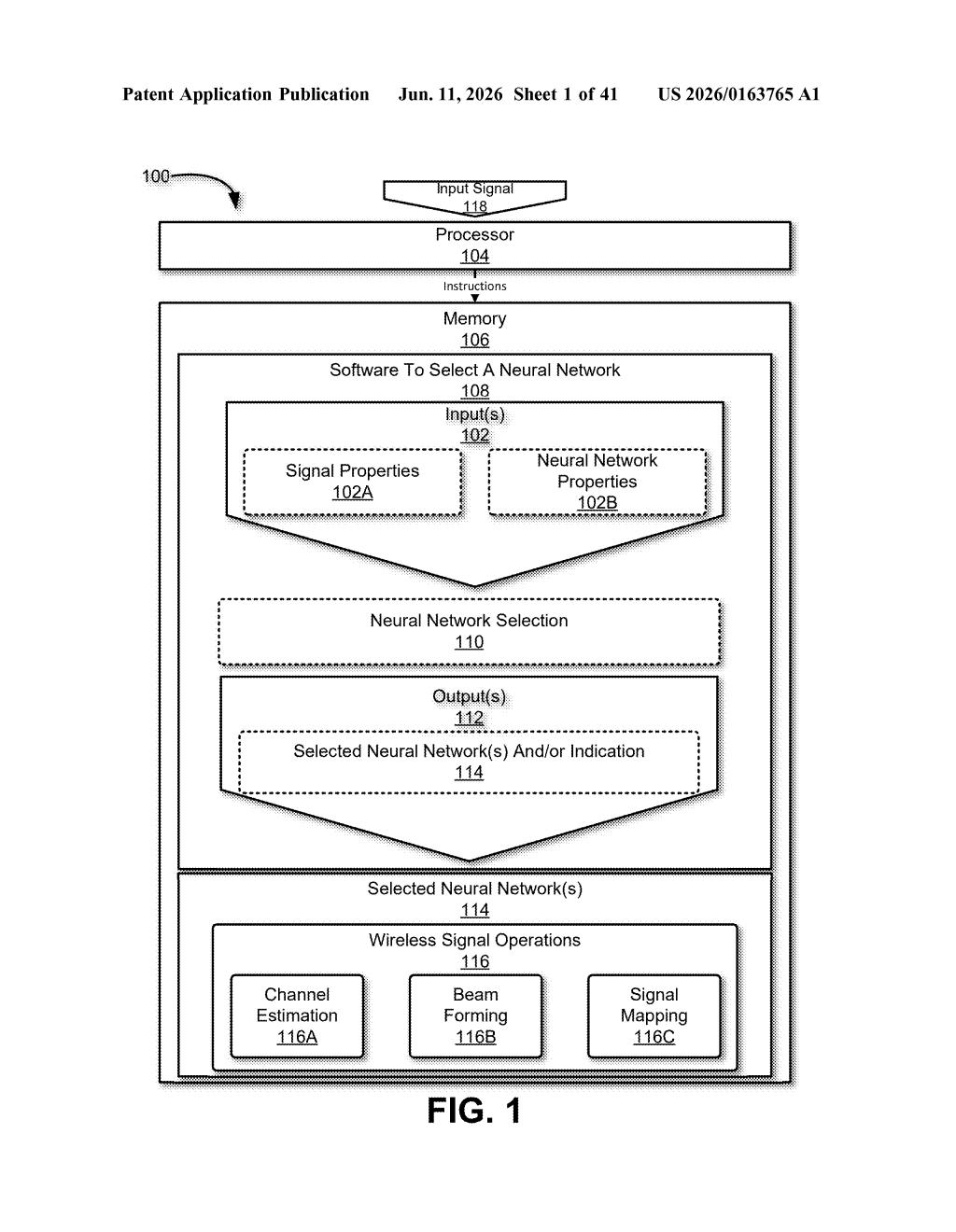
How Nvidia's signal-quality AI selector actually works
Imagine you're on a video call. In a strong Wi-Fi zone, everything flows perfectly. In a basement with weak signal, the call degrades. Now imagine the chip inside your device could sense that shift in signal quality and automatically swap to a different AI model — one specifically trained to handle noisy, unreliable connections.
That's the idea Nvidia is patenting here. The processor measures something called the signal-to-noise ratio (essentially, how much useful signal there is versus background static) and uses that number to choose which neural network takes over. High signal? Use the fast, lightweight model. Low signal? Bring in the model built to reconstruct garbled data.
This matters because wireless conditions aren't static — they shift constantly as you move, as walls get in the way, or as networks get congested. A system that can route work to the right AI for the moment, rather than always running the same one, could mean more reliable connections in the places where reception typically falls apart.
How SNR values route data to the right neural network
The patent describes a processor with one or more circuits that reads signal-to-noise ratio (SNR) values from a wireless channel. SNR is a standard measurement: a high number means a clean signal, a low number means the signal is buried in interference or noise.
Based on that SNR reading, the processor selects from a pool of neural networks — each trained to perform channel estimation under different conditions. Channel estimation (figuring out how a wireless signal has been distorted as it travels through the air) is a computationally intensive task at the heart of modern 5G and Wi-Fi systems.
The core claim is straightforward:
- Measure the SNR of the incoming signal
- Use that value to pick the appropriate neural network
- Run that network to generate a channel estimate — a model of how the signal was warped in transit
Why multiple networks? Neural networks trained on clean signals can be lighter and faster. Those trained on heavy interference tend to be larger and more compute-intensive. Routing work to the right model avoids wasting resources when conditions are good, and avoids accuracy loss when conditions are bad.
What this means for AI-powered wireless chips
Nvidia has been aggressively pushing AI into wireless baseband processing — the low-level work of encoding, decoding, and interpreting radio signals. This patent fits that trajectory: rather than running a single, generalist AI model for channel estimation, the approach is to maintain a portfolio of specialized models and choose among them dynamically. That's a meaningful architectural bet in a world where 5G and future 6G chips need to squeeze more performance out of constrained radio environments.
For you as an end user, the downstream benefit would be more reliable wireless — particularly in hard conditions like crowded stadiums or dense urban environments. But the more immediate audience is network equipment makers and chipset vendors who are building AI-accelerated basebands, where Nvidia is actively competing.
This is a narrow but purposeful patent — the claim is minimal (literally one circuit, one SNR value, one network selector), which suggests Nvidia is staking out foundational IP in AI-driven baseband processing rather than describing a finished product. It's not flashy, but if AI-accelerated radio chips become standard in 5G and 6G infrastructure, this kind of adaptive model-routing could sit at the center of that stack.
There are more where this came from
We read every patent application Big Tech publishes and send you the ones worth knowing. Plain English, free, every week.
Want this weekly breakdown for a company we don't cover? Patentlyze Pro →