
Qualcomm Patents a Way to Find Your Location and Sense Objects With One Signal
Your phone already figures out where it is. Qualcomm is working on letting the same wireless signal also figure out what's around it, all in one pass.
What Qualcomm's joint positioning-sensing signal actually does
You're in a large building, and your phone needs two things at once: a precise fix on your location and a read of whether people or objects are moving nearby. Today, those are usually separate jobs handled by separate signals, which wastes airtime and battery.
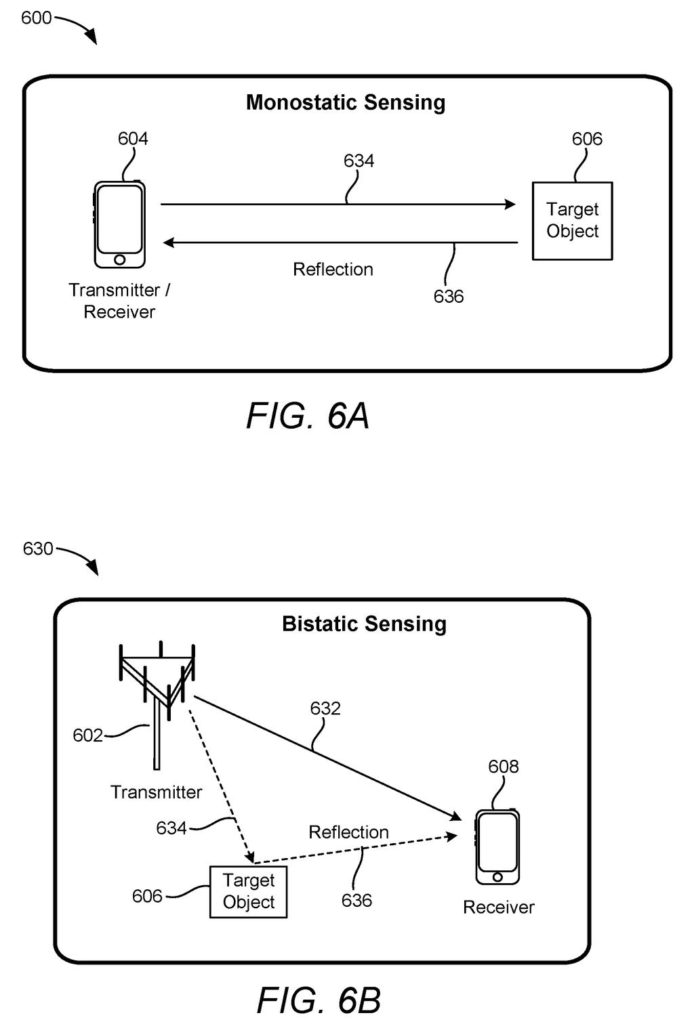
Qualcomm's patent describes a network setup where a single radio signal handles both tasks together. A central network node figures out what each job needs, then sends a transmitter the recipe for one combined signal that satisfies both. A nearby receiver picks that signal up, crunches the numbers, and sends back a single report covering both your position and a picture of the surrounding environment.
The idea is to cut redundancy. Instead of your device doing a positioning ping and a sensing sweep separately, one coordinated pulse does the work of two. That matters more as wireless networks get busier and devices are expected to do more with the spectrum they're given.
determine one or more criteria for a positioning session involving a receiver node; determine one or more criteria for a sensing session involving the receiver node; …
Translation: The system figures out what is needed to track a device's location and scan its surroundings at the same time.
How the network coordinates one signal for two jobs
The patent centers on a network entity (think: a controller node inside a cellular network, like a base station brain) that orchestrates two normally separate wireless tasks at once.
First, it sets the rules for a positioning session (determining where the receiver device is, using signal timing and angle measurements) and a sensing session (using radio waves to detect objects, movement, or environmental features nearby). Both sets of rules feed into the design of a single joint reference signal (a calibration-style radio pulse that devices use as a measurement baseline).
That joint signal is sent to a transmitter node, which broadcasts it into the environment. A receiver node (the device being located or doing the sensing) picks up the signal, takes its measurements, and packages everything into a joint positioning and sensing report that goes back to the network.
The patent's claim sits at the network coordination level, not the device level. The network decides what the signal looks like, the transmitter broadcasts it, and the receiver reports back. This separation of roles is consistent with how modern 5G networks split intelligence across different nodes.
… transmit, to a transmitter node, a configuration of a joint reference signal for a joint positioning session comprising the positioning session and the sensing session, …
Translation: It sends instructions to set up a shared signal that handles both tracking and environmental scanning simultaneously.
What this means for location and object-detection in 5G devices
For everyday users, the practical payoff would be devices that can pinpoint your location and detect nearby motion or obstacles without doubling the number of wireless transmissions needed. In crowded environments like offices, airports, or factories, less radio traffic means more reliable performance for everyone sharing the same network.
a growing pile of Qualcomm positioning and sensing filings suggests the company is building toward a world where 5G does far more than connect calls and data. If this kind of joint signal design reaches commercial networks, you'd notice it most in AR glasses, autonomous vehicles, or indoor navigation apps that need both location accuracy and environmental awareness at the same time.
Qualcomm's 468th filing we have tracked since May in our Qualcomm coverage adds to a run of location and sensing work that includes radio-based workout tracking and magnetic field positioning.
The concrete payoff is efficiency. If a device runs two separate wireless sessions to know where it is and what's around it, that takes twice the spectrum and twice the battery. A joint signal cuts that in half, at least in theory.
For most people, that savings is invisible until it isn't. You notice it when indoor navigation lags, or when a crowded venue makes location services unreliable. Removing redundant radio sessions is exactly what makes those moments less frustrating without anyone announcing it as a feature.
The patent covers the network coordination layer, not the device software that would actually process the signal. That makes it foundational plumbing rather than a finished product, and whether users ever feel the difference depends entirely on how the rest of the system gets built around it.
There are more where this came from
We read every patent application Big Tech publishes and send you the ones worth knowing. Plain English, free, every week.
The drawings
20 drawing sheets from US 2026/0304349 A1 · click any drawing to enlarge


Want this weekly breakdown for a company we don't cover? Patentlyze Pro →
Be the first to weigh in