
Robot AI Learns From Demo Videos, Then Self-Improves Via Trial and Error
Teaching a robot to do something new is slow, expensive, and fragile. Nvidia's latest patent describes a method that shortcuts the process by combining human demonstration videos with an AI that then keeps practicing on its own until it gets better.
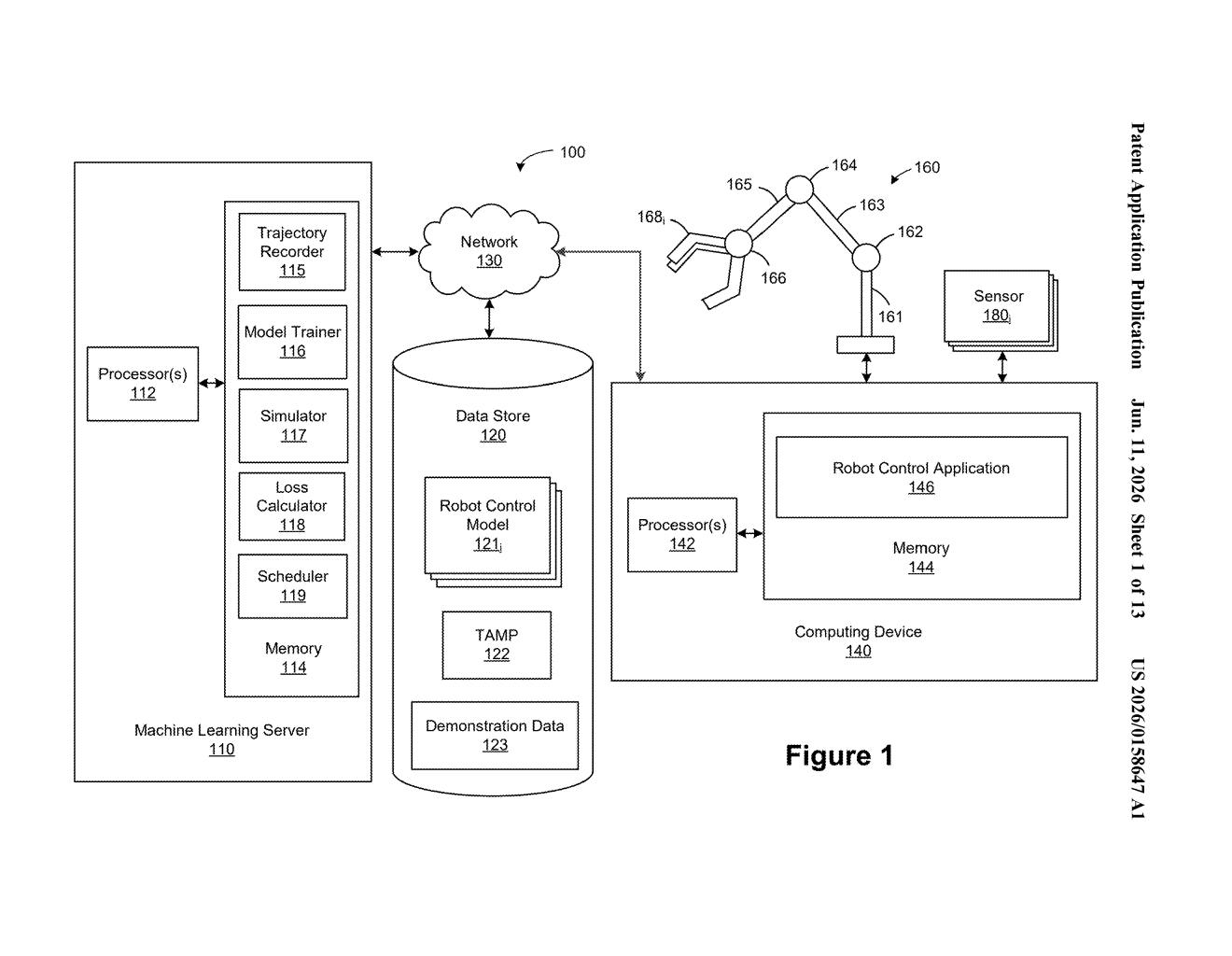
How Nvidia's two-stage robot training actually works
Imagine learning to parallel-park by first watching someone else do it a few times, then spending an afternoon practicing in an empty lot until it clicks. That's essentially what Nvidia is trying to build for robots.
The idea is a two-stage process. First, a robot watches recorded demonstrations of a task — say, picking up a box or assembling a part — and learns a rough version of the skill from those examples. That's the imitation phase. Then, in the second stage, the robot practices on its own using a method called reinforcement learning, where it earns virtual "rewards" for doing things right and gradually sharpens its technique beyond what any single demonstration showed.
The appeal here is efficiency. Right now, training a robot from scratch with just trial-and-error takes enormous amounts of time and compute. Starting from human examples gives the AI a running head start, and the self-practice phase fills in the gaps the demonstrations couldn't cover.
Inside Nvidia's demo-to-reinforcement training pipeline
The patent describes a two-phase machine learning training pipeline for robot control. In the first phase, the system uses imitation learning — a technique where a model learns to copy behavior by studying recorded "demonstration trajectories" (essentially logged videos or sensor data of a robot or human performing a task). This produces a first trained model that can reasonably approximate the demonstrated skill.
In the second phase, that first model is handed off to a reinforcement learning (RL) loop. RL is a training method where an agent tries actions, receives a score (a "reward") based on how well it did, and gradually adjusts its behavior to maximize that score over time — similar to how a dog learns tricks. The key insight here is that the imitation-trained model gives the RL system a much better starting point than random behavior, making the self-improvement phase faster and more stable.
The patent frames this as "synergistic" because the two methods compensate for each other's weaknesses:
- Imitation learning is data-efficient but capped by what the demos show.
- Reinforcement learning can exceed human-level performance but needs a good starting point to avoid spinning its wheels.
- Together, they produce a final model that is both grounded and adaptive.
The claim covers the overall method broadly, which means Nvidia is staking out foundational territory in combined imitation-plus-RL robot training.
What this means for the next wave of factory robots
Robotics is moving fast, and the bottleneck is no longer hardware — it's teaching robots new skills quickly and reliably. A system that can learn from a handful of human demonstrations and then self-improve through practice could dramatically cut the time and cost of deploying robots in warehouses, factories, or even homes. That's a market several of Nvidia's biggest customers — logistics companies, manufacturers, automotive plants — are actively trying to crack.
For you, this is background infrastructure that won't show up on a product label, but it could directly affect how quickly the next generation of capable robots makes it off the factory floor. Nvidia's Isaac robotics platform is already trying to position itself as the operating system for industrial robots, and patents like this one suggest the company is investing heavily in the training side of that stack — not just the chips that run the models.
This is a real and meaningful patent, not a trivial filing. Combining imitation learning with reinforcement learning is a well-known research direction, but Nvidia staking broad claim to the training pipeline — especially with a team that includes robotics researchers of this caliber — signals the company is serious about owning the methodology, not just the silicon. It's worth watching as Nvidia's Isaac platform matures.
There are more where this came from
We read every patent application Big Tech publishes and send you the ones worth knowing. Plain English, free, every week.
Want this weekly breakdown for a company we don't cover? Patentlyze Pro →