
Waymo's New Patent Puts AI Inside the Camera So It Spots Objects Before Sending Anything
Waymo is filing a patent for cameras that don't just take pictures — they identify objects on their own, right inside the camera hardware, before any data ever leaves the sensor. And each camera uses a different AI model depending on which direction it's pointing.
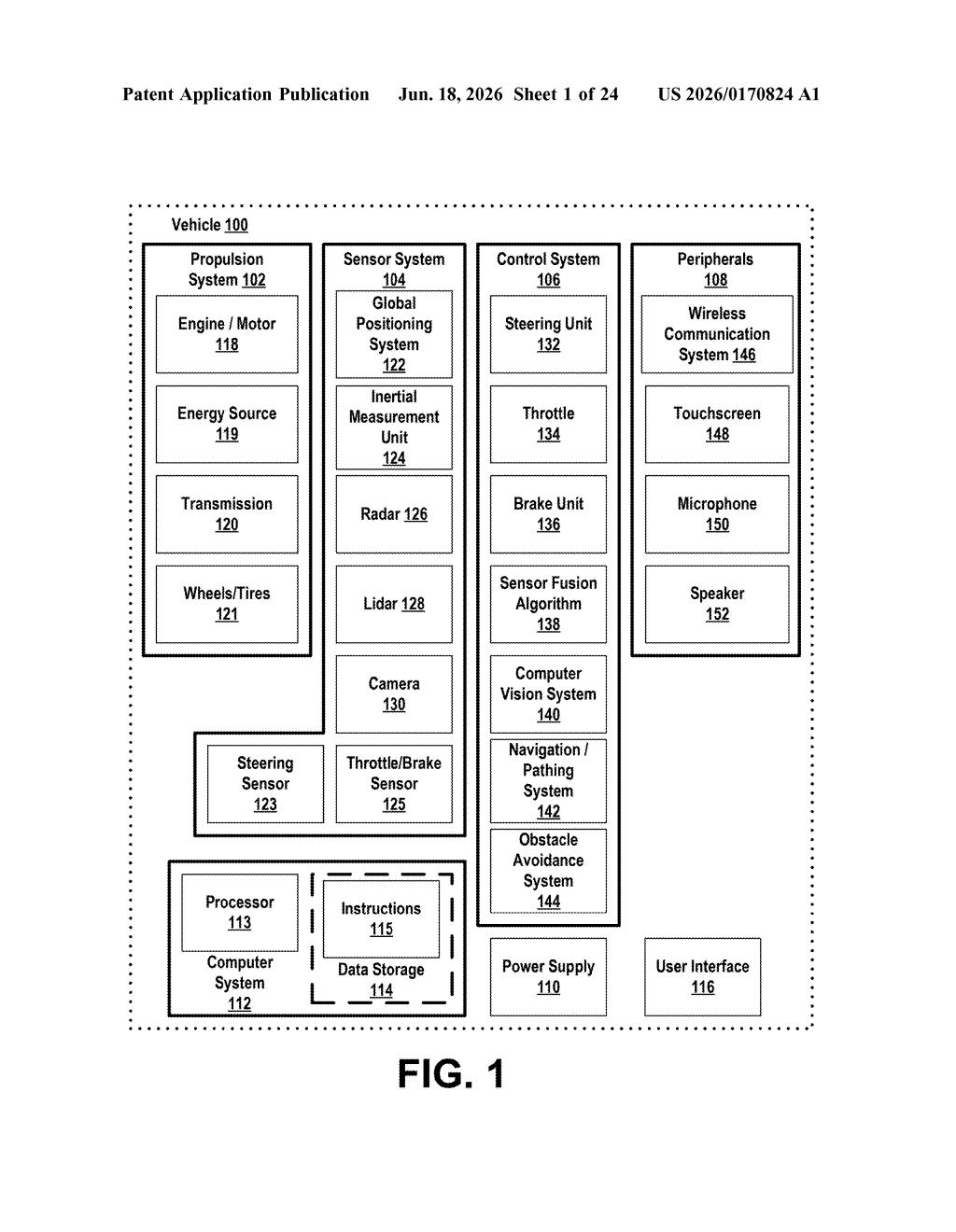
How Waymo's cameras identify objects before sending data anywhere
Imagine your home security camera could not only record footage, but also instantly tell you "there's a person at the door" without sending any video to a server first. Waymo is pursuing something similar for its self-driving vehicles — cameras that do their own object recognition on the spot, inside the camera itself.
Right now, most camera systems in autonomous vehicles send raw image data to a central computer, which then figures out what's in the picture. Waymo's approach moves that thinking into the camera, using a specialized chip built into each camera unit. The camera captures the image, converts it, and then a dedicated processor runs an AI model to label what it sees — cars, pedestrians, cyclists — before packaging that information up with the image.
Here's the part that makes this interesting: a camera pointing forward uses a different AI model than one pointing sideways or backward. Each camera gets a model tuned for what it's actually likely to see from that angle. The packaged output includes both the image and a built-in map of detected objects and where they are.
How each camera picks its own AI model based on viewing angle
The system describes a vehicle equipped with multiple camera units, each physically oriented in a different direction. Every camera unit contains three key components working together:
- An image sensor that captures raw visual data from the environment
- An analog-to-digital converter (ADC) — a chip that translates the raw light signals into digital data a computer can process
- An application-specific integrated circuit (ASIC) — a custom-built processor designed for one specific job, in this case running AI inference (the process of applying a trained AI model to new data to get a result)
The ASIC runs a trained machine-learning model on the image data entirely within the camera unit. It outputs a standard image frame, but with a twist: certain rows of that frame carry metadata — structured data tucked alongside the image — that includes object classification (what the thing is) and object location (where in the frame it appears).
The key design choice is model selection by orientation. The patent specifies that each camera picks its AI model from a library of available models based on which direction that camera faces. A forward-facing camera, for example, might be optimized to spot vehicles at long range, while a side-facing camera might be tuned for pedestrians crossing at close range. This means the AI doing the work is already calibrated for the specific visual context of that camera's field of view.
What on-sensor AI means for self-driving car speed and safety
Moving AI processing into the camera itself rather than shipping raw pixels to a central computer has a real benefit: speed. The vehicle's main computer receives pre-labeled data instead of raw video, reducing the amount of work it has to do under time pressure. In a situation where a pedestrian steps off a curb, every millisecond of processing time saved is worth something.
For Waymo specifically, this is also about building a modular, scalable sensor system. Swapping in a different AI model for a particular camera angle — without redesigning the whole vehicle's computing stack — could make it easier to adapt the same hardware platform to different driving environments, like a dense city versus a highway. Whether this ends up in a near-term Waymo vehicle or stays as infrastructure IP is unclear, but the direction is obvious: push intelligence to the edge of the sensor network, not the center.
This is a genuinely interesting systems-design patent. The orientation-specific model selection idea — giving each camera its own contextually tuned AI rather than a one-size-fits-all approach — is a concrete architectural decision, not a vague AI claim. It's the kind of filing that suggests Waymo is thinking carefully about how to make its sensor hardware do more of the heavy lifting independently.
There are more where this came from
We read every patent application Big Tech publishes and send you the ones worth knowing. Plain English, free, every week.
Want this weekly breakdown for a company we don't cover? Patentlyze Pro →