
Google Patents a Way to Send Only the Changed Bits of Your Context to Its Assistant
Every time you ask Google Assistant something, your phone ships a bundle of context to Google's servers — your location, settings, app state, and more. This patent describes a system that stops sending the whole bundle and sends only what changed since the last request.
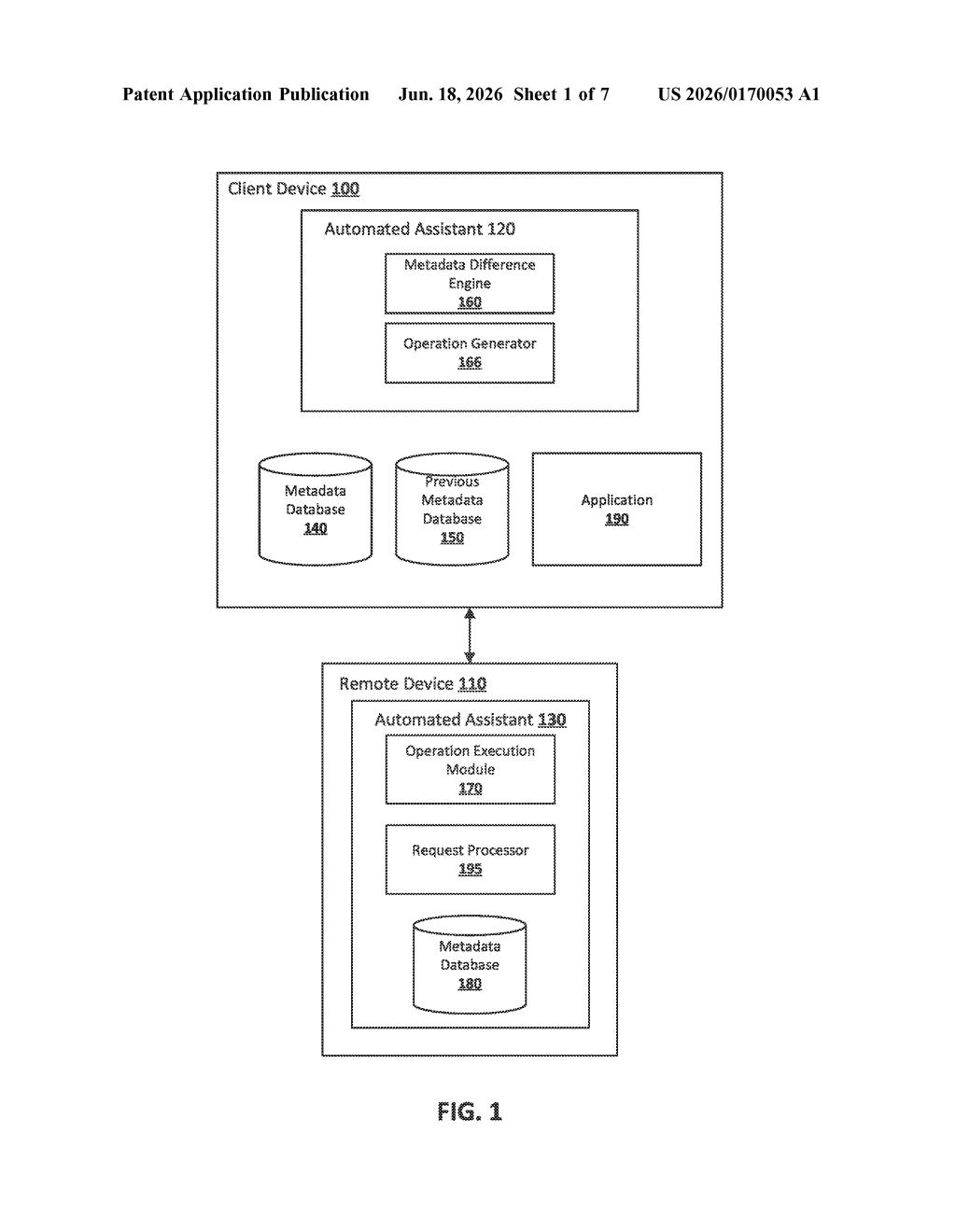
What Google's context-diffing Assistant trick actually does
Imagine Google Assistant as a conversation between your phone and a distant server. Right now, your phone has to re-introduce itself every single time you ask a question — telling the server where you are, what's on your screen, what settings you have, and so on. That's a lot of repetition over millions of requests.
Google's patent describes a smarter handshake. Your phone remembers what it already told the server last time. The next time you ask something, it figures out what changed since then and sends only that difference — a small patch rather than the full picture. The server, which kept its own copy from last time, applies that patch and now has the full, up-to-date picture of your device without you having to send it all over again.
The result is less data flowing over your network connection and, in theory, a faster response from the assistant — because there's less for the server to receive and parse before it can start working on your actual question.
How the client device calculates and sends only the delta
The system splits Google Assistant into two parts: a local component on your device and a remote component on Google's servers — which is already how modern voice assistants work. The novel part is how device context, called metadata, gets shared between the two.
When you make a request, the device:
- Reads a snapshot of its current state (location, active app, settings, time, etc.)
- Compares it to the snapshot it stored from the immediately previous request
- Generates a compact set of diff operations — think of it like a change-log that says "location updated, volume unchanged, app switched from Maps to Calendar"
- Sends the user's request plus that change-log to the server
The server, which kept a copy of the old snapshot, applies the change-log to produce a fresh, accurate picture of your device's state. It then uses that picture to process your request and decide what action to take.
The key phrase in the patent is "immediately previous request" — the diff is always calculated against the last known sync point, not some older baseline, which keeps the patch small and predictable.
What faster, leaner Assistant requests mean for your device
The practical gain here is lower latency and less bandwidth use for every assistant interaction. On a slow mobile connection or a congested Wi-Fi network, trimming even a few kilobytes from each round-trip adds up — especially for a product Google runs at the scale of billions of daily voice queries. For you as a user, the promise is a slightly snappier assistant response, particularly in spotty network conditions.
Strategically, this fits Google's ongoing effort to make on-device and cloud AI work together more efficiently. As assistant features grow more context-aware — knowing your calendar, your location history, your active apps — the metadata bundle only gets bigger. A diffing system keeps that growth from automatically meaning more network overhead per request.
This is unglamorous infrastructure work, but it's the kind of engineering that actually makes products feel faster without anyone noticing why. The diff-and-patch approach is well-established in software (it's how Git works, how software updates work), so the interesting question isn't whether this works — it's why it took this long to apply it to assistant context. Worth watching as a signal that Google is taking the bandwidth cost of increasingly context-rich AI assistants seriously.
There are more where this came from
We read every patent application Big Tech publishes and send you the ones worth knowing. Plain English, free, every week.
Want this weekly breakdown for a company we don't cover? Patentlyze Pro →