
New Patent Lets Phones Share Location Signals Without Cell Towers
What if your phone could figure out where it is relative to other nearby phones, without ever pinging a cell tower? That's the core idea behind this Apple patent on device-to-device location signaling.
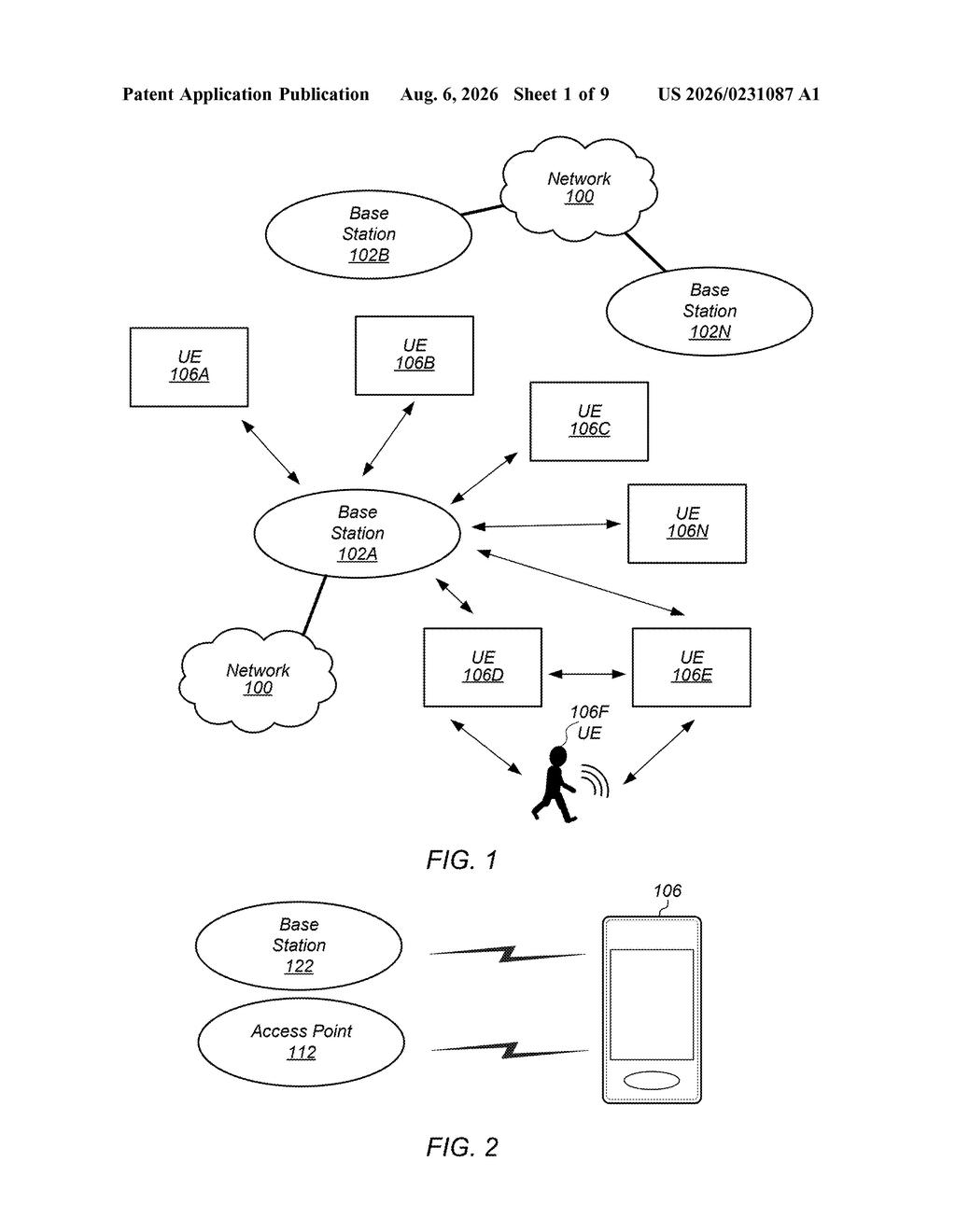
How Apple's phone-to-phone location system works
Imagine you're in a parking garage, a stadium tunnel, or a rural area where cell service is spotty or completely gone. Your phone normally needs to talk to a cell tower to help determine your location or the location of nearby devices. This patent describes a way for phones to skip that middleman entirely.
Instead of waiting for a network to assign them communication slots, phones can negotiate directly with each other. One phone essentially asks nearby phones, 'Are you already using these radio signals for positioning? If so, which ones should I avoid?' The other phones reply with suggestions, and the first phone picks its signals accordingly.
This kind of coordination matters most in places where phones are dense, like a crowded venue or a disaster zone where cell infrastructure is down. Getting location signals right, without interference from other devices doing the same thing, is the technical problem this patent is trying to solve.
Mobile devices (UEs) may use Inter-UE Control (IUC) sidelink (SL) communications for SL positioning reference signal (SL-PRS) resource allocation procedures without relying on a network/base station/cell.
Translation: Phones can coordinate their locations directly with each other without needing a cell tower.
Inside Apple's sidelink positioning resource negotiation
The patent covers a process called sidelink positioning, which is a way for devices to measure their location relative to each other using direct radio signals rather than going through a base station. The tricky part is that if many phones all try to broadcast positioning signals at the same time on the same radio frequencies, they collide and the measurements become useless.
To avoid that, the patent describes an Inter-UE Control (IUC) system (UE means 'user equipment,' the technical term for any phone or tablet on a cellular network). One device, called the transmitting UE, wants to broadcast a positioning signal. Before it does, it can coordinate with a nearby assisting UE using one of two approaches:
- Suggestion mode: The assisting device proactively tells the transmitting device which radio slots are preferred or which to avoid, based on what it knows about local usage.
- Reservation mode: The transmitting device first proposes specific radio slots it wants to use, and the assisting device reports back whether any of those slots are already claimed by other devices nearby.
Based on that exchange, the transmitting device picks a final set of radio slots and broadcasts its positioning signal. The whole negotiation happens peer-to-peer, with no cell tower involved.
What this means for location tracking without networks
The practical payoff here is reliable device-to-device location in places where cellular networks are unavailable or overloaded. Think emergency response scenarios, underground venues, or dense crowds where a cell tower can't handle every positioning request. If phones can sort out their radio slot usage among themselves, location accuracy improves without adding network load.
For Apple, this fits into a broader push toward connectivity that doesn't depend entirely on carrier infrastructure, similar to the thinking behind features like Emergency SOS via satellite. A patent like this could eventually feed into features for Find My, emergency location sharing, or future wearable and accessory tracking that needs to work even when your iPhone has no bars.
This is a solid but unglamorous piece of wireless standards work. The canceled independent claims (claim 1 through 55) suggest this application is a continuation or refiling, which means the legal groundwork was already laid earlier. The underlying technology is real and useful, particularly for emergency and off-grid scenarios, but don't expect it to show up as a named feature on a product page anytime soon.
There are more where this came from
We read every patent application Big Tech publishes and send you the ones worth knowing. Plain English, free, every week.
The drawings
9 drawing sheets from US 2026/0231087 A1 · click any drawing to enlarge


Want this weekly breakdown for a company we don't cover? Patentlyze Pro →
Be the first to weigh in