
Microsoft Patents a Way to Pull Your Pre-Meeting Chat Into the Meeting Itself
Ever started a private side-chat with a coworker before a meeting, then had to scroll back through Teams to remember what you two agreed on? Microsoft is patenting a way to make that history show up automatically inside the meeting itself.
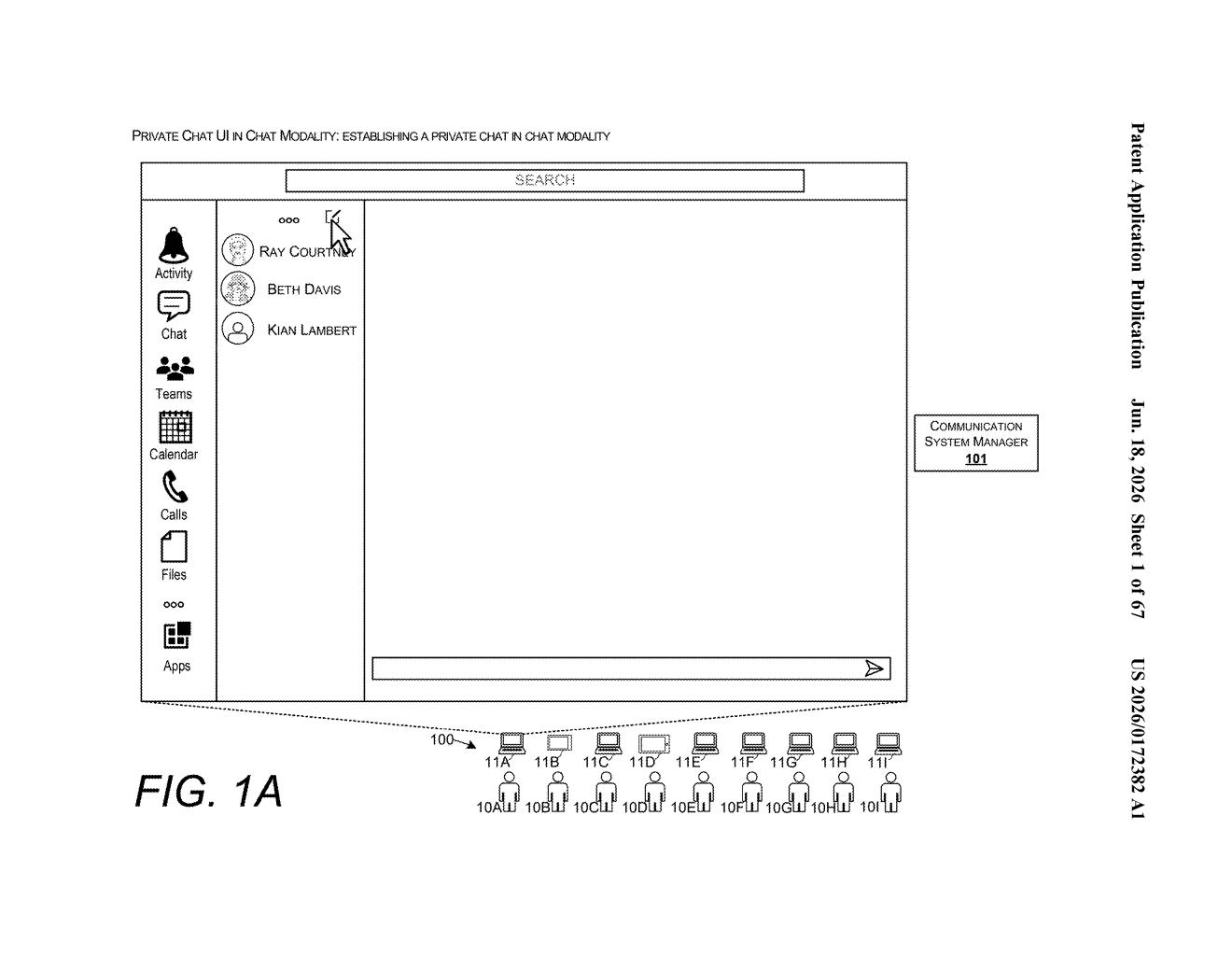
What Microsoft's chat-to-meeting thread merger actually does
Imagine you and a colleague have been privately messaging each other in Teams for a few days — working out what you're going to say in an upcoming budget review. When the meeting starts and you open a private side-chat with that same colleague inside the meeting, all those earlier messages would already be there, sorted in order.
That's the core idea in this Microsoft patent. The system recognizes that the same people who were privately chatting before the meeting are now chatting privately during the meeting, and it bridges the two conversations automatically. You don't have to copy-paste anything or hunt for context.
Critically, the privacy rules stay intact. Only the people who were part of that original private chat — and who are also in the meeting — can see those pulled-in messages. Everyone else in the meeting sees only the main public chat, with no sign that a private thread even exists.
How the system links chat objects to meeting objects
The patent describes a system with two distinct operating modes: a chat modality (your normal ongoing Teams conversation) and a meeting modality (the in-meeting chat panel). Each mode manages its own private message threads through separate objects — a communication object for the chat side and a meeting object for the meeting side.
When a user opens a private side-chat during a meeting with a specific subset of attendees, the system checks whether any prior private chat threads already exist among exactly those same people. If they do, it builds a data structure (essentially a link or mapping) connecting the pre-meeting chat to the in-meeting thread.
The system then selects messages from the older chat that were exchanged specifically between that subset of participants and injects them into the meeting's private thread, sorted by timestamp so the conversation reads chronologically. This population happens during the meeting, not before.
- Permission enforcement: only devices belonging to the subset of participants can display the private thread.
- Public thread separation: all other attendees see only the public meeting chat, with no visibility into the private thread or its imported history.
- Timestamp ordering: pre-meeting and in-meeting messages are merged into a single chronological view.
What this means for Teams users managing private side chats
For anyone who uses Teams heavily, this addresses a real friction point: the gap between your ongoing private conversations and the moment a meeting begins. Right now, context lives in one place and the meeting lives in another. This patent describes a way to close that gap automatically, without asking users to manually dig up old messages or re-explain background information to a colleague mid-meeting.
From a product strategy angle, this fits Microsoft's broader push to make Teams feel like a single continuous workspace rather than a collection of separate chat and video tools. If this ships, it would make the private side-chat feature — already somewhat buried in Teams meetings — considerably more useful, especially for recurring meetings where the same small group always needs to coordinate privately.
This is genuinely useful UX work, not a vanity filing. The problem it solves — losing conversational context when you shift from a chat window to a live meeting — is something Teams users bump into constantly. The permission architecture described is also careful enough that this wouldn't become a privacy headache. Worth watching for a Teams update in 2025 or 2026.
There are more where this came from
We read every patent application Big Tech publishes and send you the ones worth knowing. Plain English, free, every week.
Want this weekly breakdown for a company we don't cover? Patentlyze Pro →