
Microsoft Patents Laser Sign-In That Locks Out Anyone Not Standing Directly Opposite
What if two devices could only talk securely when they were literally pointing at each other? That's the core idea behind this Microsoft patent — a system that uses tightly aimed laser light instead of radio signals to establish a trusted connection.
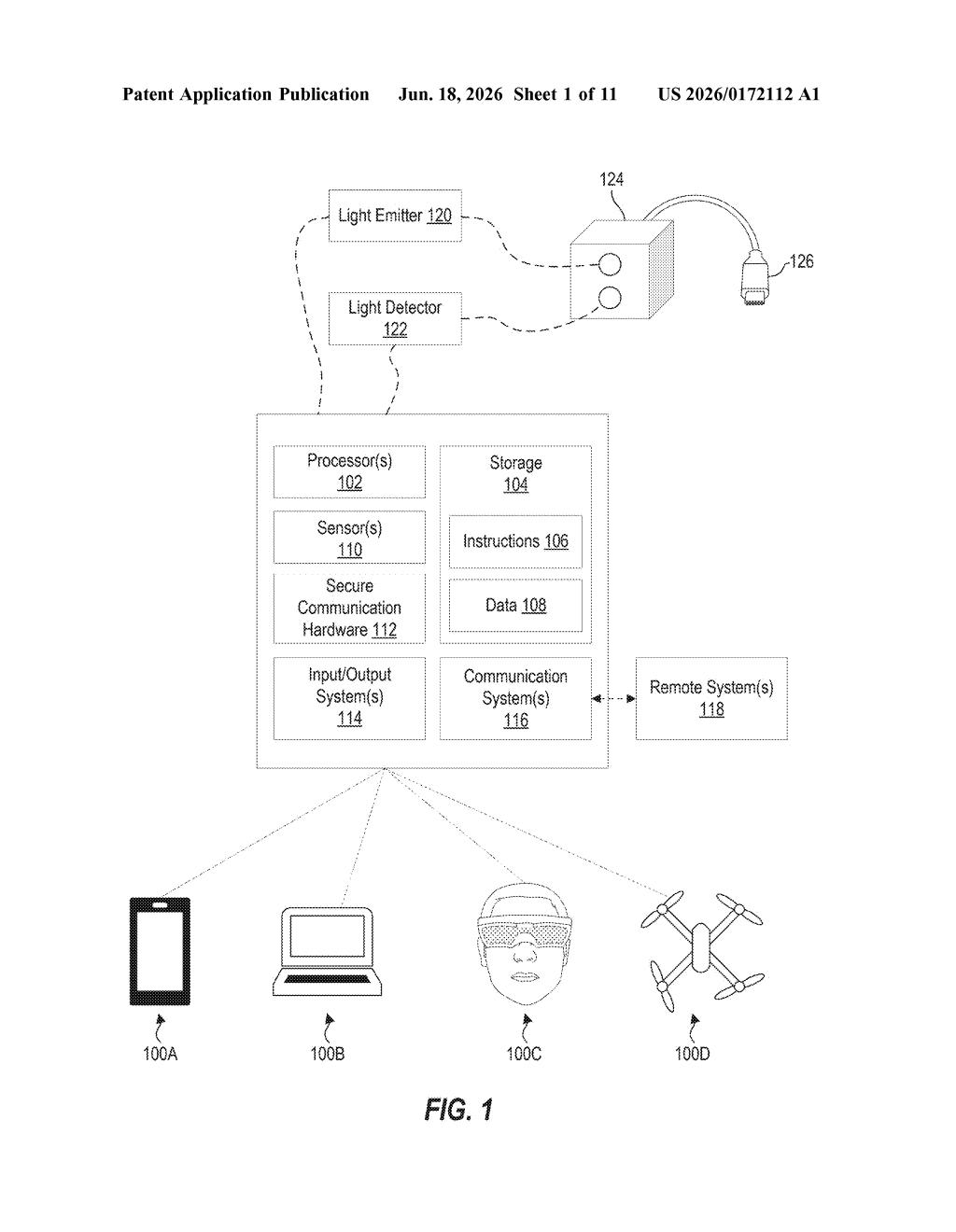
What Microsoft's optical authentication system actually does
Imagine you want to share something sensitive between two devices — say, a payment credential or an access key. Normally that happens over Wi-Fi or Bluetooth, signals that travel in every direction and can potentially be intercepted by someone nearby. Microsoft's patent describes a different approach: use a focused laser beam that only reaches a device sitting within a specific, narrow angle in front of it.
Both devices must shine their laser at each other simultaneously. If both beams are detected — each device sees the other's light — the connection is considered trusted and the secure data exchange begins. If either beam misses, nothing happens. You can't eavesdrop on a conversation you're not physically standing in the middle of.
The system also checks that an authorized user is operating the device before any of this starts, so you need both the right person and the right physical alignment to unlock the secure channel.
How the laser, optics, and serializer lock down the link
The patent describes a communication device built around an optical data link — think of it as a very precise, very short-range fiber-optic connection through open air.
On the transmit side, a serializer (a chip that converts parallel data into a single fast stream) feeds a laser driver, which pulses a laser to encode data as light. A purpose-built optical chain — lenses and aperture elements — shapes that beam so it only spreads across a tightly defined angle, called the predefined field of view. Anything outside that cone simply never receives the signal.
On the receive side, a matching optical chain captures incoming laser light and focuses it onto photodiodes (light-to-current sensors). A transimpedance amplifier converts that tiny current into a clean digital signal, which a de-serializer then reassembles back into usable data.
The security handshake requires mutual detection: both devices must confirm they can see the other's laser before the secure element (the tamper-resistant chip storing credentials or keys) is unlocked. This bidirectional optical confirmation replaces the cryptographic back-and-forth that radio-based pairing typically relies on.
What this means for physical-proximity security
Radio-based authentication — Bluetooth, NFC, Wi-Fi — has an inherent problem: the signals leak in all directions, creating a surface that sophisticated attackers can probe. Optical line-of-sight shrinks that surface to a narrow cone, meaning physical proximity and deliberate alignment become security requirements, not just conveniences. That's a meaningful shift for scenarios like point-of-sale terminals, secure document transfer, or access-control systems in sensitive environments.
For you as a user, the practical effect is a system that's hard to spoof without being physically present and visibly aiming a device. The tradeoff is obvious — you have to point things at each other — but in high-security contexts, that friction is a feature, not a bug.
This is a genuinely interesting security architecture that borrows from optical communications research and applies it to authentication. The line-of-sight constraint is elegantly self-enforcing — physics does the security work that cryptography usually has to. Whether Microsoft ships this in a real product or it stays a research filing, the underlying idea is sound and worth tracking.
There are more where this came from
We read every patent application Big Tech publishes and send you the ones worth knowing. Plain English, free, every week.
Want this weekly breakdown for a company we don't cover? Patentlyze Pro →