
Microsoft Files Patent to Catch AI Hallucinations by Verifying Facts Against Source Data
AI models can confidently generate wrong answers, and that's a real problem when the output is a medical summary or a legal document. Microsoft is patenting a system that checks what an AI wrote against what it was actually given to work with.
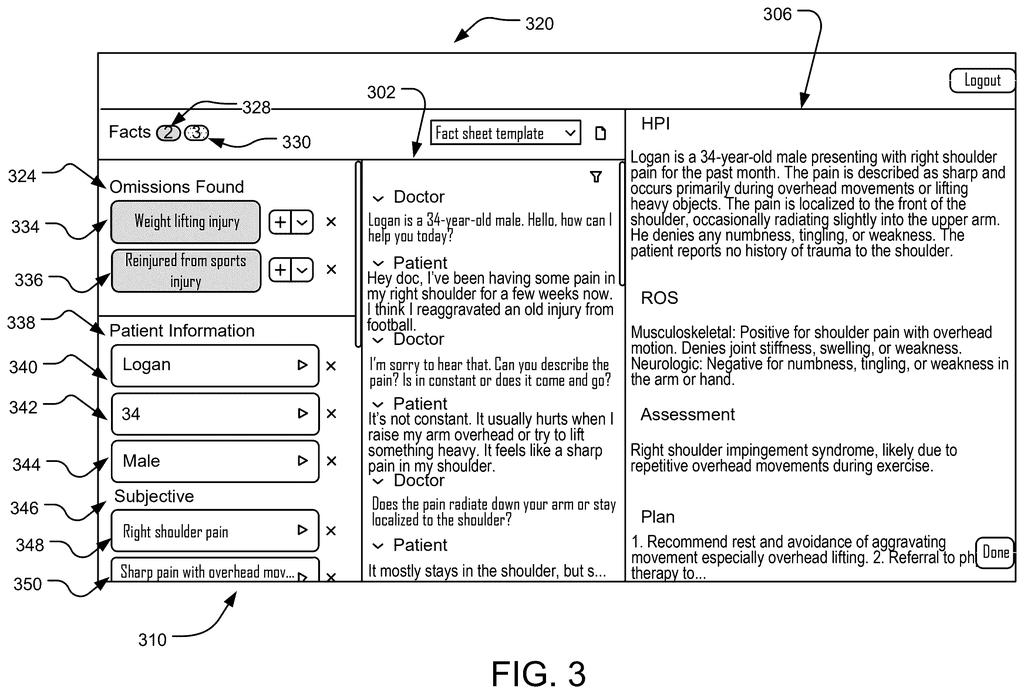
How Microsoft's AI fact-checker actually works
Imagine you ask an AI to summarize a patient's medical chart, and it invents a drug dosage that was never in the original notes. That kind of confident fabrication is one of the biggest practical problems with AI today. Microsoft's patent describes a system designed to catch exactly that.
The basic idea: before an AI's output goes anywhere, the system pulls out the important named pieces of information from both the original source material (what you fed the AI) and the AI's response (what it produced). It then tries to match those pieces together, flagging anything in the output that doesn't trace back to something in the input.
The result is a kind of report card on each fact. You can see which pieces of information the AI correctly carried over, which it left out, and which it may have introduced from thin air. The system is designed to work within a specific topic area, so it knows what kinds of facts are worth checking in, say, a medical context versus a legal or financial one.
extracting first input entities corresponding to the knowledge domain from the input data and first output entities corresponding to the knowledge domain from the output data …
Translation: The system identifies key facts from both the user's original prompt and the AI's generated response.
How the entity-mapping pipeline catches AI errors
The patent describes a three-step pipeline that runs as a quality check on top of an AI model's output.
- Entity extraction: The system identifies "entities" (specific named facts, terms, values, or concepts relevant to a given subject area) from both the input data and the AI-generated output. A "knowledge domain" here means a defined subject area like medicine, law, or finance. The system knows which kinds of facts matter in that domain.
- Entity mapping: It then attempts to match entities from the input against entities from the output. This is the fact-checking step: if the output mentions a specific figure or name, does that correspond to something in the source?
- Status reporting: Each entity gets a "mapping status," essentially a verdict indicating whether it was matched, unmatched, or new. Unmatched output entities are potential hallucinations; unmatched input entities may signal something the AI omitted.
The claim is domain-specific, meaning the extraction and matching logic is tuned to the type of content being checked. A medical deployment would look for things like drug names and dosages; a financial one might focus on figures and company names. This matters because generic spell-checkers don't know that "10 mg" is a meaningful fact worth verifying.
The system may map at least some of the first input entities to at least some of the first output entities. The system may output the set of first entities indicating a mapping status for each of the set of first entities.
Translation: The software checks if the AI's claims match the source material and labels each fact based on whether it was verified.
What this means for AI tools in high-stakes fields
AI hallucination, where a model generates plausible-sounding but false information, is one of the central unsolved problems holding back AI deployment in serious professional settings. Doctors, lawyers, and analysts can't rely on a tool that makes things up, even occasionally. A structured fact-tracing layer that sits between the model and the end user is a direct answer to that problem.
Microsoft already embeds AI assistants across its product line, from Word and Outlook to Copilot for enterprise customers. A patent like this suggests the company is building infrastructure to make those tools auditable, not just capable. For regulated industries especially, the ability to show that an AI's output traces back to verified source material could be the difference between a tool that gets approved for use and one that doesn't.
This is a practical, unsexy patent that addresses one of AI's most consequential real-world problems. The entity-mapping approach is not a moonshot; it's closer to careful engineering. That's not a criticism. If Microsoft can make Copilot's outputs auditable in healthcare or legal workflows, this kind of infrastructure is worth a lot more than any flashier AI feature.
There are more where this came from
We read every patent application Big Tech publishes and send you the ones worth knowing. Plain English, free, every week.
The drawings
9 drawing sheets from US 2026/0228607 A1 · click any drawing to enlarge


Want this weekly breakdown for a company we don't cover? Patentlyze Pro →
Be the first to weigh in