
Sony Patents a Two-Layer Photo Verification System That Proves Images Are Unaltered
Every photo you take could carry two invisible stamps of authenticity, one that only authorities can verify and one that you can share freely. Sony just filed a patent to make that a camera feature.
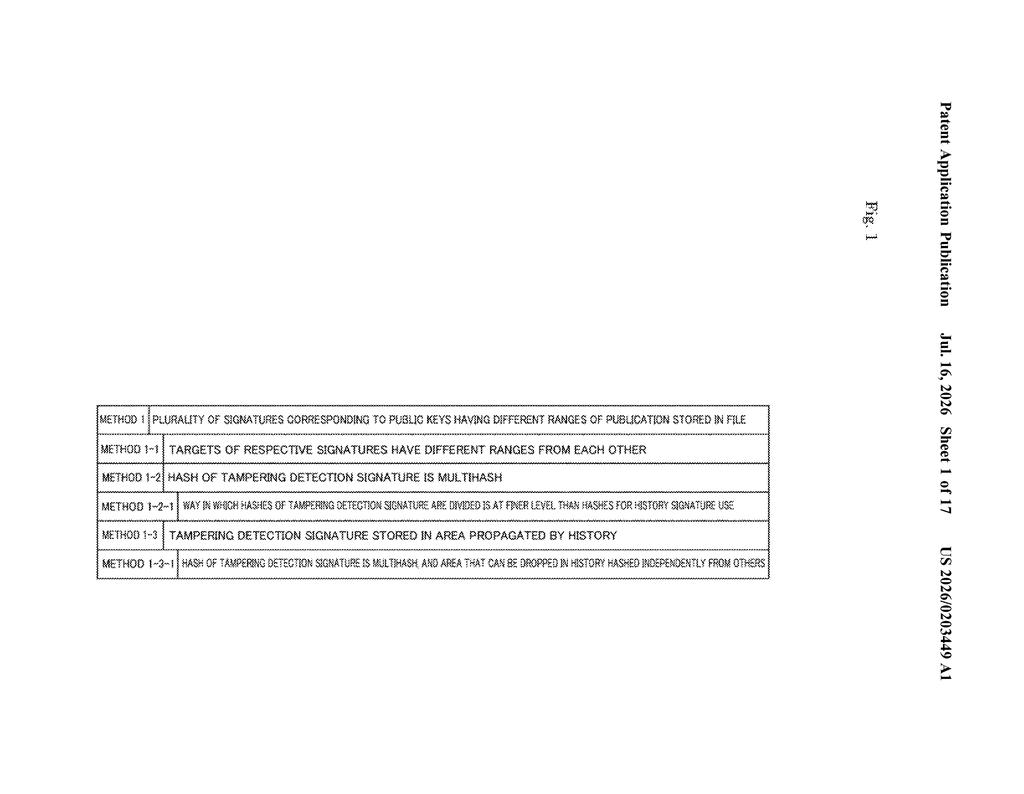
How Sony's dual photo signature actually works
Imagine a photo that comes with two sealed envelopes of proof attached. One envelope can only be opened by a government agency, a court, or a news wire service. The other can be opened by anyone you hand it to. Sony's patent describes a camera system that creates exactly that, baking two separate cryptographic signatures into every image the moment it's taken.
The first signature is locked to a private key that only the camera manufacturer (or a trusted institution) controls. The matching public key is handed out only to organizations with special access, not regular users. The second signature uses a key that you also have access to, so you can share or verify the photo yourself without needing anyone's permission.
The point is to let a photo prove two things at once: that it came from a real camera and hasn't been tampered with at a hardware level, and that its owner can still use and authenticate it in everyday situations. You don't have to choose between a photo being officially verifiable and being practically useful.
How the two private keys split photo-editing rights
The patent describes an image processing device that runs two parallel cryptographic signing operations the moment a photo is captured.
Hash generation: A hash (think of it as a unique fingerprint of the image data and its metadata like GPS location, timestamp, and camera settings) is computed twice, producing a first hash and a second hash. Each hash is tied to a different signing chain.
Dual signing:
- The first signature is created using a first private key held by the camera or a trusted manufacturer system. The corresponding public key is distributed only to privileged entities, such as law enforcement, press certification bodies, or content provenance registries.
- The second signature is created using a second private key that the user also has access to. Its matching public key can be shared with anyone, allowing ordinary verification by editors, publishers, or social platforms.
File packaging: All of this, the image, the metadata, and both signatures, gets bundled into a single file. Neither signature replaces the other. They coexist, giving the photo a layered trust architecture where different parties can verify different things depending on what keys they hold.
What this means for photo authenticity and editing rights
The practical problem this addresses is real: today's photo authenticity tools, like the C2PA (Coalition for Content Provenance and Authenticity) standard, give every verifier roughly the same level of access. Sony's approach creates a tiered system where some verification is reserved for credentialed institutions and some is open to anyone. That matters for use cases like legal evidence, photojournalism, or insurance claims, where you want official bodies to be able to confirm authenticity in ways that can't be spoofed by a user with their own key.
For you as a photographer, this could mean your camera becomes a certified source of truth in contexts where that's valuable, without taking away your own ability to prove your photos are genuine to clients or publishers.
This is a genuinely interesting approach to a problem that content authenticity standards like C2PA have not fully solved: how do you give institutions stronger verification rights than regular users without making photos useless for everyday sharing? Sony is essentially proposing a permissions hierarchy for photo trust, and given that Sony makes cameras used by professional photojournalists and law enforcement agencies worldwide, this isn't an abstract idea.
There are more where this came from
We read every patent application Big Tech publishes and send you the ones worth knowing. Plain English, free, every week.
Want this weekly breakdown for a company we don't cover? Patentlyze Pro →
Be the first to weigh in