
Microsoft Patents a Self-Reorganizing AI Agent Workflow System
Most AI agent pipelines run in a fixed order — Agent A, then B, then C — regardless of what they find along the way. Microsoft's new patent describes a system where the AI itself can reorder those agents mid-task based on what it's already discovered.
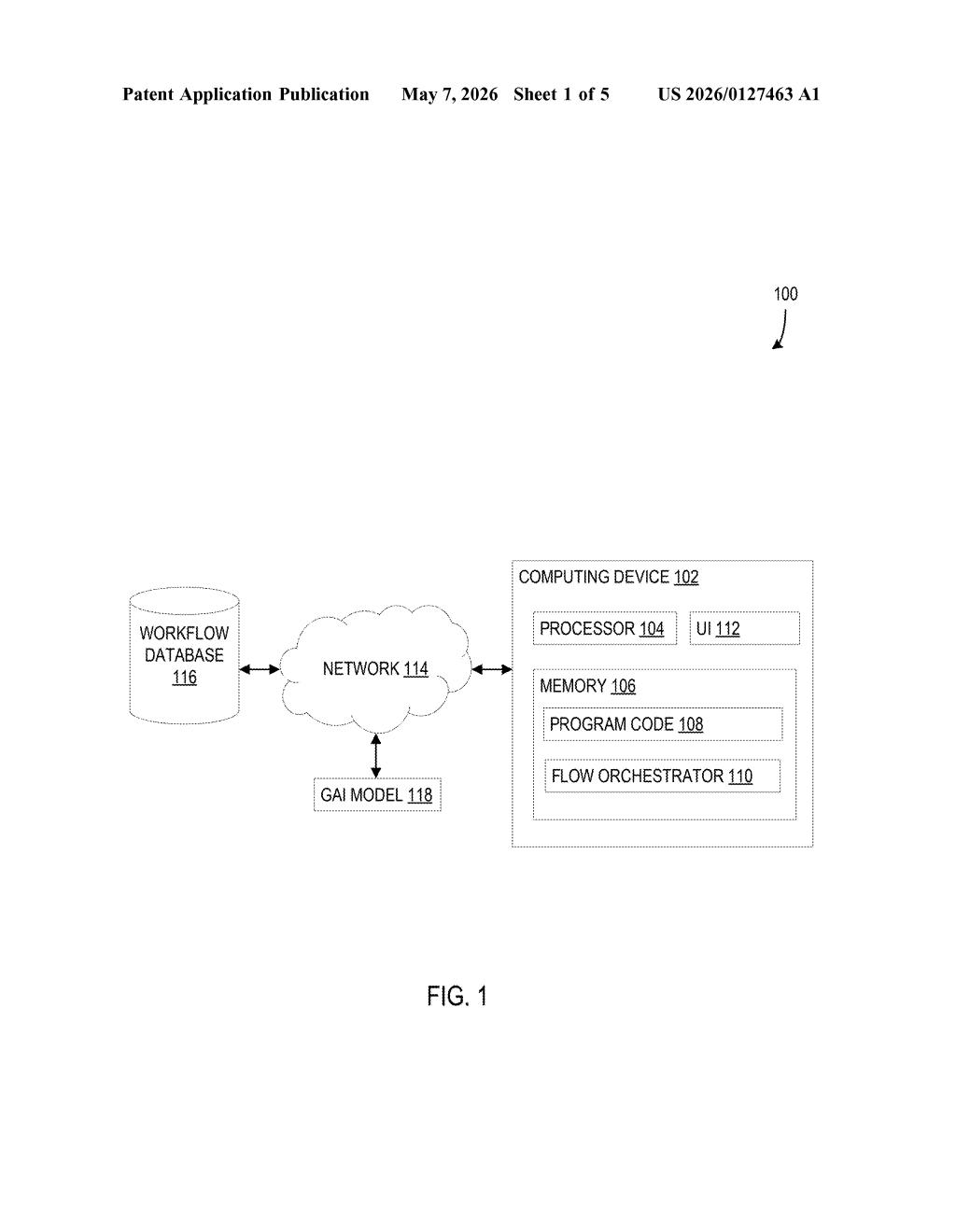
How Microsoft's AI agents reroute themselves on the fly
Imagine you're asking an AI assistant to pull together a research report. Normally, it would follow a fixed checklist: search the web, summarize results, check facts, format output — always in that order, no matter what. But what if the first search reveals that the most important data is locked behind a database query? A rigid pipeline would still run every step in sequence, wasting time.
Microsoft's new patent describes a smarter setup. An AI model kicks off a workflow with a team of specialized "agents" — each one responsible for a different task. After the first agent runs and returns some data, the AI model looks at what it got and asks: given this, what should happen next? It then reshuffles the remaining agents into a better order before continuing.
You don't see any of this. From your perspective, you asked a question and got an answer. But under the hood, the AI is dynamically routing itself toward the most efficient path — more like a GPS recalculating your route than a train locked to its tracks.
How MSMP mode lets the GAI model reshape agent order
The patent describes a multi-step multi-pass (MSMP) execution mode — meaning a workflow can loop and reorder across multiple rounds, not just run once from top to bottom.
Here's the core loop:
- A generative AI (GAI) model receives a data request and spins up a workflow of multiple agents.
- The first agent executes and returns a partial result — a "retrieved portion" of the requested data.
- The GAI model inspects that partial result and adjusts the workflow — specifically, it can change which agent runs next, second, and so on.
- The reordered workflow then runs to completion, producing the final output.
The key insight is that the orchestration logic lives inside the language model, not in a hard-coded scheduler. The model reasons about what it found and decides what to do next — similar in spirit to how chain-of-thought prompting (a technique where a model reasons step-by-step before answering) works, but applied to agent sequencing rather than text generation.
The patent doesn't specify a fixed number of agents or task types, suggesting the system is designed to be general-purpose across many workflow configurations.
What self-adjusting workflows mean for AI assistant reliability
Static agent pipelines are one of the biggest practical frustrations in deploying AI assistants for complex tasks. If step three of your pipeline depends on what step one found — but your system always runs in the same order — you're either over-building every step or accepting worse results. Dynamic reordering means the system can do less unnecessary work and prioritize the most relevant path based on real evidence.
For Microsoft, this fits squarely into its Copilot and Azure AI strategy, where multi-agent orchestration is a core selling point. A workflow that adapts to intermediate results is more robust, more efficient, and — from a user perspective — more likely to return a useful answer the first time. That's a meaningful competitive advantage when enterprises are choosing between AI platforms.
This is solid, practical AI infrastructure work — not a flashy demo, but the kind of plumbing that makes AI agents actually useful in production. The self-adjusting workflow idea is conceptually clean, and it addresses a real pain point that anyone who has built multi-agent pipelines has run into. The patent is broad enough to matter if it grants, but also broad enough that prior art challenges seem plausible.
There are more where this came from
We read every patent application Big Tech publishes and send you the ones worth knowing. Plain English, free, every week.
Want this weekly breakdown for a company we don't cover? Patentlyze Pro →